Review · TICKETS
Copenhagen: National Museum of Denmark Entry Ticket
The Viking sorceress exhibition is the star here, but it is only one chapter in a museum that covers 14,000 years of Danish history. You move from ancient tools and burial finds to Bronze Age gold, Viking beliefs, Danish exploration, and cultures from around the world. I like the famous Sun Chariot, the great curved lurs, and the way the museum gives Norse religion a human face. I also like that you can go at your own speed instead of being tied to a group.
The catch is simple: there is too much to see in one quick visit. The rooms can feel confusing, and you may spend four or five hours here without seeing every display properly. If Copenhagen gives you only one free afternoon, you will need to choose your priorities.
Key Points Before You Go
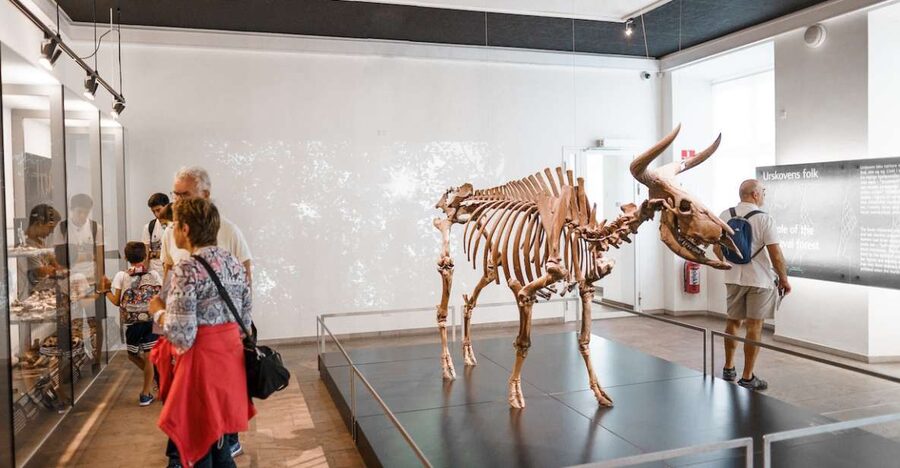
- Four to five hours is a sensible visit: Two hours covers the main highlights quickly, but a longer stay lets you read, pause, and see the special exhibitions.
- The Viking Sorceress exhibition is the main draw: It explores the Völva, a powerful female seer connected with Viking religion, prophecy, and ritual.
- Bronze Age treasures are exceptional: Look for the Sun Chariot, curved lurs, and ancient helmets.
- The visit is self-guided: You can move at your own pace, and a highlight audio tour or free docent tour may help you organize the day.
- The museum is central and accessible: Show your voucher at the ticketing desk. The building is wheelchair accessible.
- The $21 ticket can be good value: It remains valid for 365 days, giving you unusual flexibility if you want to return.
Entering Denmark’s Long Story
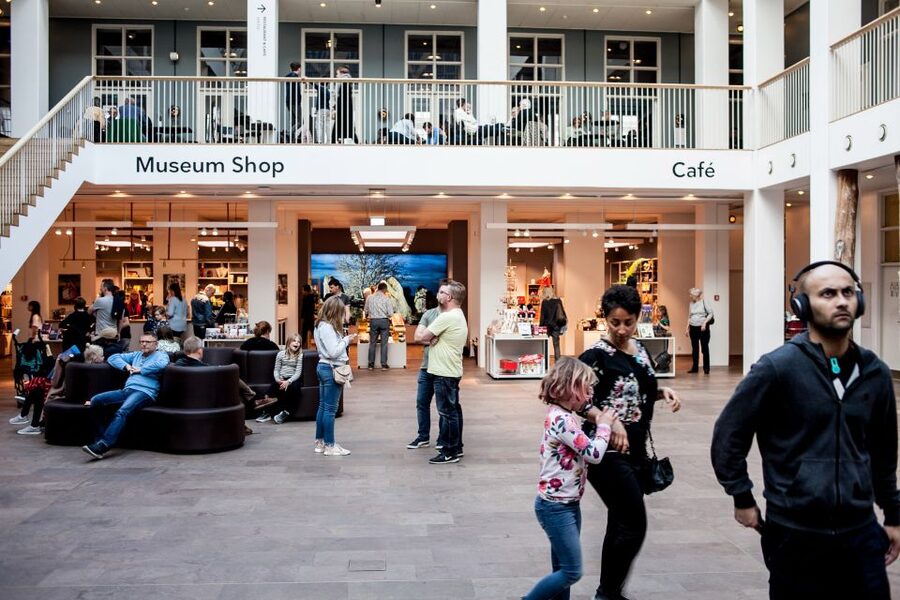
The National Museum of Denmark is not a small specialist museum. It is a large cultural museum in the heart of Copenhagen, with collections that reach from the Stone Age to the modern era and beyond Denmark’s borders.
That broad range is its strength and its challenge. You can see the physical remains of people who lived thousands of years ago, then turn a corner and find Viking weapons, religious objects, or material connected with Danish exploration. The museum also looks at customs, beliefs, and other forms of cultural heritage that do not fit neatly inside a glass case.
You will not follow a tight, theatrical route. Instead, you enter a series of galleries and adjoining rooms. The layout has been praised for its attractive displays and good design, but it can be easy to lose your sense of direction. I suggest deciding what matters most before you start.
For most first-time visitors, that means three targets: the Stone Age and Bronze Age collections, the Viking material, and the current special exhibition. After that, use your remaining time for the sections that catch your eye.
A few more museum visits around the world worth comparing
- Vatican: Museums & Sistine Chapel Entrance Ticket
★ 4.5 · 144,003 reviews - Paris: Louvre Museum Timed-Entrance Ticket
★ 4.6 · 71,977 reviews - Amsterdam: Van Gogh Museum Ticket
★ 4.7 · 52,054 reviews
Stone Age Finds and the First Danish Settlers
The oldest sections give you a useful reminder that Danish history did not begin with the Vikings. Stone tools, remains, and other ancient objects show how people lived long before written records.
Some pieces are around 6,000 years old. That age is hard to grasp until you look closely at a simple object and realize how many generations separate you from the person who made or used it. The displays help connect large periods of time with ordinary human needs: food, shelter, ritual, work, and death.
This section may suit you best if you like archaeology and early human history. It is less likely to hold the attention of a young child for hours, especially because the museum has so many cases and written explanations. Families can still make it work by choosing a few objects rather than trying to cover every room.
The museum has a children’s area, which gives younger visitors a break from the main galleries. Still, this is not a short, highly interactive attraction from beginning to end. Plan for pauses if you are visiting with children.
Bronze Age Treasures Worth Seeking Out
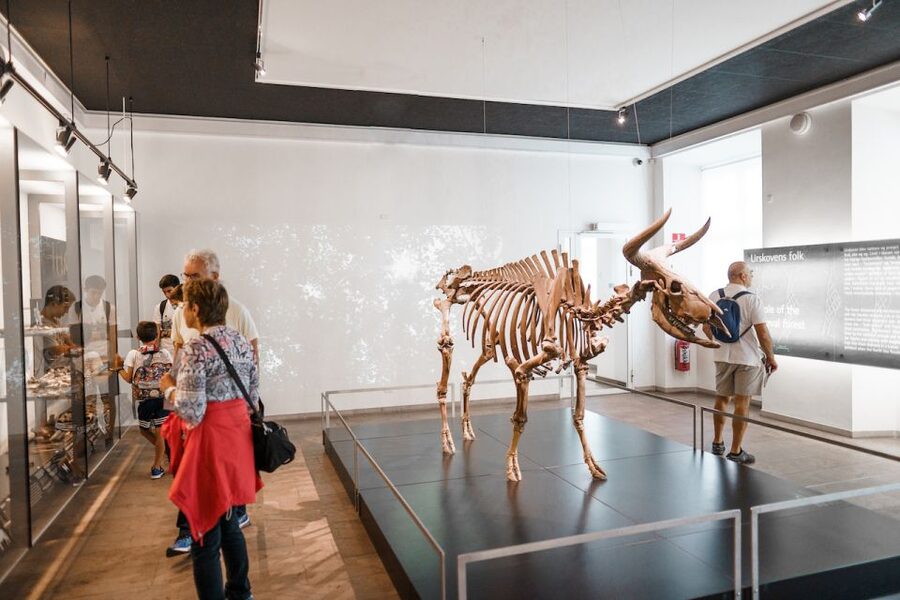
The Bronze Age collection provides some of the museum’s most memorable objects. The Sun Chariot is the clear showstopper, with its small horse pulling a bronze disk that represents the sun.
The great curved horns, known as lurs, are another highlight. Their shape is striking even before you think about how they may have sounded or how they were used in ceremonial life. Ancient helmets and other Bronze Age objects add to the sense that this was a skilled and organized society, not a vague prelude to later Danish history.
I recommend taking your time here rather than racing toward the Viking displays. The objects are visually strong, and they offer some of the best examples of Denmark’s early craftsmanship. This is also a good part of the museum for visitors who do not normally spend much time reading long historical panels. The main objects make an impression on their own.
The Viking Sorceress and the Völva
The Viking Sorceress exhibition gives the Viking galleries their strongest focus. It centers on the Völva, a female seer or sorceress associated with prophecy, ritual, and the uncertain boundary between the human world and the supernatural.
The exhibition presents Viking beliefs through objects, scenes, and stories linked with the Eddas and sagas. That approach makes the subject easier to picture than a room of weapons and jewelry alone. You are encouraged to think about what people feared, hoped for, and believed about the future.
This is the area I would put first if your main reason for visiting is Norse mythology. It has an atmospheric, interactive quality that several other parts of the museum do not match. Some visitors have found the audio material less effective than the exhibition itself, so you may get more from looking closely at the objects and displays than from relying only on the audio.
The subject is also more complicated than the popular image of Vikings as raiders. The Völva exhibition shows a society shaped by religion, fate, ritual, and social roles. That gives the Viking collection more depth than a simple parade of swords and ships.
Special exhibitions can change. A vampire exhibition has also appeared at the museum and was praised for its interactive design, but it should not be treated as a permanent part of your visit. Check the current program if a temporary exhibition is important to you.
Same city, a completely different collection:
- Vatican Museums, Sistine Chapel & St. Peter’s Basilica Tour
★ 4.3 · 73,970 reviews - Vatican Museums, Sistine Chapel & St Peter’s Basilica Guided Tour
★ 4.5 · 39,149 reviews - NYC: 9/11 Memorial & Museum Timed-Entry Ticket
★ 4.8 · 31,428 reviews - London: Tower of London and Crown Jewels Exhibition Ticket
★ 4.6 · 28,769 reviews
Viking Objects, Voyages, and Danish Explorers
Beyond the Völva display, the museum presents the Vikings as sailors, conquerors, traders, and explorers. Their voyages reached far beyond Denmark, and the museum places that movement within the wider story of European and world history.
The Viking material is a natural crowd favorite, but do not assume it tells the whole story of Denmark. The museum also follows Danish explorers and their curiosity about parts of the world that were unfamiliar to them. These sections broaden the visit from one famous age into a longer story of travel, contact, ambition, and discovery.
You may find the transition between sections less clear than in a smaller museum. Some rooms connect naturally, while others feel like separate chapters. I recommend using a highlight audio tour if one is available, or asking staff where to begin with the main Danish collections.
Free docent tours have also been available, and they can be useful if you prefer a human explanation rather than reading every panel. The exact schedule may vary, so ask at the museum when you arrive.
More Than Danish History
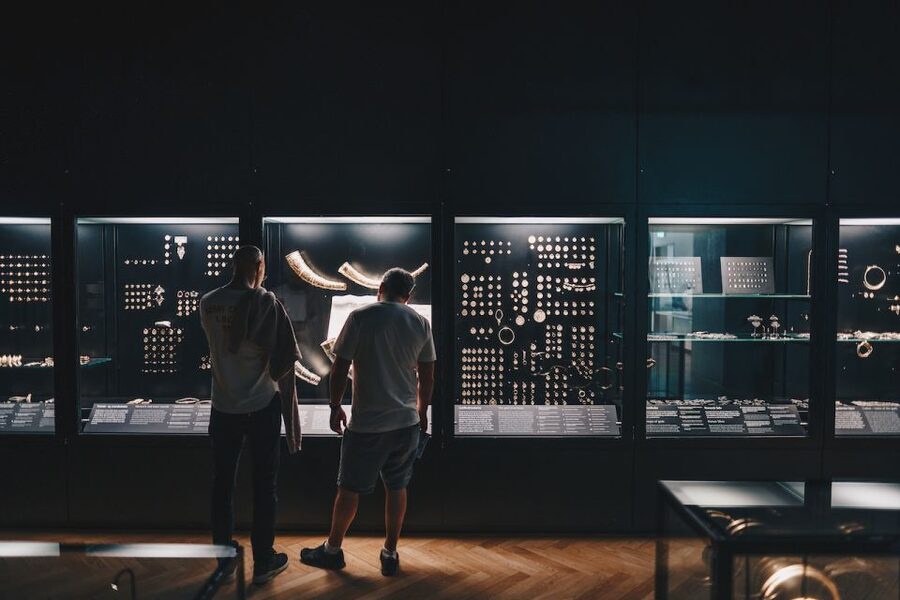
The museum also documents cultural heritage from outside Denmark. That matters because the collection is not limited to a national timeline. You see Denmark’s past alongside objects and traditions from other parts of the world.
This wider scope explains why the museum can feel like several museums in one. It is part archaeology museum, part national history museum, part cultural history museum, and part home for temporary exhibitions. If you are expecting a compact Viking museum, the scale may surprise you.
Some visitors like this variety because it gives a fuller sense of how people organize their lives, beliefs, and communities. Others may prefer Copenhagen’s more focused museums, especially on a short city break. I would treat this visit as a broad cultural survey, not as a single-subject attraction.
The art collections are handled separately in other museums, so do not come expecting a major fine-art collection. That separation will please visitors who want history and archaeology without a large painting collection. If you want both, you will need to add another museum to your Copenhagen plans.
How Much Time Should You Allow?
Two or three hours is enough for a fast visit focused on the Viking exhibition and the main treasures. You will need to keep moving, and you will skip many smaller displays.
Three to four hours gives you a much better balance. You can see the Stone Age, Bronze Age, Viking, and special exhibition areas without treating every room like a race. Five hours or more suits anyone who enjoys reading labels and examining objects closely.
The museum is large enough that your feet may tire well before your curiosity does. Plan a break at the café rather than pushing through. A few visitors have returned the next day because one visit was not enough, and the ticket’s long validity makes that possible.
The 365-day validity is unusual for a standard museum entry. It does not mean you should assume every temporary exhibition will remain available for a year, but it does give you flexibility if your plans change or if you want to return to finish the collection.
Café, Lockers, Toilets, and Family Comfort
The building has lockers for personal belongings and a wardrobe for coats. That is useful in Copenhagen, where bulky outerwear can make a long museum visit awkward.
There is a café and restaurant on site, and the food and atmosphere have received especially strong praise. It gives you a proper place to rest instead of forcing you to leave the museum halfway through the day.
Toilets are available, but facilities can become busy. If you are visiting with children or planning a long stay, use the facilities before settling into the more distant galleries. The children’s area is another helpful feature, though the overall museum can still feel overwhelming for younger visitors.
Staff are described as friendly and helpful. If the room layout confuses you, ask for directions early. A few minutes at the start can save you from wandering through adjoining galleries without a plan.
Is the $21 Ticket Good Value?
At $21 per person, the admission is fair if you like museums and can give the National Museum at least three hours. You are paying for a large collection, several periods of Danish history, Viking material, and access to the special exhibition program included with your entry.
The value is weaker if you have only a short stop in Copenhagen and prefer a tightly focused experience. The museum can take time to navigate, and part of your visit may involve deciding what to skip.
The 365-day validity improves the deal. If you are staying in Copenhagen long enough to return, the price becomes easier to justify because you can split the visit into two shorter sessions. It also removes some pressure from a rainy-day plan that might change.
Free cancellation up to 24 hours before the visit and reserve-now, pay-later booking add flexibility. Show your voucher at the ticketing desk. The museum is wheelchair accessible.
Who Will Enjoy This Museum Most?
I would recommend it to anyone curious about Danish archaeology, Viking religion, early societies, or the country’s place in wider world history. It is especially good for visitors who enjoy building their own route rather than following a guide from room to room.
Norse mythology fans should make the Völva exhibition a priority. Archaeology fans should allow extra time for the Stone Age and Bronze Age galleries. Families can use the children’s area and café, but should not expect every section to be interactive.
You may want to choose another attraction first if you have only one or two days in Copenhagen and want a quick, polished overview. The museum rewards patience. It is less satisfying if you rush through it simply to say you saw everything.
Should You Book the National Museum of Denmark?
Book it if you want a serious look at Denmark’s past and can spare at least half a day. The Viking Sorceress exhibition, Sun Chariot, lurs, Stone Age remains, and explorer displays give you several strong reasons to go, while the café and lockers make a long visit easier.
Skip it only if your schedule is extremely tight or you prefer small, tightly organized museums. For most history-minded visitors, the $21 ticket is good value, especially with 365-day validity. Arrive with a short list of priorities, accept that you will not see every room, and you will get far more from the visit.
FAQ
How much does entry to the National Museum of Denmark cost?
The listed price is $21 per person.
How long is the ticket valid?
The entry ticket is valid for 365 days. Check current availability and opening details before planning a return visit.
What does the ticket include?
The ticket includes entry to the National Museum of Denmark.
Is the museum wheelchair accessible?
Yes, the activity information states that the museum is wheelchair accessible.
Where do I show my voucher?
Show your voucher at the ticketing desk of the National Museum of Denmark.
Can I cancel the booking?
Yes. You can cancel up to 24 hours in advance for a full refund.
Can I reserve now and pay later?
Yes. The booking option allows you to reserve your spot and pay nothing at the time of booking.
Just added around the world
- Girona, Figueres, Dalí Museum and Cadaqués Tour from Barcelona★ 4.5 · 36 reviews
- Football Club Barcelona Museum Immersive Tour Guided Visit★ 3.5 · 52 reviews
- Erotic Museum Admission Ticket with Audioguide★ 5.0 · 527 reviews
- Dali Museum and Costa Brava Small Group Day Trip from Barcelona★ 5.0 · 77 reviews
- Madrid by High-Speed Train with Prado Museum Private Tour★ 4.0 · 33 reviews
- Guitar Legends Hall: Entrance to the Immersive Rock Museum★ 5.0 · 25 reviews
- White Rabbit Museum: The Best Immersive Experience in Catalonia★ 5.0 · 538 reviews
- Private Dali Museum, Besalú & Girona Tour from Barcelona★ 5.0 · 15 reviews
Tickets, compared.

Vatican: Museums & Sistine Chapel Entrance Ticket
Read our review →

Tower of London and Crown Jewels Exhibition Ticket
Read our review →
Skip-The-Line Uffizi Gallery Timed Entry Ticket
Read our review →