
Review · ROME
Borghese Gallery, Canova’s Masterpieces Skip-the-Line Guided Tour
The greatest pleasure here is seeing Bernini’s marble figures at close range, then hearing how a good guide turns cold stone into drama, movement, and human feeling. The Borghese Gallery is compact, lavish, and packed with major works by Bernini, Caravaggio, Canova, and Raphael.
I like the small-group format, which makes it easier to hear and ask questions. I also like the combination of art and gardens: after nearly two hours indoors, you can step into Villa Borghese for a quiet change of pace. The main caution is time. The museum visit can feel rushed, and some evening departures have ended before the advertised two hours.
What makes this Borghese tour worth considering
- Bernini at close range: See Apollo and Daphne, David, and The Rape of Proserpina in the setting built for Cardinal Scipione Borghese’s collection.
- Caravaggio’s Roman drama: Study Young Sick Bacchus and Boy with a Basket of Fruit with help on technique, symbolism, and story.
- A guide-led museum visit: Guides such as Mattia, Agnese, Guido, Silvia, and Valentina have been praised for clear explanations and lively storytelling.
- Skip-the-line access: Timed admission avoids the long ticket queue, though it does not mean you can stay indefinitely.
- A peaceful garden finish: Villa Borghese offers an easy escape from central Rome’s traffic and crowds.
- A few practical limits: Bags must go to the cloakroom, the group may include up to 20 people, and the Canova focus in the title may be broader than expected.
Why the Borghese Gallery feels different
Rome has larger museums, but size is not the Borghese Gallery’s strength. Its appeal is concentration. In a relatively small palace, you move from one first-rate work to another without the long corridors and foot fatigue of the Vatican Museums.
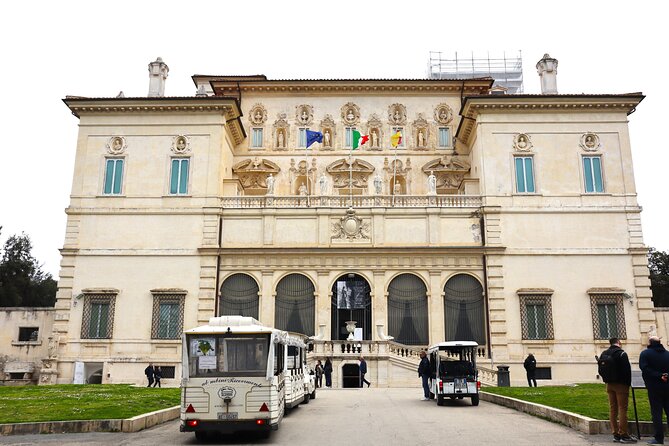
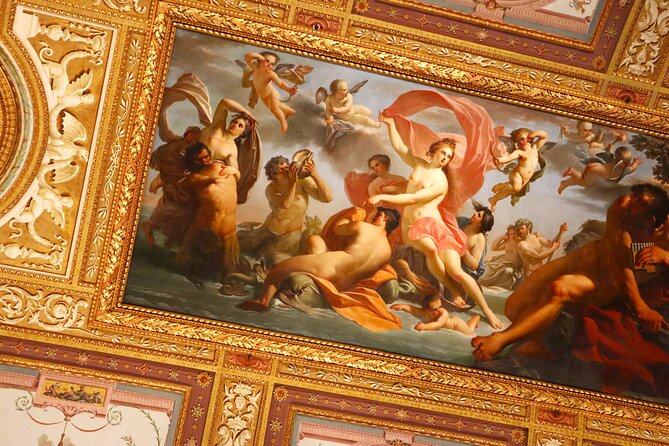
The building itself is part of the visit. The rooms have painted ceilings, patterned floors, sculpture-filled walls, and enough decorative detail to compete with the collection. I recommend looking up and down as often as you look straight ahead. The ceiling frescoes and floors are not background decoration. They help explain how Cardinal Scipione Borghese wanted art to be seen: as a total display of wealth, taste, power, and theatrical skill.
The collection began with Scipione Borghese, a powerful cardinal and avid collector who lived from 1579 to 1633. His taste favored works that grabbed attention quickly. That makes this a strong museum for anyone who likes art with a clear physical presence and a story you can follow.
The tour is especially useful if you know the names Bernini and Caravaggio but not much else. A good explanation connects the art to its period, its patron, and its religious or political setting. Guides including Mattia and Guido have been praised for putting individual works into a wider Roman context, while Agnese and Virginia have been singled out for storytelling that makes the collection easier to follow.
More Museum Tours in Rome
- Vatican Museums, Sistine Chapel & St. Peter’s Basilica Tour
★ 4.3 · 73,970 reviews - Vatican Museums, Sistine Chapel & St Peter’s Basilica Guided Tour
★ 4.5 · 39,149 reviews - Rome: Vatican Museums, Sistine Chapel and Basilica Tour
★ 4.3 · 16,039 reviews
Starting at Piazzale del Museo Borghese
You meet at Piazzale del Museo Borghese, outside the gallery in Villa Borghese. The location is near public transportation, but allow time to find the exact meeting point. The gardens are large, and a rushed arrival is an unpleasant way to begin a timed museum visit.
The experience is offered in English, with a group size of up to 20 people. That is not a private tour, but it is small enough for a guide to keep the group together and answer questions. Your experience will depend partly on the individual guide. Many of the named guides receive strong praise for clear English, art knowledge, humor, and patience, but one lower-rated experience reported difficulty with English and answers that wandered.
That range is worth keeping in mind. The gallery itself is superb, but the guide is a major part of what you are paying for. When the guide is in the mold of Mattia, Silvia, Valentina, or Federico, the tour can turn a beautiful museum into a much more understandable one.
Dress smart casual. The gallery has strict bag rules, so bring only what you need. Small and large bags are not permitted inside and must be left at the cloakroom. You will collect them afterward, but the rule can affect your pace, especially if you arrive carrying a daypack.
A short introduction to Villa Borghese
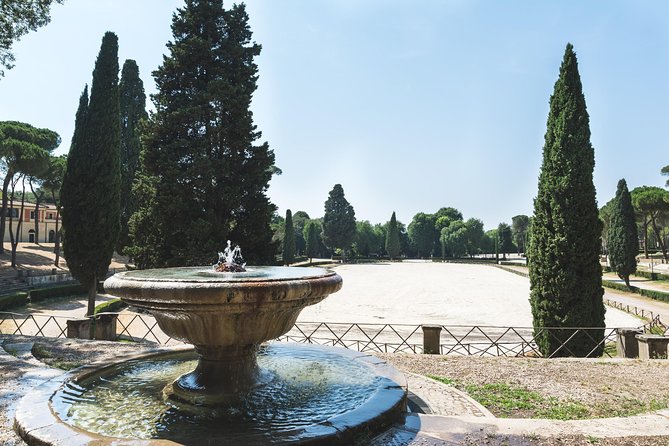
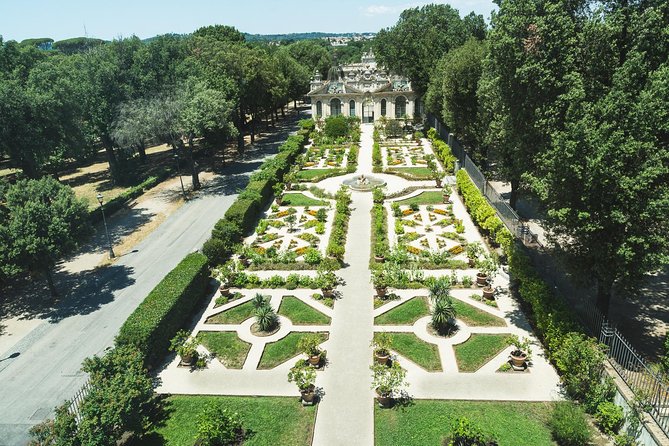
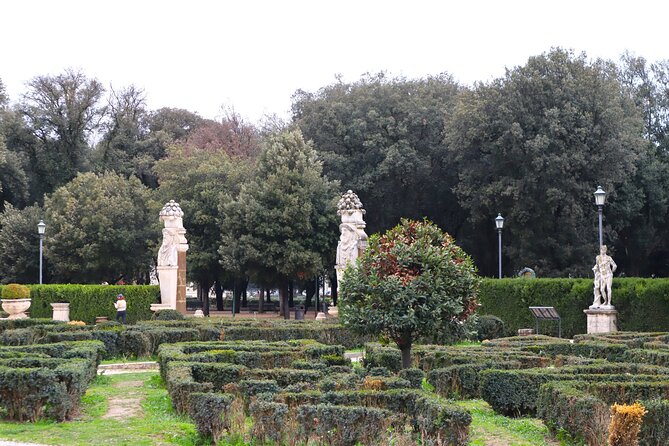
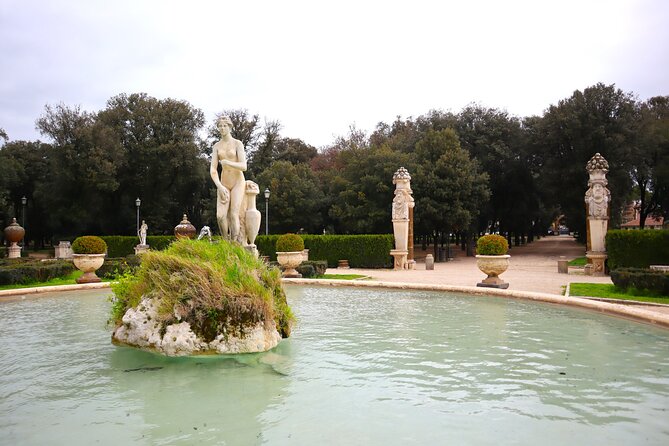
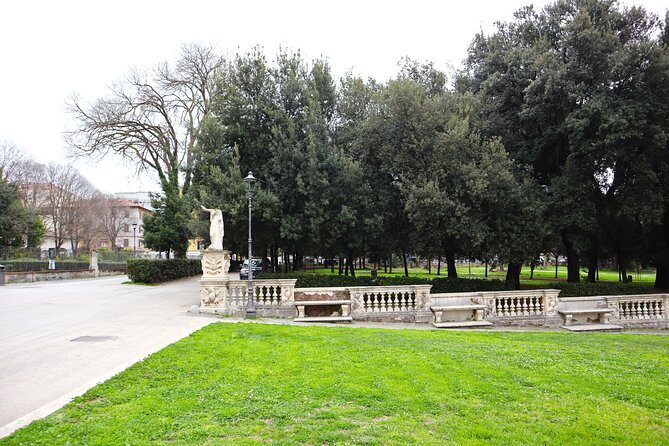
The garden portion begins with Villa Borghese, Rome’s third-largest public park. The supplied timing gives about 15 minutes for the first stop, so think of this as an introduction rather than a full park walk.
A marble inscription presents the grounds as a place made for visitors rather than the owner. Its message is unusually welcoming: go where you like, ask what you wish, and leave when you want, provided you respect the rules of courtesy. That little piece of wording gives the park a human touch before you enter the museum’s more formal world.
The gardens provide useful breathing room. Rome can be noisy and tiring, while Villa Borghese has broad paths, open space, and a calmer feel. Do not expect a detailed botanical tour or a long guided exploration. The garden walk is listed without a guide, so you should treat it as time to look around at your own pace.
Depending on the order of the day, you may encounter the gardens before the gallery or return to them at the end. Either way, this part adds value because it keeps the experience from becoming two straight hours of standing in crowded rooms.
Bernini’s marble stories inside the gallery
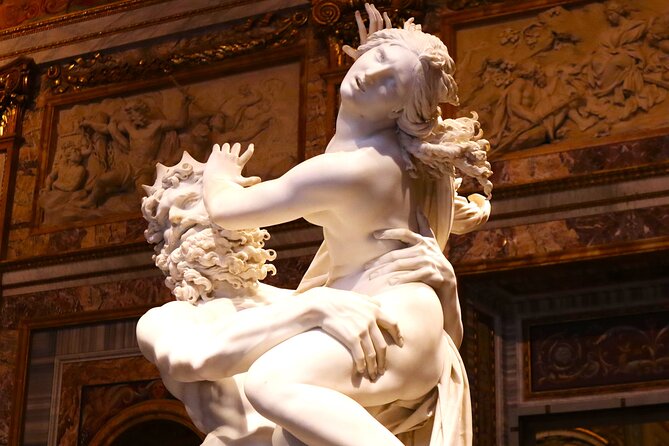
Bernini is the star for many first-time visitors. His sculptures are not meant to be viewed from one fixed angle. As you move around them, the figures reveal new expressions, gestures, and moments of action.
Apollo and Daphne captures the instant Daphne changes into a laurel tree while Apollo reaches for her. David is shown at the point of greatest effort, not after the victory. The Rape of Proserpina is famous for its emotional force and for the way Bernini makes marble appear soft under Pluto’s fingers.
A guide can point out details you might otherwise miss, such as the direction of a gaze or the way a body twists through space. That is where a guided visit earns its keep. You can admire the sculpture alone, but you may not notice how deliberately Bernini directs your eyes around the composition.
The gallery’s relatively intimate scale also matters. You are not seeing a small photograph in a giant hall. You are standing close enough to appreciate the surfaces and the physical skill involved. One practical limitation is that timed museum access means you cannot linger forever. A detailed guide may make the time pass quickly, especially if you want to study every work.
A few more museum visits around Rome worth comparing
- Rome: Borghese Gallery Skip-the-Line Ticket & Audioguide
★ 4.3 · 4,318 reviews - Rome: Borghese Gallery Ticket + Audioguide or Guided Tour
★ 4.6 · 3,219 reviews - Rome: Borghese Gallery Guided Tour with Skip-the-Line Entry
★ 4.8 · 2,649 reviews - Rome: Borghese Gallery Skip-the-Line Tickets with Audioguide
★ 4.6 · 2,562 reviews
Caravaggio’s paintings and the power of contrast
Caravaggio brings a different kind of energy. His figures are direct, imperfect, and often lit by a hard beam that cuts through the darkness. The Borghese Gallery includes Young Sick Bacchus and Boy with a Basket of Fruit, two works that show his interest in ordinary human faces and tactile detail.
Young Sick Bacchus has an unusual mood for a mythological subject. The figure looks tired and physically present rather than idealized. Boy with a Basket of Fruit invites you to notice the skin, leaves, and fruit, but it also carries a sense of fragility. A guide can help you see both the surface appeal and the less comfortable human feeling beneath it.
Caravaggio is one reason this tour suits people who are not committed art specialists. His paintings communicate quickly. You can respond to the light, faces, and mood before you know the technical vocabulary. The guide then adds context about the painter’s methods and the period in which he worked.
The tour also helps you compare painting and sculpture. Caravaggio freezes a moment with light. Bernini freezes a moment with movement. Seeing them in the same collection gives the visit a useful rhythm rather than making it a long list of unrelated masterpieces.
Canova, Raphael, and the limits of the title
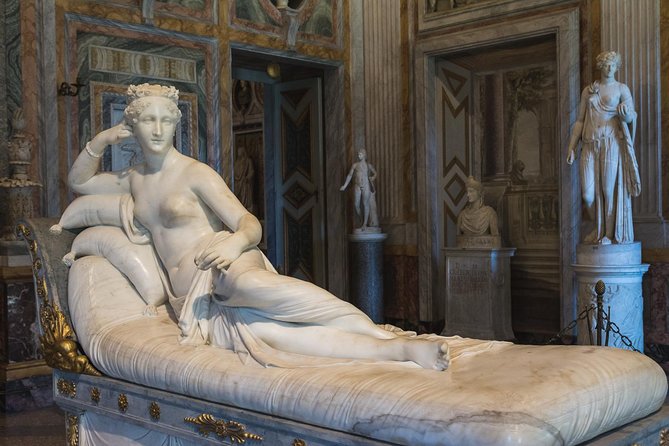
The tour title gives Canova prominent billing, and Paolina Bonaparte is the work to watch for. Canova’s polished Neoclassical style contrasts sharply with Bernini’s restless Baroque motion. Paolina is presented as Venus Victorious, reclining with an air of calm control and political confidence.
You should not book this expecting a tour devoted only to Canova. The actual visit covers the wider collection, with strong attention to Bernini, Caravaggio, Raphael, and other artists. One especially useful point is that the gallery contains only one especially prominent Canova work in the main route, according to the tour experience described by visitors.
That broader focus is a benefit if you want an introduction to the museum. It is a possible disappointment if your main goal is an extended Canova study. I would choose this tour for the gallery as a whole, not for a narrow list of Canova sculptures.
Raphael’s Entombment of Christ gives the painting collection a different tone. It rewards careful looking at the arrangement of figures, gestures, and grief. A guide can connect the painting to Renaissance design and show how its order differs from Caravaggio’s dramatic realism.
Stories, context, and the value of a guide
The strongest part of the experience is not simply being shown the famous rooms. It is having someone explain why the works look the way they do and why they mattered to the people who commissioned them.
Guides such as Guido have been praised for treating the tour like a lively lesson in Italian art and history. Mattia has been noted for covering the major works while also pointing out smaller pieces and room details. Agnese has a reputation for bringing the collection to life through storytelling, and Valentina is praised for clear English and useful background stories.
That variety gives you a good sense of what to look for when booking. You are not guaranteed a particular guide unless the provider confirms one, but the best guide for this museum is not merely someone who recites dates. You want someone who can explain a sculpture from several angles, answer a direct question, and keep the group moving.
Audio equipment has also worked well for some groups, which matters in rooms where several people are gathered around a single sculpture. Still, do not assume every guide will have the same style. One weak experience included unclear English and poorly organized answers. That is not a reason to skip the gallery, but it is a reason to judge the tour as a guided service rather than as guaranteed personal instruction.
How much can you see in two hours?
The listed duration is about two hours, with roughly 15 minutes connected to the gardens and about 1 hour 45 minutes for the gallery portion. That sounds generous until you account for walking between rooms, listening to explanations, and the museum’s timed-entry structure.
Several people have wished for more time. One departure scheduled from 5:45 to 7:45 ended when the museum closed at 7:00, making the actual visit shorter than expected. Another experience found that 90 minutes was not enough to see the collection at a comfortable pace.
You should arrive with a plan: focus on the major Bernini sculptures, the key Caravaggio paintings, Paolina Bonaparte, and Raphael’s Entombment of Christ. If you try to study every painting equally, you may feel hurried. If you let the guide set the route, you will get a clear overview and the most important works.
The group size of 20 is manageable, but it is not the same as being alone in the gallery. Position yourself where you can see the guide and the work being discussed. If you have a serious interest in one artist, consider returning on your own only if your admission arrangement allows it, since this tour itself is designed as a timed visit.
Is $59.26 a fair price?
At $59.26 per person, this is not the cheapest way to enter a museum. The value comes from the combination of timed, skip-the-line admission and an English-speaking art guide. A self-guided visit may cost less, but it asks you to build your own route and supply your own context.
For a first visit to the Borghese Gallery, I think the price can make sense. This is a collection where the difference between simply seeing a statue and understanding its design is large. If a guide explains how Bernini controls your viewpoint or why Caravaggio’s lighting changes the emotional tone, you are getting something beyond admission.
The value is weaker if you already know the gallery well, want a slow personal visit, or mainly want Canova. The tour has a fixed pace, and the guide’s style will shape the experience. You are paying for efficiency and interpretation, not unlimited time.
The 92 percent recommendation rate and 4.7 rating from 1,162 reviews indicate a strong overall record, but the individual guide matters. If you can request or confirm a highly regarded guide such as Mattia, Agnese, Guido, Silvia, or Valentina, that may improve your odds of getting the kind of visit you want.
Who should book this experience?
I would recommend it to a first-time Borghese visitor who wants the famous works explained without spending hours preparing. It is also a good fit for couples, families with older children, and anyone who finds art museums easier to enjoy with a story attached.
The tour can work well before the Vatican Museums. The Borghese collection gives you a smaller, more focused look at Roman patronage, Bernini, and the relationship between art and papal power. You will have some useful background before facing the Vatican’s larger crowds and longer corridors.
Art lovers should book it if they value interpretation and a planned route. People who prefer to stand quietly in front of one painting for 20 minutes may find the pace too tight.
The activity is listed as suitable for most participants, and one guide helped a wheelchair user manage the visit with ease. Still, accessibility details are not fully spelled out, so contact the provider before booking if you need specific arrangements. Free cancellation is available up to 24 hours before the start time. Changes or cancellations inside that window are not refunded.
Should you book the Borghese Gallery tour?
Book this tour if you want an efficient introduction to one of Rome’s finest art collections, especially if Bernini and Caravaggio are high on your list. The skip-the-line entry, compact museum, English explanations, and garden setting make a strong two-hour plan.
Do not book it solely for Canova, and do not expect unlimited time with every work. The best version of this experience comes when you arrive light, accept the timed pace, and treat the guide as the main added value. At $59.26, that is a fair trade for many first-time visitors, particularly if your guide is as clear and engaging as Mattia, Agnese, Guido, Silvia, or Valentina.
FAQ
How long does the Borghese Gallery tour last?
The activity lasts approximately two hours. The schedule includes about 15 minutes connected with Villa Borghese and about 1 hour 45 minutes for the gallery visit, although the exact duration can vary with the museum’s closing time.
Is skip-the-line admission included?
Yes. The tour includes guaranteed skip-the-line access to the Borghese Gallery, along with the guided museum visit.
What language is the tour offered in?
The tour is offered in English and led by an English-speaking guide.
How large is the group?
The maximum group size is 20 people. It is a small-group experience rather than a private tour.
Which artists and works are included?
The visit includes works by Bernini, Caravaggio, Canova, and Raphael. Highlighted works include Apollo and Daphne, David, The Rape of Proserpina, Paolina Bonaparte, Young Sick Bacchus, Boy with a Basket of Fruit, and Entombment of Christ.
Is the garden walk guided?
The garden portion is listed as a walking tour without a guide. Villa Borghese Gardens are included as part of the experience, but the detailed art commentary takes place inside the gallery.
Can I bring a large bag into the gallery?
No. Small and large bags are not permitted inside the Borghese Gallery and must be checked at the cloakroom. You collect them after the visit.
Where does the tour start and end?
The meeting point is Piazzale del Museo Borghese, 00197 Rome. The activity ends back at the meeting point.
Can I cancel for a refund?
Yes, you can cancel for a full refund if you do so at least 24 hours before the experience starts. Cancellations or changes made less than 24 hours in advance are not refunded or accepted.
More Skip-the-Line Tickets in Rome
- Vatican Museums & Sistine Chapel Skip-the-Line Entry Ticket
★ 4.4 · 13,838 reviews - Rome: Vatican Museums & Sistine Chapel Skip-the-Line Ticket
★ 4.3 · 8,103 reviews - Skip the Line: Vatican Museum, Sistine Chapel + Optional Basilica
★ 4.5 · 6,181 reviews - Skip the line: Vatican Museums, Sistine Chapel & St Peters Tour
★ 4.5 · 1,888 reviews
Just added around Rome
- Vatican City: Sistine Chapel, Museums, Basilica Private Tour★ 4.8 · 158 reviews
- Rome: Hop-on Hop-off Bus & Vatican Museums Ticket★ 3.5 · 41 reviews
- Rome: Vatican Museums, Sistine Chapel, and St. Peter’s Tour★ 4.5 · 49 reviews
- Skip-The-Ticket Line-Vatican Museum & Sistine Chapel★ 3.9 · 383 reviews
- Skip the line Vatican Museum Sistine & St.Peter Private Tour★ 4.7 · 40 reviews
- Skip-the-Line Vatican Museums and Sistine Chapel Guided Tour★ 4.3 · 130 reviews
- Skip-the-Line Tickets: Vatican Museum and Sistine Chapel★ 3.5 · 114 reviews
- MAXXI – Museum of Contemporary Art of 21st century★ 4.0 · 91 reviews
Museum Tours in Rome, compared.
Vatican Museums, Sistine Chapel & St. Peter’s Basilica Tour
Read our review →
Vatican Museums, Sistine Chapel & St Peter’s Basilica Guided Tour
Read our review →
Vatican Museums, Sistine Chapel and Basilica Tour
Read our review →
Vatican Museums & Sistine Chapel Skip-the-Line Entry Ticket
Read our review →
Vatican Museums, Sistine Chapel & Basilica Tour
Read our review →
Vatican Museums & Sistine Chapel Guided Tour
Read our review →
Vatican Museums & Sistine Chapel Skip-the-Ticket-Line Tour
Read our review →
Vatican Museums, Sistine Chapel and St. Peter’s Basilica Tour
Read our review →Browse the lists this tour appears in