
Review · PALACE MUSEUM
Palace of Parliament, Ceausescu House & Village Museum
Bucharest’s past makes the most sense when you see its contrasts side by side. This six-hour tour moves from traditional Romanian homes at the Village Museum, to the luxury of Nicolae Ceaușescu’s former residence, then into the giant political monument that is the Palace of Parliament. It is a brisk but useful way to connect daily life, dictatorship, and modern Romania.
I like the comfortable coach transfers, since these three sights are spread across the city. I also like the guide-led format: recent feedback singles out Gabriel for clear explanations and good humor, which matters when the buildings alone cannot explain what happened inside them.
The main catch is price clarity. The advertised $1.27 is only the tour charge, not the admission cost. Tickets for all three attractions are extra, and you must carry a passport or national identity card for the Palace of Parliament and Ceaușescu Mansion.
Key points to know before booking
- Three very different Bucharest sights: You move from rural architecture to private communist luxury and then a colossal government building.
- Six hours with coach transfers: Each listed transfer takes about 20 minutes, saving you from arranging several city journeys yourself.
- Tickets are not included: The low headline price does not cover admission to the Village Museum, Ceaușescu Mansion, or Palace of Parliament.
- Photo ID is compulsory: Bring a passport or national identity card, including for children who join the tour.
- Monday needs special attention: Ceaușescu Mansion is closed that day, so the visit may be replaced or adjusted.
- Small groups or private departures: The tour can be arranged for a private or small group, with live guides in several languages.
Three sides of Bucharest in six hours
This is not a single-site tour with a few extra photo stops. It is a compact lesson in how Romania changed from a rural society to a communist state and then into the present day.
You begin at Bulevardul Regina Elisabeta, near the center of Bucharest. The supplied meeting information gives both number 3 and number 7, so I would confirm the exact entrance before setting out. That small detail matters more than it sounds, especially if you are carrying luggage or arriving by taxi.
The trip uses a modern, air-conditioned coach. Each transfer is listed at about 20 minutes, though city traffic can affect the timing. You are not left to solve Bucharest’s distances on your own, and the guide can fill the road time with context.
The tour is most useful if you want a broad first look at the city rather than a slow, specialist visit to one museum. You will see three major attractions, but the schedule also means you should expect a planned pace.
More palace museums in the world:
- Istanbul: Topkapi Palace & Harem Museum Ticket & Audio Guide
★ 4.1 · 3,977 reviews - Venice’s Best: Basilica, Doge’s Palace, Gondola & History Gallery
★ 4.5 · 2,478 reviews - Royal Palace & Prado Museum Skip the Line Guided Tour
★ 4.5 · 1,347 reviews
Traditional Romania at the Village Museum
The Dimitrie Gusti National Village Museum is the gentlest opening to the day. This open-air museum brings traditional houses, churches, windmills, and other rural buildings from different parts of Romania into one large setting.
That arrangement gives you a quick sense of the country’s regional variety. Instead of looking at household objects behind glass, you walk among actual structures and compare their shapes, materials, and layouts. The stop is especially helpful if your Bucharest visit is otherwise focused on modern streets and grand public buildings.
You have time for a guided visit, photographs, and a break. The museum is outdoors, so sensible shoes and weather-appropriate clothing will make the stop easier. The information provided does not give a fixed amount of free walking time, so stay aware of the guide’s meeting instructions.
I like this first stop because it gives the rest of the tour a human scale. After seeing the kind of homes and churches used by ordinary Romanian communities, the mansion and parliament building feel even more extravagant.
There is also a practical limitation. The Village Museum can cover a large area, and the whole tour lasts only six hours. You should not expect to examine every building at length. If traditional architecture is your main interest, you may want to return separately.
Admission is not included in the tour charge. That applies here as well as at the other two attractions, so check the total cost before booking.
Inside Ceaușescu’s private residence
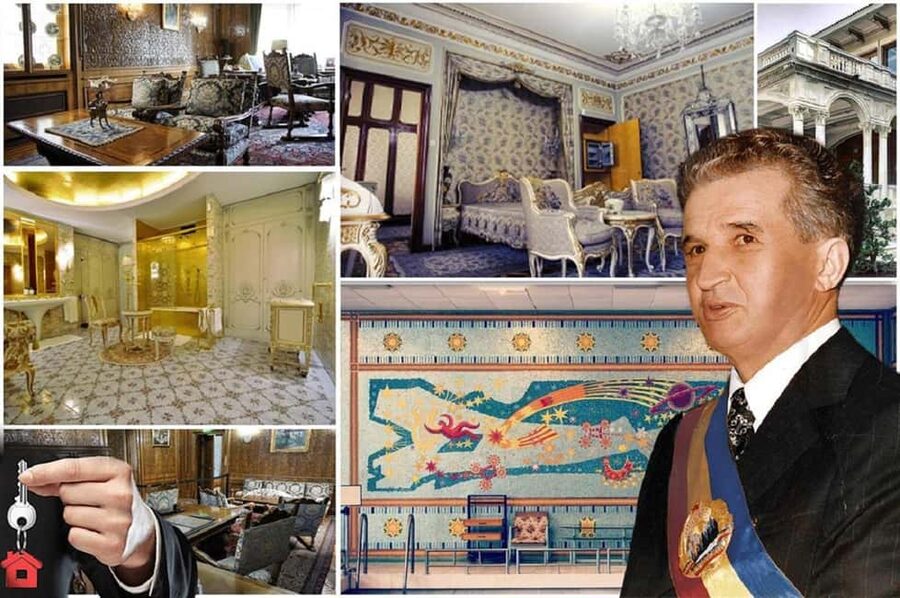
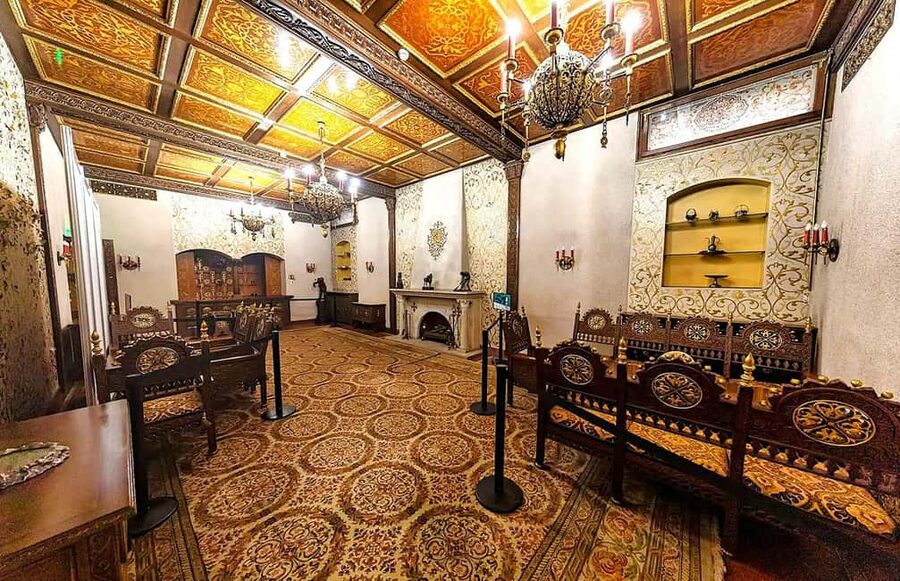
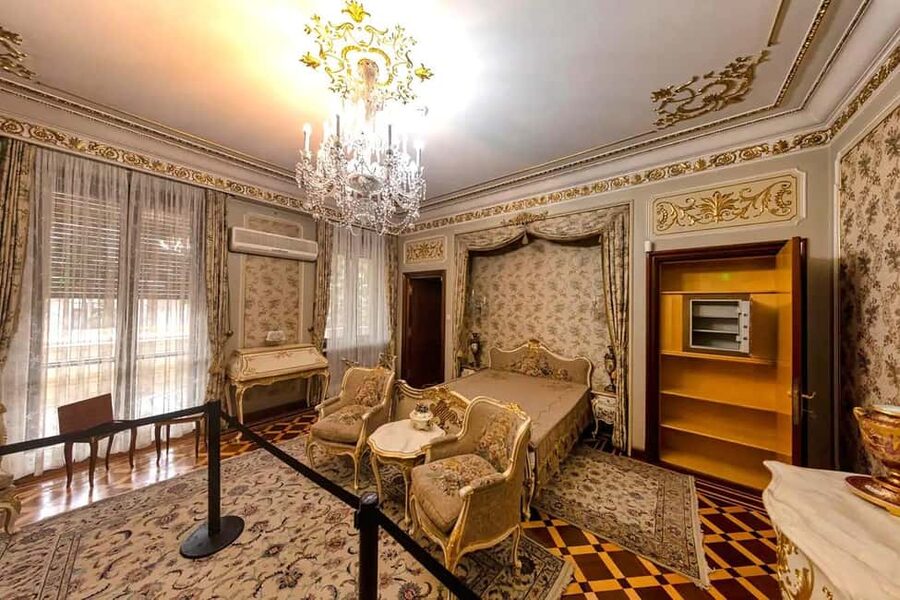
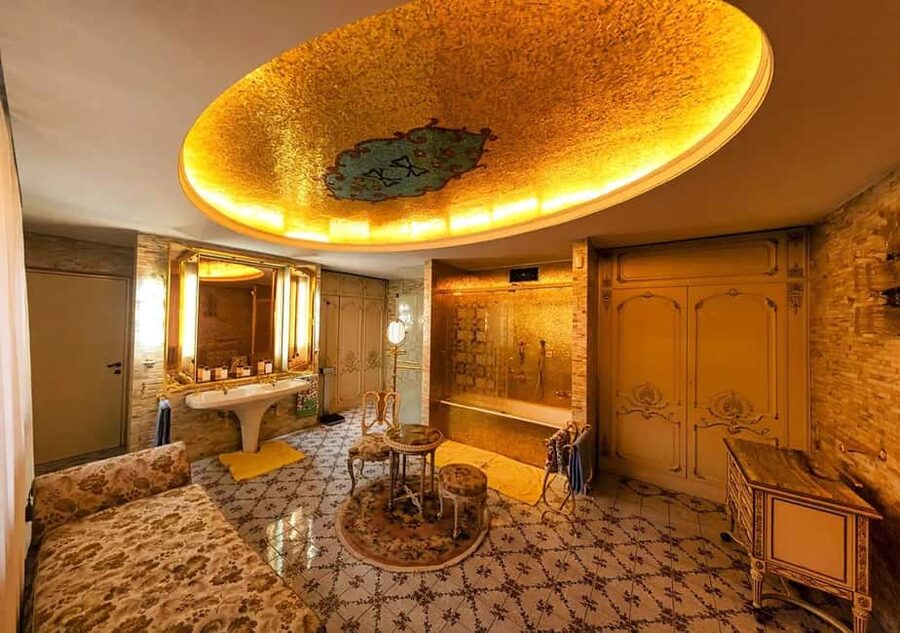
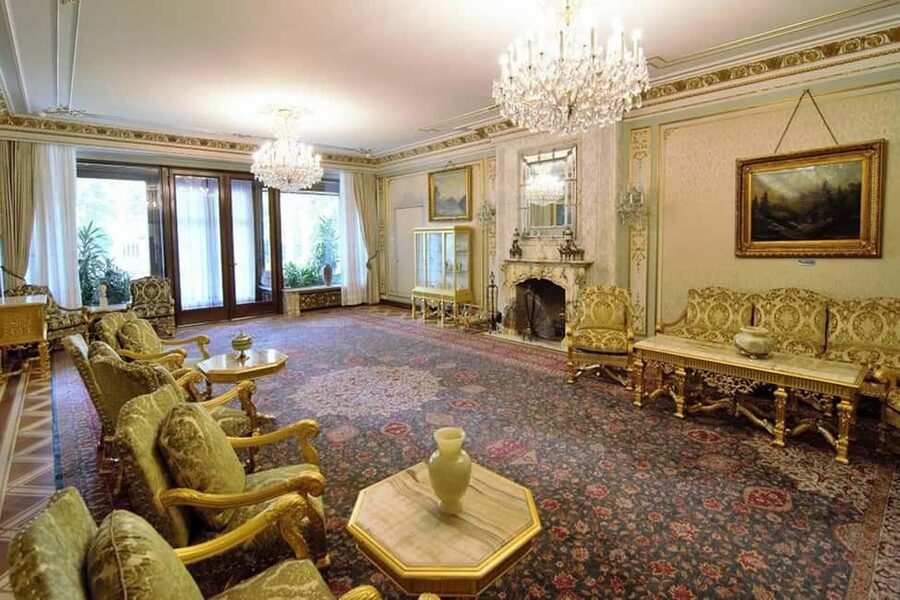
The House of Ceaușescu offers a very different picture of Romania. This was the lavish home of Nicolae Ceaușescu, the country’s communist-era dictator, and the visit lets you see the private rooms and decorated interiors used by the leadership until 1989.
The value of this stop lies in the contrast between public political language and private comfort. Ceaușescu’s regime presented itself as a workers’ government, while his family lived in surroundings that were far removed from ordinary life. Seeing the residence makes that contradiction easier to grasp than a short paragraph in a museum display.
Your guide leads the visit and provides the political setting. This is where a good explanation matters most. The furnishings and rooms can look merely grand if you do not know why the house carries such weight in Romania’s recent past.
Guide Gabriel is specifically praised for clear explanations and a lively manner on some departures. Guides are available in English, Spanish, Italian, and Bulgarian. Optional audio support is listed for a wide range of other languages, including German, French, Chinese, Hebrew, Greek, Turkish, Polish, Portuguese, Russian, Croatian, Danish, Dutch, Norwegian, Swedish, Finnish, Serbian, Lithuanian, Latvian, Estonian, and Lettish.
Ceaușescu Mansion is closed on Mondays. On that day, the operator may replace or adjust this part of the visit depending on availability. I would not book a Monday departure without confirming exactly what you will see instead.
You also need valid photo identification to enter. A passport or national identity card is required, and the same rule applies to children. A driving licence should not be treated as a safe substitute because the stated requirement specifically names a passport or national identity card.
The Palace of Parliament’s huge political message
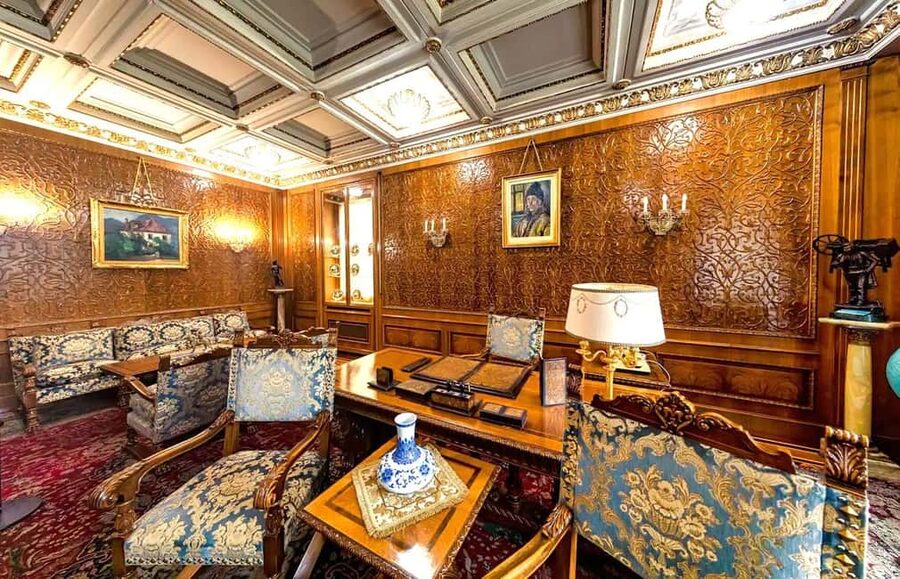
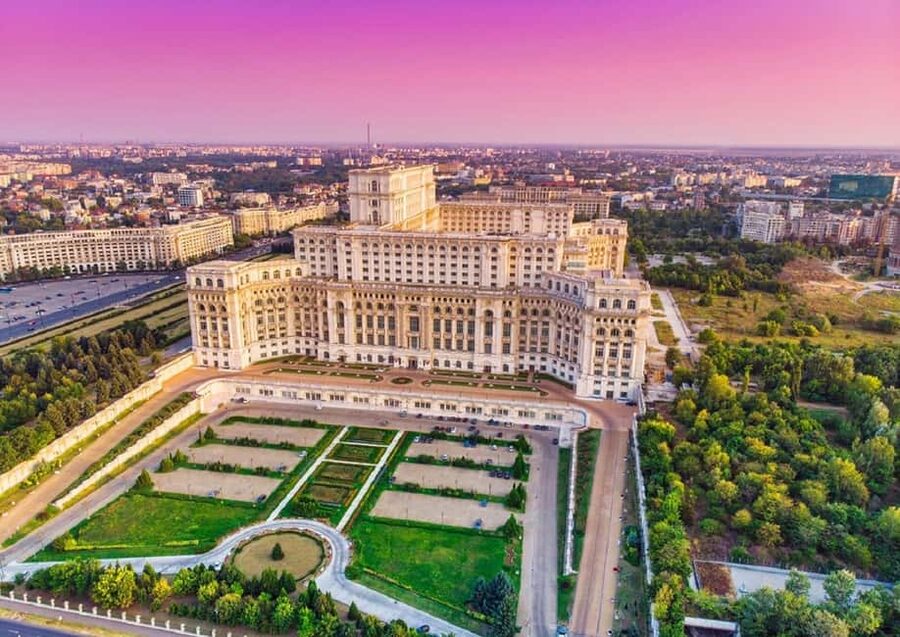
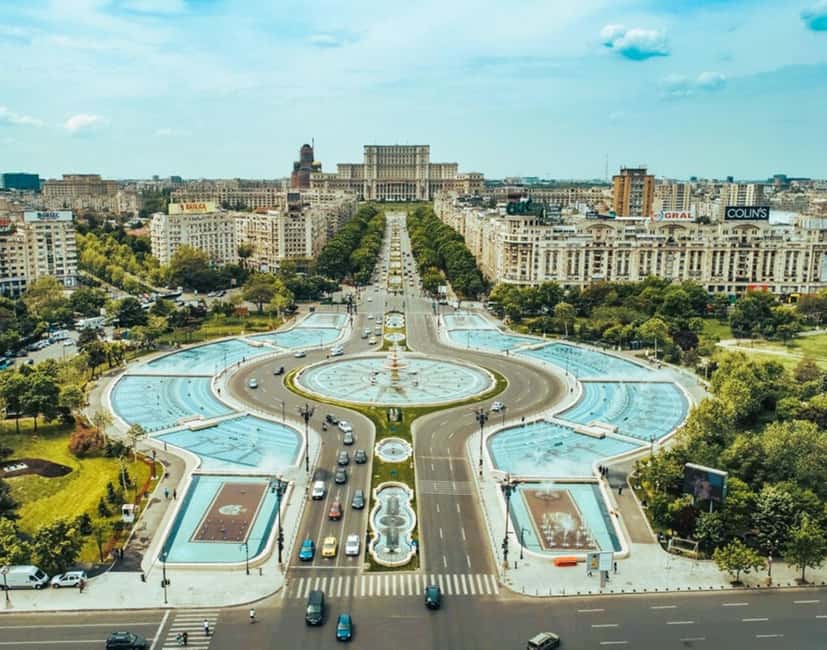
The final major stop is the Palace of Parliament, the building most closely tied to Ceaușescu’s grand plans for Bucharest. It is described as the world’s second-largest administrative building after the Pentagon, and its scale is hard to grasp from a photograph.
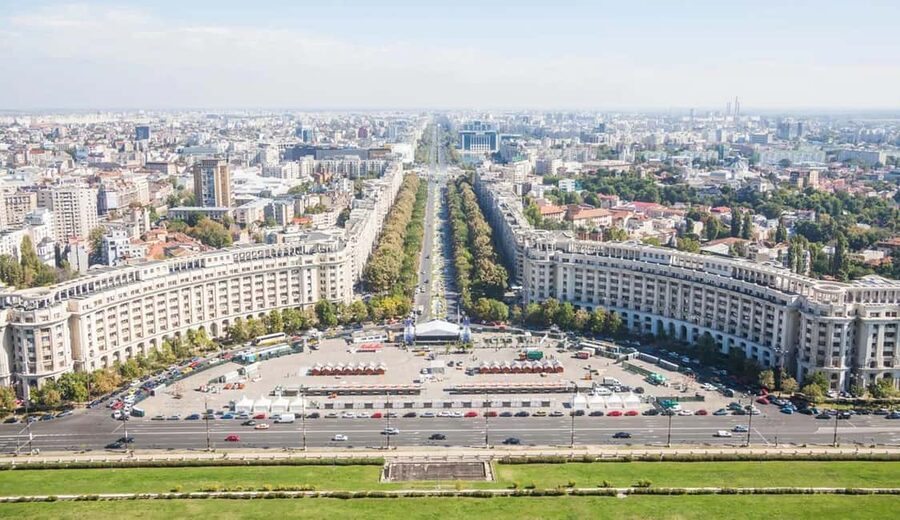
Inside, the tour takes you through grand halls, marble staircases, and heavily decorated rooms. The building was constructed during the communist period, when vast parts of central Bucharest were cleared to make room for the regime’s vision. The result is both impressive and unsettling: polished stone and enormous rooms on one hand, massive state control and human cost on the other.
The guide helps keep the visit from becoming a simple parade of large rooms. Ask questions if you want more political context, since the building works best when you understand what it represented. It was not just an office complex. It was a physical expression of power.
The tour advertises a separate entrance for skip-the-line access. However, entrance tickets are not part of the base price. The operator can help arrange tickets after booking, which may help you avoid queues, but you should confirm how that purchase works and what it costs before you rely on it.
The Palace also requires a valid passport or national identity card. Carry the original document, not only a photograph on your phone. Without the required ID, admission can be refused.
One limitation is that the building may feel formal and controlled compared with the Village Museum. You will not be wandering at your own pace through every corridor. That is normal for a major government site, and the organized visit is part of the practical value.
A few more museum visits around the world worth comparing
- Vatican: Museums & Sistine Chapel Entrance Ticket
★ 4.5 · 144,003 reviews - Vatican Museums, Sistine Chapel & St. Peter’s Basilica Tour
★ 4.3 · 73,970 reviews - Paris: Louvre Museum Timed-Entrance Ticket
★ 4.6 · 71,977 reviews - Amsterdam: Van Gogh Museum Ticket
★ 4.7 · 52,054 reviews
Why the coach transfers help
Bucharest’s attractions are not arranged in a neat sightseeing line. The coach links the three stops with transfers of roughly 20 minutes each, then returns you to Bulevardul Regina Elisabeta.
That transport saves time and reduces the chance of getting turned around between northern and central Bucharest. It is also useful in poor weather, when several taxi or public transport journeys would make the day less pleasant.
The tradeoff is flexibility. A coach tour follows a set schedule, so you cannot linger indefinitely at the Village Museum or decide to skip the mansion and spend longer at the Palace. If you prefer to build your own day, separate visits may suit you better.
The vehicle is described as modern and air-conditioned. Hotel pickup and drop-off are not included, so you must reach the central meeting point yourself and return there at the end.
What the six-hour schedule feels like
The listed route includes four coach segments of about 20 minutes each, along with the three visits. That leaves a substantial part of the day for sightseeing, but it does not mean six hours inside museums and buildings.
You should plan for transitions, guide instructions, admission checks, and short breaks. The experience is best viewed as a structured overview. It gives you enough time to understand the role of each site without promising the depth of a full-day specialist tour.
The guide travels with you and leads the visits. Live guiding is available in English, Spanish, Italian, and Bulgarian. Private and small-group options are also offered, which may be worthwhile if you want to ask more questions or keep the pace more personal.
Food and drinks are not included. Bring water and arrange your own meal around the schedule, but do not expect a food stop to be part of the advertised program. Alcoholic drinks are not allowed in the vehicle, and alcohol and drugs are prohibited during the activity.
The real cost and overall value
At $1.27 per person, the advertised tour price looks almost too low to be the full cost. It is not. Entrance tickets to the Village Museum, Ceaușescu Mansion, and Palace of Parliament are expressly excluded.
That changes how you should judge the value. You are paying the base amount for transportation, the guide, meeting-point pickup and drop-off, and the organized route. You then need to add three admission charges, unless the operator provides a different combined arrangement after booking.
The tour can still be good value if you want all three sites in one day. You avoid planning separate transport, locating each entrance, and working out how the attractions fit together. The guide also gives the buildings a common story, which is harder to achieve on your own.
I would compare the final combined price with the cost of visiting independently before paying. Ask specifically about attraction tickets, skip-the-line arrangements, and the total per person. Do not assume that the low displayed figure includes admissions.
The flexible booking terms add some comfort. You can cancel up to 24 hours in advance for a full refund, and the reserve-now, pay-later option lets you hold a place without paying immediately. Check the final conditions at booking, especially if the Monday replacement could affect your plans.
Who will enjoy this tour most
I would recommend it to you if this is your first Bucharest visit and you want a clear introduction to Romanian culture and communist-era history. It works well for anyone who prefers a guide to explain the political meaning behind the rooms rather than simply walking through them.
It is also a practical fit if you have only one free day for major sights. The Village Museum gives you traditional culture, the mansion shows the private world of the dictatorship, and the Palace presents the regime’s public scale.
Families can join, provided each child has the required passport or national identity card. The activity is not considered suitable for people over 95, according to the supplied conditions.
I would hesitate if you dislike fixed schedules, want long periods for photography, or care mainly about one attraction. In that case, a separate visit may give you more control. I would also avoid Monday unless you are comfortable with the mansion stop being changed.
Should you book it?
Book this tour if you want breadth, transport, and explanation in one Bucharest outing. The route connects three places that are difficult to understand in isolation, and the coach makes the citywide schedule manageable.
Before booking, confirm the exact meeting point, calculate the extra admission costs, and put your passport or national identity card in your day bag. If those details work for you, this is a strong first-day overview, especially when Gabriel or another well-reviewed guide is leading the group.
FAQ
How long does the tour last?
The tour lasts six hours, including transportation between the three attractions and the return to Bulevardul Regina Elisabeta.
Where does the tour start and finish?
The stated meeting point is on Bulevardul Regina Elisabeta in Bucharest. The supplied information gives both number 3 and number 7, so confirm the exact location before departure. The tour returns to Bulevardul Regina Elisabeta.
Are entrance tickets included?
No. Tickets for the Village Museum, Ceaușescu Mansion, and Palace of Parliament are not included in the tour price.
What identification do I need?
You need a valid passport or national identity card to enter the Palace of Parliament and Ceaușescu Mansion. Children also need a passport or identity card.
Is Ceaușescu Mansion open every day?
No. Ceaușescu Mansion is closed on Mondays. The visit may be replaced or adjusted on that day, depending on availability.
What languages are available with a live guide?
Live guides are available in English, Spanish, Italian, and Bulgarian.
Are audio guides available?
Optional audio guides are listed in German, French, Chinese, Hebrew, Greek, Turkish, Polish, Portuguese, Russian, Croatian, Danish, Dutch, Norwegian, Swedish, Finnish, Serbian, Lithuanian, Latvian, Lettish, and Estonian.
Is transportation provided between the attractions?
Yes. Round-trip transportation is provided in a modern, air-conditioned vehicle. Each listed transfer takes about 20 minutes.
Is hotel pickup included?
No. Pickup and drop-off are provided at Bulevardul Regina Elisabeta, not at your hotel.
Can I cancel the booking?
You can cancel up to 24 hours in advance for a full refund. The reserve-now, pay-later option is also available, according to the stated booking conditions.
Just added around the world
- Girona, Figueres, Dalí Museum and Cadaqués Tour from Barcelona★ 4.5 · 36 reviews
- Football Club Barcelona Museum Immersive Tour Guided Visit★ 3.5 · 52 reviews
- Erotic Museum Admission Ticket with Audioguide★ 5.0 · 527 reviews
- Dali Museum and Costa Brava Small Group Day Trip from Barcelona★ 5.0 · 77 reviews
- Madrid by High-Speed Train with Prado Museum Private Tour★ 4.0 · 33 reviews
- Guitar Legends Hall: Entrance to the Immersive Rock Museum★ 5.0 · 25 reviews
- White Rabbit Museum: The Best Immersive Experience in Catalonia★ 5.0 · 538 reviews
- Private Dali Museum, Besalú & Girona Tour from Barcelona★ 5.0 · 15 reviews
Palace Museum Tours, compared.
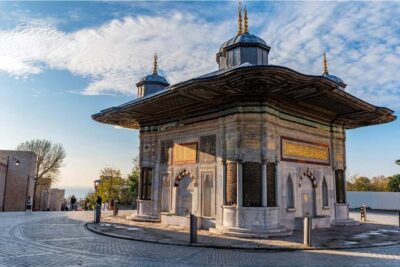
Topkapi Palace & Harem Museum Ticket & Audio Guide
Read our review →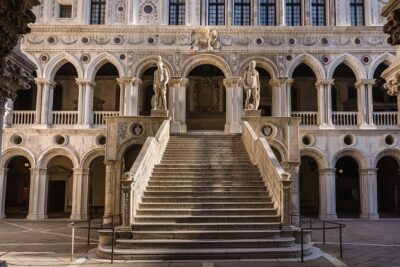
Venice’s Best: Basilica, Doge’s Palace, Gondola & History Gallery
Read our review →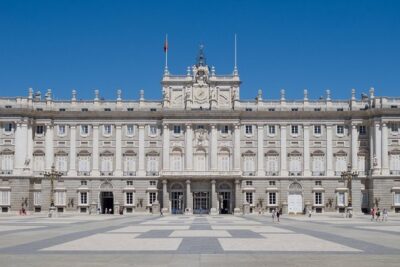
Royal Palace & Prado Museum Skip the Line Guided Tour
Read our review →
City Pass with Museums including Doge’s Palace
Read our review →
Crete: Knossos Palace and Museum E-Tickets with Audio Guides
Read our review →
Venice Museum Pass & Doge’s Palace Entrance Ticket
Read our review →
Palace, Museum, Madrasa & Medina Highlights Tour
Read our review →Browse the lists this tour appears in