
Review · ROME
Rome: Borghese Gallery and Museum Entry Tickets
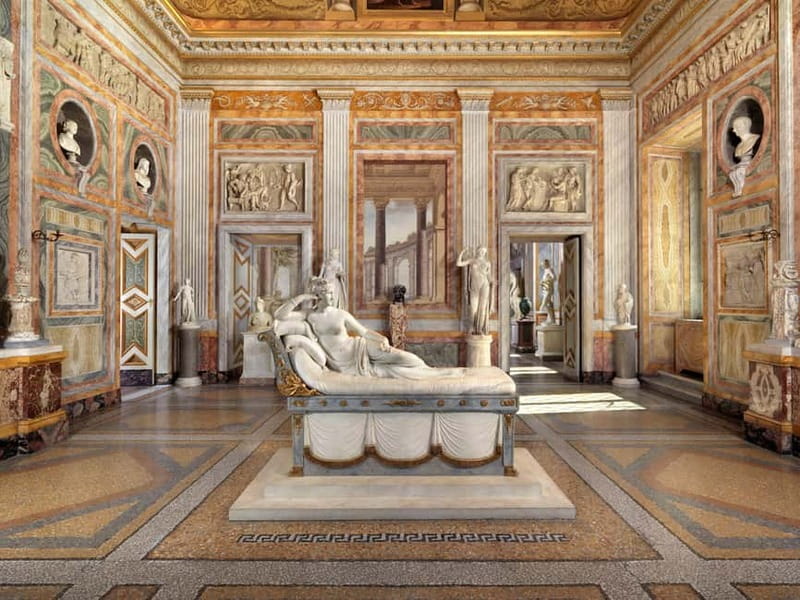
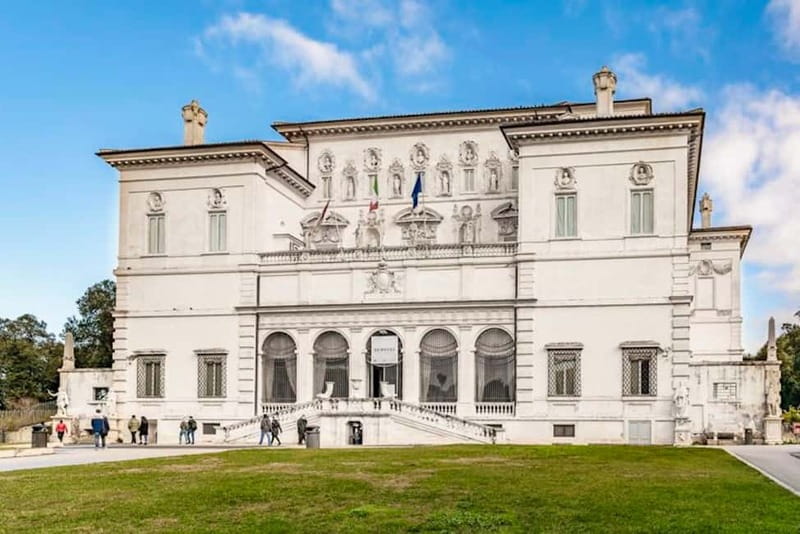
The Borghese Gallery packs an astonishing amount of art into a small former cardinal’s villa. In a few rooms, you can stand close to Bernini’s marble figures, look directly at Caravaggio paintings, and study ceiling frescoes without walking for miles through a giant museum.
I like the timed entry, which matters because the gallery limits capacity. I also like the focused two-hour visit: you can see major works without giving up half a day. The main caution is price. At $77 per person, this ticket may be useful when regular admission is sold out, but it is expensive for entry alone, with no guide or audio guide included.
Key points to know before booking
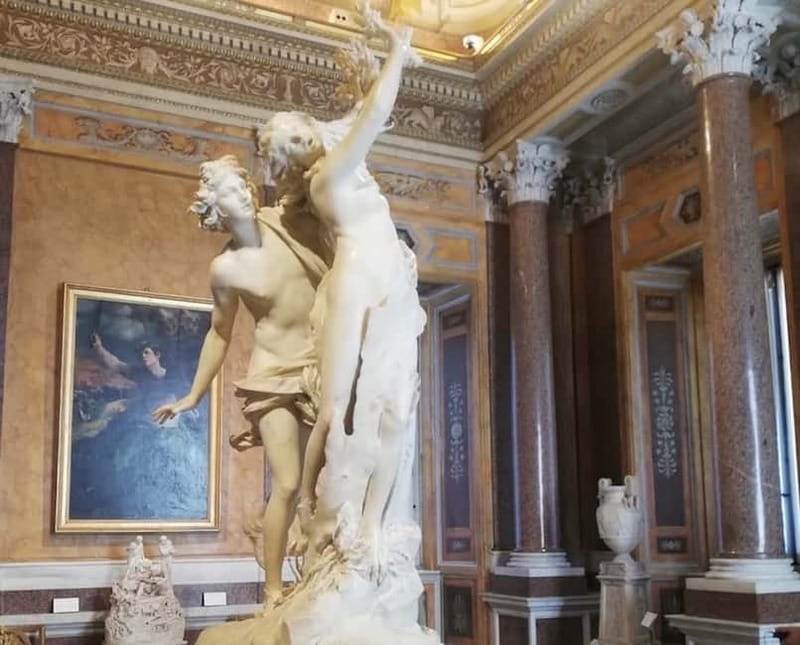
- Bernini is the main event: Expect several sculptures by Gian Lorenzo Bernini, with marble carved to suggest movement, expression, and soft fabric.
- Caravaggio is close at hand: The gallery lets you study his dramatic paintings from a short distance.
- Two hours is a sensible visit: The collection is concentrated, so you can see a lot without museum fatigue.
- This is not a guided tour: The ticket includes entry only. You can rent a multilingual audio guide inside.
- Meet outside with a red flag: Look for the host holding the red Saints Tour logo flag in front of the museum.
- Book only if the price works for you: It may help when official tickets are gone, but several visitors paid far above the museum’s stated admission price.
Why the Borghese Gallery feels different from Rome’s larger museums
The Borghese Gallery is not a vast series of anonymous halls. It is a former villa designed for display, and that gives the visit a more personal scale. The rooms are full, but the collection is tightly focused. You move from sculpture to painting to antiquities with little wasted time.
That compact layout is a real advantage. If you have only a few days in Rome, you can give the gallery two hours and still have time for the park, Piazza del Popolo, the Spanish Steps, or another part of the city. I find this easier to manage than a huge museum where the final rooms blur together.
The villa setting also changes how the art feels. You are not simply looking at isolated works under modern gallery lighting. You are seeing major pieces inside an elegant building originally connected with a powerful cardinal and collector. The rooms, ceilings, sculpture, and paintings were meant to work together.
This is especially useful for anyone curious about the Baroque period. Bernini’s sculptures are not quiet objects placed against blank walls. Their poses, gestures, and expressions create drama from every angle. The gallery gives you enough space to look closely and then move around the work.
More Museum Tours in Rome
- Vatican Museums, Sistine Chapel & St. Peter’s Basilica Tour
★ 4.3 · 73,970 reviews - Vatican Museums, Sistine Chapel & St Peter’s Basilica Guided Tour
★ 4.5 · 39,149 reviews - Rome: Vatican Museums, Sistine Chapel and Basilica Tour
★ 4.3 · 16,039 reviews
The first rooms: marble that seems to move
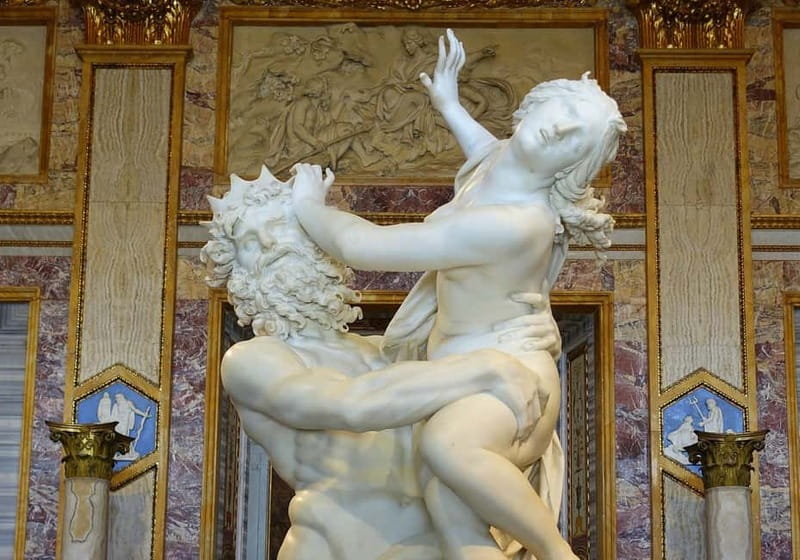
The strongest reason to visit is the collection of sculpture, particularly the work of Gian Lorenzo Bernini. His figures are famous for making hard marble appear flexible, emotional, and alive.
As you walk through the rooms, look for details rather than rushing from famous title to famous title. Watch the way a hand grips fabric. Notice hair carved into curls, skin that seems soft, and bodies caught in motion. These details are where Bernini’s skill becomes clear.
You might find the sculptures more impressive in person than in photographs because photographs flatten them. A camera usually gives you one angle. In the gallery, you can see how the composition changes as you move. A face that appears calm from one side may look tense from another.
The collection also includes sculptures by Antonio Canova, another major name in Italian art. His marble has a different character from Bernini’s Baroque energy. Canova is associated with a smoother, more controlled style, so seeing his work alongside Bernini helps you compare two very different approaches to the human figure.
I would give sculpture the largest share of your attention. Paintings are important here, but the gallery’s sculpture rooms are what make the visit distinctive.
Caravaggio, Raphael, Titian, and the painting rooms
The Borghese Gallery’s paintings reward close looking. You can stand just feet away from works by Caravaggio, whose sharp contrasts of light and dark give his scenes a theatrical force.
Caravaggio does not make you work through distant, decorative compositions. His figures feel close. Light picks out a face, a hand, or a gesture, while darker areas push other details back. If you like paintings with tension and strong storytelling, these rooms may be the most memorable part of the visit.
The collection also includes works associated with Raphael, Titian, and Rubens. That range gives you a useful lesson in changing styles. Renaissance balance, Venetian color, Baroque drama, and later artistic ideas all appear within a relatively small museum.
Do not treat the paintings as a quick break between sculptures. Take time to compare how each artist handles skin, fabric, light, and emotion. Caravaggio may grab your attention first, but Raphael and Titian help show why the collection is more than a one-artist stop.
The short duration works well here. Two hours gives you enough time to pause at major paintings while still seeing the building and sculpture collection. You will need to make choices, though. A visitor who reads every label slowly may not see every room at the same pace.
Look up: the ceilings are part of the collection
The frescoes deserve more attention than they often get. Many people enter a museum and look straight ahead, but at the Borghese Gallery the ceilings add another layer to the rooms.
Painted decoration helps explain the original setting. This was not a plain storage space for art. The building was designed to impress, and the ceiling work contributes to that effect. Stand back when you can and study the arrangement of figures, color, and architectural details above you.
The frescoes can also give your eyes a welcome change after close examination of marble and oil paint. Look up before leaving each room. It takes only a few seconds, and you may notice details that are easy to miss while focused on the famous works at eye level.
A few more museum visits around Rome worth comparing
- Rome: Borghese Gallery Skip-the-Line Ticket & Audioguide
★ 4.3 · 4,318 reviews - Rome: Borghese Gallery Ticket + Audioguide or Guided Tour
★ 4.6 · 3,219 reviews - Rome: Borghese Gallery Guided Tour with Skip-the-Line Entry
★ 4.8 · 2,649 reviews - Rome: Borghese Gallery Skip-the-Line Tickets with Audioguide
★ 4.6 · 2,562 reviews
Antiquities and the broader Borghese collection
The museum is not limited to Renaissance and Baroque masterpieces. Antiquities are part of the Borghese Collection too, adding a much longer historical reach to the visit.
This matters because the collection reflects the taste of a major collector rather than a single narrow art movement. Ancient sculpture and later Italian works sit within the same overall experience. You can see how artists and collectors looked back to classical forms while developing new styles.
The antiquities also provide visual context for Canova and Bernini. When you compare ancient ideals of the body with later interpretations, you get more from the sculptures than simply admiring their technical skill.
The available information does not identify every object or give a room-by-room route, so I would not arrive expecting a fixed sightseeing script. Instead, use your timed visit to follow the gallery’s sequence and spend your best attention on the works that interest you most.
What the two-hour schedule means for you
The stated duration is two hours, and that is a good target for this museum. The collection is concentrated enough that you can see the major areas without hurrying from one end of a massive complex to another.
I would plan to arrive ready to enter at your assigned time. Timed admission helps control crowds, but it also means you should not treat the ticket like an open-ended pass. Give yourself room to find the meeting point and locate the host before your time slot.
Once inside, begin by getting a sense of the rooms. Then return to the works you want to study. I prefer this approach to stopping for long periods at the first famous sculpture and discovering later that I have little time left.
Two hours suits:
- First-time Rome visitors with a packed schedule
- Art lovers who want major names in a compact setting
- Families or mixed groups that prefer a manageable museum visit
- Anyone who has already seen Rome’s largest museums and wants something more focused
You may want more time if you read every label or plan to sketch. For most people, however, the length is one of the ticket’s practical strengths.
Meeting the host and getting inside
The meeting point is in front of the Borghese Gallery and Museum. Look for a greeter holding a red flag with the Saints Tour logo. The host languages are English, Italian, Spanish, French, and German.
This is worth taking seriously because one reported problem involved having to make two phone calls after arriving to obtain the entrance ticket. Another visitor found no one waiting to greet or guide them in. I would save the activity contact details, arrive early, and keep an eye out for the red flag rather than assuming the entrance process will explain itself.
The service is best understood as ticket assistance, not a museum tour. The included item is entry to the gallery. There is no included guided commentary, and the audio guide is separate. If you want background on Bernini, Caravaggio, or the frescoes, you need to bring your own guidebook or rent the multilingual audio guide inside.
That distinction should be clear before you pay. The title and presentation can sound more hands-on than the actual service. You are buying access and help with entry, not a personal art historian.
Is $77 good value?
The listed price is $77 per person. That is a high price for a museum ticket, especially because food, drinks, hotel transport, a guided tour, and the audio guide are not included.
The value depends on what you are paying to avoid. Borghese Gallery admission is timed and capacity is limited. If the museum’s regular tickets are sold out during your Rome dates, a premium ticket may be the only practical way to secure a visit. One visitor specifically considered the price worthwhile because regular tickets were unavailable.
But you should compare carefully before booking. Two complaints described paying far more than the stated museum admission, with one citing a price of €45 for a ticket connected to a lower official admission cost. The exact official price can change, and ticket conditions vary, but the basic point is sound: check the official Borghese booking page first.
If an official time slot is available, it is likely the better value. If everything is sold out and this ticket gives you a confirmed entry time, the extra cost may be acceptable for a once-in-a-lifetime Rome visit. I would not buy it expecting a guided experience. Buy it for access.
The free cancellation window helps reduce risk. You can cancel up to 24 hours before the visit for a full refund, and the reserve-now, pay-later option keeps your plans flexible. Still, read the final booking terms and confirm the date and time before relying on those features.
Practical advice for a smoother visit
Wear comfortable shoes. You will be standing and walking through the gallery, and the surrounding Villa Borghese park gives you a pleasant place to continue afterward.
Do not bring luggage or large bags. They are not allowed, and a large suitcase would be a poor match for a timed museum visit anyway. Carry only what you need.
I would also prepare for the visit before entering. Read a short introduction to Bernini and Caravaggio, or make a list of the works you most want to see. Since there is no included guide, a little preparation helps you turn a ticket into a more meaningful art experience.
If you want spoken commentary, rent the multilingual audio guide inside. If you prefer to move at your own pace, use the labels and focus on the details that interest you. Neither approach is automatically better. The museum’s compact size makes an independent visit quite workable.
The gallery is wheelchair accessible, which is useful for visitors who need an accessible cultural stop. The available information does not provide detailed route or restroom information, so contact the provider ahead of time if you need a particular access arrangement.
Who should book this Borghese Gallery ticket?
I would recommend it most strongly to someone who has limited time in Rome and wants a concentrated dose of top-level art. It is also a good match for a person who particularly likes sculpture, Baroque painting, or Caravaggio.
Families can benefit from the two-hour format. It is long enough to feel worthwhile but short enough to avoid turning the museum into an endurance test. Art students and serious museum fans may prefer to arrange a lower-priced official ticket and spend more time with the collection.
I would hesitate if you expect a guide to lead you through the rooms. You may also want to pass if the official site still has tickets available at a much lower price. The service received an overall rating of 4.1 from 298 ratings, but that average hides a clear issue: the gallery itself is widely valued, while the ticket service and price can cause frustration.
Should you book it?
Book this experience if your preferred Borghese time is sold out through regular channels and you are willing to pay a premium for confirmed entry. The museum is one of Rome’s strongest art stops, and the combination of Bernini, Caravaggio, Canova, Raphael, Titian, Rubens, frescoes, and antiquities makes two hours well spent.
Do not book it under the impression that a guide is included. Confirm the price, check the official museum option first, and arrive early to find the host with the red Saints Tour flag. If those conditions work for you, this ticket can solve a difficult Rome planning problem. If not, wait for a standard admission slot and keep the savings for another museum or a good Roman lunch.
FAQ
Where is the Borghese Gallery located?
The Borghese Gallery is in the Lazio region of Italy, inside the Villa Borghese park in Rome.
How long does the visit last?
The stated duration is two hours.
What does the ticket include?
It includes entry to the Borghese Gallery and Museum.
Is a guided tour included?
No. The ticket does not include a guided tour. A multilingual audio guide can be rented inside the gallery.
Where do I meet the host?
Meet the greeter in front of the Borghese Gallery and Museum. Look for a red flag with the Saints Tour logo.
Which languages are available from the host or greeter?
Host assistance is available in English, Italian, Spanish, French, and German.
Can I bring luggage or a large bag?
No. Luggage and large bags are not allowed.
Is the Borghese Gallery wheelchair accessible?
Yes, the activity information states that the gallery is wheelchair accessible.
Can I cancel the booking?
Yes. You can cancel up to 24 hours in advance for a full refund. The reserve-now, pay-later option is also available.
Just added around Rome
- Vatican City: Sistine Chapel, Museums, Basilica Private Tour★ 4.8 · 158 reviews
- Rome: Hop-on Hop-off Bus & Vatican Museums Ticket★ 3.5 · 41 reviews
- Rome: Vatican Museums, Sistine Chapel, and St. Peter’s Tour★ 4.5 · 49 reviews
- Skip-The-Ticket Line-Vatican Museum & Sistine Chapel★ 3.9 · 383 reviews
- Skip the line Vatican Museum Sistine & St.Peter Private Tour★ 4.7 · 40 reviews
- Skip-the-Line Vatican Museums and Sistine Chapel Guided Tour★ 4.3 · 130 reviews
- Skip-the-Line Tickets: Vatican Museum and Sistine Chapel★ 3.5 · 114 reviews
- MAXXI – Museum of Contemporary Art of 21st century★ 4.0 · 91 reviews
Museum Tours in Rome, compared.
Vatican Museums, Sistine Chapel & St. Peter’s Basilica Tour
Read our review →
Vatican Museums, Sistine Chapel & St Peter’s Basilica Guided Tour
Read our review →
Vatican Museums, Sistine Chapel and Basilica Tour
Read our review →
Vatican Museums & Sistine Chapel Skip-the-Line Entry Ticket
Read our review →
Vatican Museums, Sistine Chapel & Basilica Tour
Read our review →
Vatican Museums & Sistine Chapel Guided Tour
Read our review →
Vatican Museums & Sistine Chapel Skip-the-Ticket-Line Tour
Read our review →
Vatican Museums, Sistine Chapel and St. Peter’s Basilica Tour
Read our review →Browse the lists this tour appears in