
Review · DUBAI
Museum of the Future Tickets
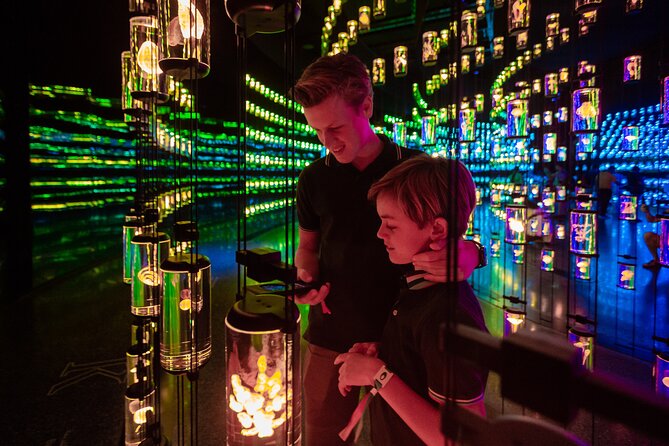
Dubai’s Museum of the Future turns a museum visit into a trip to the year 2071. You move through interactive rooms about space, robotics, genetics, transport, and the planet, with exhibits designed to involve your sight, sound, touch, and imagination. The futuristic building is part of the attraction, not just a shell around it.
I like the timed-entry system, which lets you choose a visit that fits your day, and I like the museum’s big question: what kind of future are we willing to create? The mix of science, technology, and human responsibility gives families and science-fiction fans plenty to talk about. The main drawback is value. At $44.37 per person, some displays may feel too simple, too brief, or less convincing than you expected.
Key points to know before you go

- Allow at least 1.5 to 2 hours: A quick visit can take about 90 minutes, but extra time helps you absorb the exhibits and enjoy the building.
- Choose a timed entry: Booking ahead helps secure your preferred day and entry period.
- Expect an experience, not a traditional museum: You will find interactive rooms, sensory effects, future scenarios, and storytelling rather than long rows of historic objects.
- Use public transportation if practical: The museum is near public transportation, and arriving by train can be easier than taking a taxi.
- Download the MOTF Navigator app: The app can help you get more from the visit.
- Check your voucher before arrival: Some ticket holders have had trouble when a QR code or confirmation code was missing.
A building that begins the experience
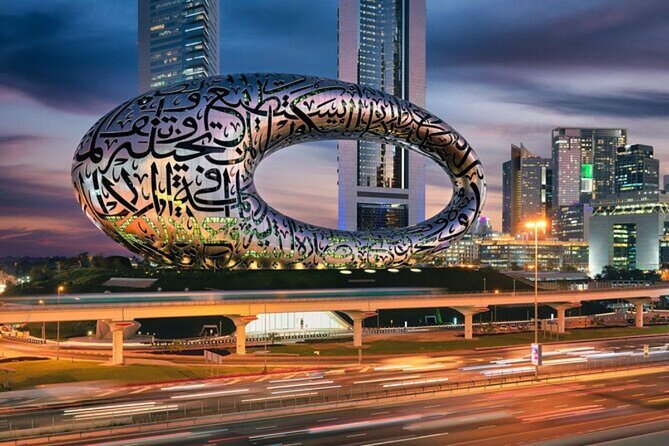
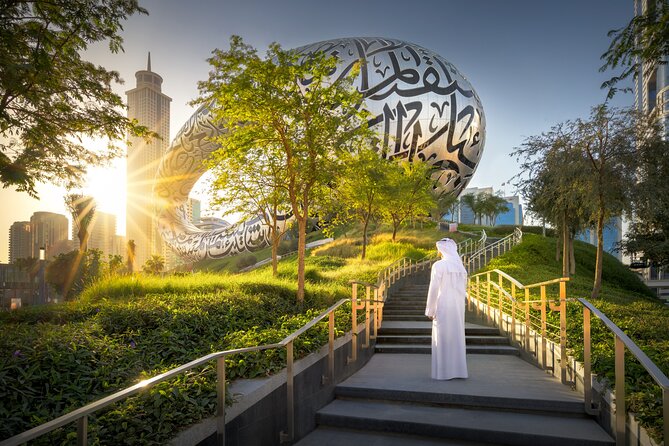
The Museum of the Future rises 77 metres above the ground and has an instantly recognizable exterior. Even before you enter, the structure makes its point: Dubai is presenting the future as something bold, polished, and physically impossible to ignore.
I would plan to arrive with a few minutes to spare, not only to handle entry but also to look at the building from outside. If you can arrange your visit before sunset, you may get a pleasant bonus: city views from the balcony as the light changes. At night, the building can be especially striking when it is lit.
The architecture may be the most dependable part of the experience. You do not need a strong interest in science fiction to appreciate the exterior, and it gives the visit a clear sense of place. This is not an anonymous exhibition hall that could be anywhere. It is closely tied to Dubai’s ambition and its rapid push toward new technology.
More Museum Tours in Dubai
- Dubai: Museum of the Future Admission Ticket
★ 4.3 · 21,464 reviews - Dubai: Old Town, Creek, Museums, Souks, & Street Food Tour
★ 4.8 · 10,816 reviews - From Dubai: Abu Dhabi Grand Mosque & Louvre Museum Full-Day
★ 4.8 · 6,227 reviews
What the 2071 journey feels like
Inside, the museum asks you to imagine life roughly 50 years from now. The visit is built around several future environments, and you become part of the story rather than simply reading labels beside objects.
The museum combines science, technology, and spirituality. That combination can be appealing because it treats the future as more than a collection of machines. It asks questions about human choices, the environment, health, and responsibility. At its best, the experience gets you thinking about the present rather than only admiring gadgets.
The five-senses approach also makes the visit accessible to different ages. Children can respond to the sound, movement, images, and hands-on features, while adults may pay closer attention to the larger questions. Still, the level is uneven. One room may feel aimed at elementary-school children, while another assumes a more advanced interest in science. That variety can keep a family group engaged, but it can also make the whole visit feel less focused.
Space, transport, and the future of daily life
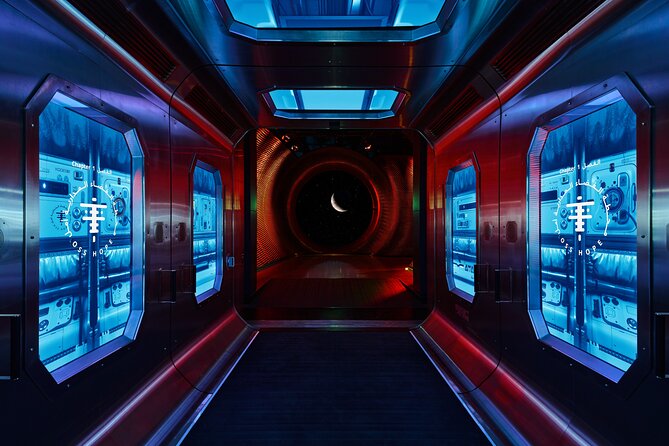
One of the strongest themes is humanity’s relationship with space. You may encounter a storyline involving travel beyond Earth and imagined orbital life. The subject gives the museum a natural sense of scale: you begin with the future of people and technology, then consider what life might look like away from our planet.
The space material is imaginative, though it may not satisfy visitors hoping for detailed scientific explanation. The museum is presenting possible futures, not offering a university lecture or a working aerospace demonstration. I would approach it as a visual and conceptual experience.
Transport is another familiar subject. The exhibits ask you to picture how people might move around in the future and how technology could change ordinary routines. This section works well for children because the idea is easy to grasp. Adults may find the ideas more interesting if they consider the practical questions behind them: Who controls these systems? Who gets access? What happens when convenience and environmental responsibility conflict?
The museum does not always answer those questions in depth. It is better at opening a conversation than settling one. If you want firm predictions, technical data, or a detailed timeline of inventions, the $44.37 ticket may feel expensive. If you enjoy looking at possible futures and discussing them afterward, the same price may feel more reasonable.
Robotics, genetics, and human health
Robotics and DNA genetics are among the themes that give the visit its science-fiction flavor. These subjects are presented as part of a larger look at human progress and future health.
The robotics material should appeal to anyone who enjoys machines and automation, while the genetics displays raise more serious questions about how far humans should go in altering life. The museum’s best moments come when an attractive display leads to an uncomfortable thought. What should we change? What should we leave alone? Who carries responsibility when technology creates new risks?
You will not get the same depth in every section. Some exhibits may feel highly polished and visually impressive, while others can seem more like a short introduction to a large subject. I would not book this as a specialist science visit. It works better as a broad, family-friendly introduction to future ideas.
A few more museum visits around Dubai worth comparing
- Dubai: OliOli® Children Museum Admission Tickets
★ 4.6 · 130 reviews - Dubai: Arte Immersive Museum Entry Ticket
★ 4.7 · 115 reviews - Dubai: Museum of Candy Entry Ticket
★ 4.6 · 83 reviews - Dubai: Al Shindagha Museum Entry Ticket
★ 4.5 · 36 reviews
The environmental message gives the visit weight

The museum’s future is not presented only as a place of flying vehicles and clever robots. Environmental care and human accountability also form part of the message. The visit encourages you to think about the cost of careless behavior and the choices that shape the world ahead.
That gives the experience more substance than a simple technology showcase. You may leave considering not only what humans can build, but also what humans need to repair or protect. The environmental ideas can feel more familiar than the science-fiction displays, yet they help connect the imaginary future to your own life.
This section may appeal most to adults who want a clear purpose behind the spectacle. It also gives parents something useful to discuss with children after the visit. The museum is not asking you to admire the future passively. It is asking you to imagine a future worth having.
How long you should plan to stay

The stated duration is about 1.5 to 2 hours. That is a fair minimum for moving through the main experience, especially if you keep a steady pace.
I would not schedule a tight appointment immediately afterward. Some people may finish in about 90 minutes, particularly if they move quickly or find certain displays less engaging. Others may want substantially longer to pause, watch, interact, take photographs, and think about the ideas being presented.
A half-day plan is safest if you want a relaxed visit. That does not mean the exhibits require four hours. It means you should allow time for entry, possible waiting, the museum itself, the café, the gift shop, and the surrounding building.
Arriving early in the day can help if you prefer a quieter visit. The experience uses timed admission, but that does not always eliminate queues. One reported visit included a 30-minute wait. A timed ticket protects your planned entry better than arriving without one, but you should still leave a little breathing room.
Getting there and handling your ticket
The museum is on Sheikh Zayed Road in the Trade Centre area of Dubai and is near public transportation. A train can be a practical choice instead of a taxi, particularly if traffic is heavy or you are visiting at a busy time.
Your confirmation is issued at booking, and you should check the voucher before leaving for the museum. A QR code or confirmation code may be needed at reception. Some ticket holders have had difficulty downloading a voucher on a phone or found that the booking was not immediately visible at the ticket desk. Staff may be able to sort out the problem, but resolving it can cost you valuable time.
I would save the ticket in more than one way. Keep the confirmation available on your phone, and if possible take a screenshot before arriving. This is simple preparation for any timed attraction, and it matters more here because entry is tied to a specific booking.
The attraction is designed so that most people can participate. The available information says it is near public transportation and suitable for most visitors. It does not provide a detailed accessibility breakdown, so you should contact the provider directly if you need specific arrangements.
Is the $44.37 ticket good value?
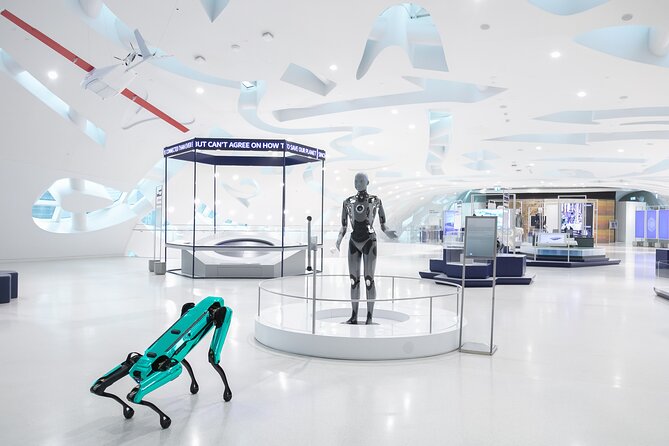
At $44.37 per person, this is not a casual pop-in attraction. The price makes sense if you are excited by futuristic design, interactive technology, or Dubai’s vision of the coming decades. It is less convincing if you expect a conventional museum filled with extensive collections and detailed factual displays.
I see three things included in the value:
- The building itself is a major part of the visit.
- You get a guided-feeling sequence of themed environments without needing to join a separate tour.
- The experience gives families and groups a shared subject to discuss afterward.
The price is harder to justify for someone who wants technical depth or a dramatic series of surprises. Several sections may feel introductory, and the overall content can seem brief compared with the cost. The museum is carefully produced, but polished presentation does not guarantee that every idea will feel new.
For a family, the value improves if everyone enjoys different parts of the experience. Children may like the sensory elements, adults may focus on genetics and the environment, and science-fiction fans may enjoy the future settings. For a solo visitor with limited interest in technology, I would spend the money only if the building and Dubai’s future-focused identity are high on your list.
Who will enjoy this most?
I would recommend the museum to:
- Science-fiction fans who enjoy possible futures more than strict scientific detail
- Families looking for an indoor activity with visual and interactive features
- Visitors interested in Dubai’s plans and ambitions
- People who enjoy architecture as much as exhibitions
- Anyone who likes attractions that raise questions instead of providing simple answers
I would be more cautious if you prefer art museums, historic objects, or carefully documented scientific collections. The experience is broad and theatrical. It can feel inspiring in one room and underdeveloped in the next.
Your expectations matter. Think of the visit as a future-themed journey with educational elements, not as proof of exactly what the year 2071 will look like. That mindset will help you enjoy the imaginative side without demanding predictions the museum cannot provide.
Practical ways to improve your visit
Download the MOTF Navigator app before you arrive. It is intended to help you get more from the experience, and preparing it in advance is easier than trying to deal with a download while moving through entry.
Choose your time carefully. A visit before sunset may let you enjoy city views from the balcony, while an early-day slot may help you avoid heavier crowds. You should also leave enough time around the booking for a possible queue or ticket check.
Look beyond the most dramatic displays. The building and futuristic effects are easy to remember, but the environmental and ethical ideas give the visit its longer afterlife. I would take a moment in each themed area to ask what problem the exhibit is addressing and whether its proposed future helps everyone or only a few people.
If you are visiting with children, let them lead part of the experience. The material can shift quickly from simple, colorful concepts to harder questions about genetics, technology, and human responsibility. You do not need to explain every idea on the spot. A conversation afterward may be more useful.
Should you book the Museum of the Future?
Book it if you want a visually ambitious, family-friendly look at space, robotics, genetics, transport, and environmental responsibility, and if the building itself interests you. The timed entry, public transportation access, café, gift shop, and city views make it easy to fit into a Dubai sightseeing day.
Think twice if $44.37 feels high for about 90 minutes to two hours, or if you expect every exhibit to be technically deep and genuinely astonishing. The museum can be thoughtful and entertaining, but it is not equally strong in every section.
My practical advice is to reserve ahead, save your QR code, download the app, and allow closer to half a day if you dislike rushing. For most people, this is a one-time visit rather than a repeat attraction. It is worth booking when you want to understand Dubai’s future-facing outlook and enjoy an unusual building, but not if you are looking only for a traditional museum.
FAQ
Where is the Museum of the Future?
It is located on Sheikh Zayed Road in the Trade Centre area of Dubai, United Arab Emirates.
How long does the visit take?
The expected duration is about 1 hour 30 minutes to 2 hours. You may want to allow extra time for entry, the café, the gift shop, and the building’s views.
How much does admission cost?
The listed price is $44.37 per person.
Do I need to book a timed entry?
Yes. The ticket offers multiple timed-entry options, and booking in advance helps secure a visit on your preferred day.
What will I see inside?
You will see interactive, future-focused environments involving subjects such as space, robotics, DNA genetics, transport, relaxation, technology, and environmental responsibility.
Can I reach the museum by public transportation?
Yes. The museum is near public transportation, and arriving by train is suggested as an alternative to taking a taxi.
What happens if I need to cancel?
The experience is non-refundable and cannot be changed for any reason. If the museum cancels because of poor weather, you will be offered another date or a full refund.
Just added around Dubai
- From Dubai: Abu Dhabi City Tour With Louvre Museum★ 4.8 · 455 reviews
- Dubai: Discover Dubai Old Town, Souks, Museum & Street Food★ 4.9 · 25 reviews
- Dubai.Discover Old town,Markets,street food,Abra &Museums★ 4.9 · 181 reviews
- Dubai: Future Museum, Burj Al Arab, and Dubai Frame Tour★ 4.5 · 514 reviews
- Dubai: OliOli® Children Museum Admission Tickets★ 4.6 · 130 reviews
- Dubai: Museum of Candy Entry Ticket★ 4.6 · 83 reviews
- Dubai: Top Must-See Sights Tour with Burj Khalifa At The Top★ 4.9 · 91 reviews
- Dubai: Arte Immersive Museum Entry Ticket★ 4.7 · 115 reviews
Museum Tours in Dubai, compared.


Old Town, Creek, Museums, Souks, & Street Food Tour
Read our review →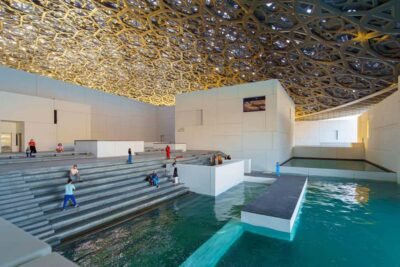
Abu Dhabi Grand Mosque & Louvre Museum Full-Day
Read our review →
Future Museum, Burj Al Arab, and Dubai Frame Tour
Read our review →


Dubai.Discover Old town,Markets,street food,Abra &Museums
Read our review →
Browse the lists this tour appears in