
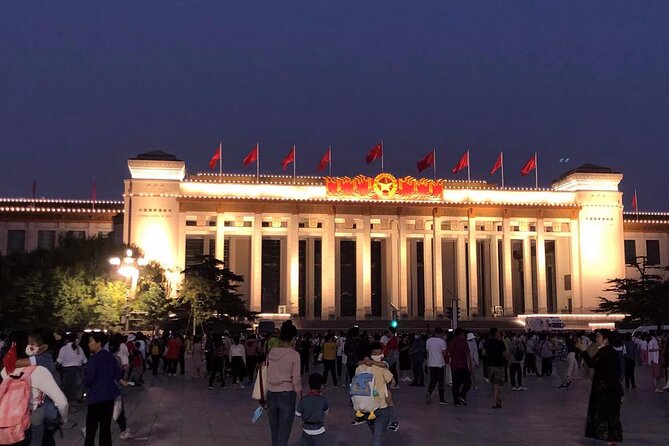
Review · PRIVATE DRIVERS
Beijing Half Day: National Museum of China In-depth Tour with Subway Transfer
The best reason to book this tour is simple: the National Museum of China is far too large to tackle casually. In four hours, your guide leads you through the main Ancient China galleries, then adds Buddhist sculpture and other displays, giving shape to thousands of years of Chinese history.
I like the hotel pickup and the guide’s help with museum entry, since tickets can be hard to secure online. I also like the personal format. Guides such as Mike, Cathy, William, Diana, Michael, and Herbie have been praised for clear English, good humor, and patient answers. The catch is time: four hours gives you a strong introduction, not a complete museum visit, and the building can be very crowded.
Key points to know before booking
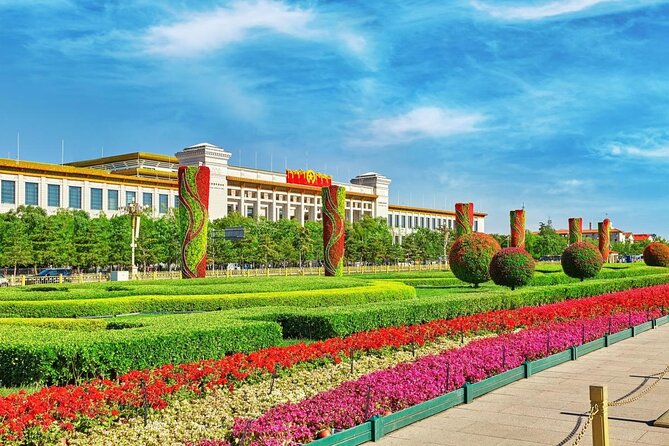
- See the major Ancient China galleries: Follow a route from prehistoric pottery and jade to bronzes, Sanxingdui finds, and objects from the period before the 1911 Revolution.
- Let a guide handle the context: Mike, Cathy, William, Diana, Michael, and Herbie have all led this experience, though your assigned guide may be different.
- Expect a private visit: Only your group takes part, so you can ask questions and adjust the pace within the available four hours.
- Hotel pickup is included: The guide meets you in your lobby at 8:30 a.m. or 1 p.m., then travels with you by subway or taxi.
- The museum is enormous: Your guide helps you avoid wandering past the most important pieces, but you will not see every gallery.
- Plan for ticket uncertainty: Museum entry is arranged for you, yet a preferred date may not always be available, especially for a larger group.
Why this museum deserves half a day
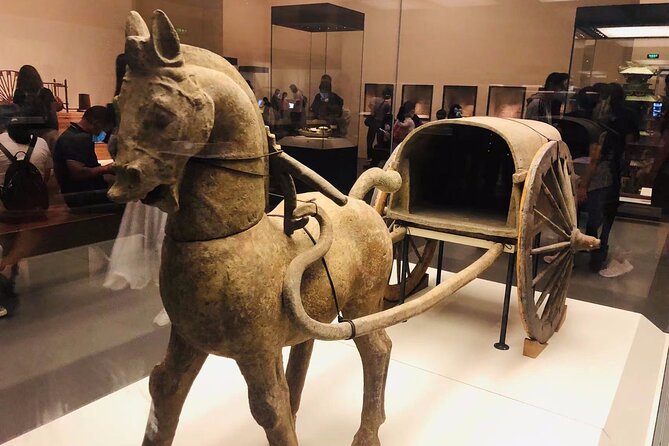
The National Museum of China sits beside Tiananmen Square and contains more than 1.4 million relics. Its holdings range from prehistoric objects to modern Chinese history, including nearly 6,000 pieces classed as first-grade cultural relics.
That scale is both the attraction and the problem. You could spend days here, moving between permanent collections and temporary exhibitions. Without a plan, you may spend too much time reading labels or walking through rooms that do not match your interests.
This tour gives you a clear thread: Chinese civilization from early prehistory through the dynastic period and onward toward the 1911 Revolution. I like that approach because the objects become easier to understand when you see how technology, belief, art, and government changed over time.
The tour is not a slow, room-by-room study of the entire museum. It is a guided selection of major objects, with time for questions and a look at additional displays if the schedule permits.
A few more museum visits around China worth comparing
- Cairo: Grand Egyptian Museum Ticket w/ Opt. Guide & Transfer
★ 3.9 · 217 reviews - Zurich: Lindt Home of Chocolate Museum Ticket & Transfer
★ 3.7 · 83 reviews - Cairo: Egyptian Museum 4-Hour Private Tour with Transfer
★ 4.4 · 81 reviews
Meeting your guide at the hotel
Your guide meets you in the hotel lobby at either 8:30 a.m. or 1 p.m. The morning departure is the better choice if you want the freshest start and a little more breathing room around the museum visit. The afternoon option works well if your Beijing schedule includes a morning attraction.
From the hotel, you travel by subway or taxi. The included transport is described as a single-way taxi transfer, while the tour details also mention subway travel, so confirm the exact arrangement with the operator if this matters to your budget or mobility plans.
This transfer is useful beyond getting from one place to another. Beijing can feel huge, and a guide who meets you at the hotel removes the first layer of guesswork. You do not have to find the museum entrance alone or work out the ticket process before the tour begins.
The experience is private, meaning only your group participates. That matters at a museum this large. You can ask why a bronze vessel mattered, stop for clarification, or spend a little longer with an object that catches your eye. The pace is still limited by the four-hour schedule, but it is more flexible than a large coach outing.
The Ancient China exhibition, from pottery to bronzes
The main portion of the tour lasts about two hours and focuses on the Ancient China exhibition. This is the heart of the experience.
You begin with objects linked to prehistoric China, including painted pottery jars whose designs still invite questions about their purpose and meaning. The route then moves through jade, bronze, and other relics connected to the development of Chinese civilization.
One early highlight is the Jade Dragon, often described as the first dragon in China. Its shape gives you a useful reminder that the dragon was not simply a later imperial symbol. Images and forms associated with dragons appeared very early in Chinese culture.
The tour also includes a 2,000-year-old refrigerator, an object that makes ancient technology feel surprisingly practical. It is the sort of display that can break up a long sequence of formal vessels and help you see ancient people as problem-solvers, not just makers of ceremonial art.
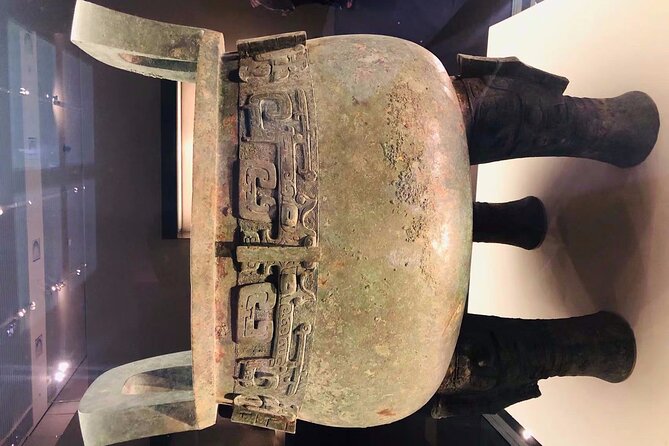
Your guide points out the Simuwu Ding, a huge bronze ritual vessel unearthed in Henan Province in 1939. You will also see the Siyang Fangzun, known for the horned sheep facing in four directions. These pieces are important not only for their age, but for their size, craftsmanship, and connection to ritual and political power.
The Sanxingdui material adds a different mood. The civilization associated with the Sanxingdui site is known for unusual forms and striking faces that do not look like the familiar figures many people expect from early Chinese art. Your guide can help place these objects in the wider story rather than leaving them as isolated curiosities.
The collection covers a huge span, from a prehistoric period reaching back roughly two million years to objects connected with the 1911 Revolution. That is a lot of ground. You should expect a brisk historical journey, not a detailed look at every period.
What the guide adds to the objects
A guide is particularly useful here because the labels and chronology can become difficult to follow. A good explanation links one object to the next and tells you what to notice before you move on.
Mike has been singled out for clear English, humor, and strong coverage of ancient and modern Chinese history. Cathy is praised for explaining difficult historical subjects in simple terms, while William has been appreciated for his clear English and easy conversation. Diana has also been described as friendly and helpful with questions.
Those names are useful when reading recent tour information, but your guide is assigned by the operator and may be someone else. The important point is the style of service promised: an English-speaking professional guide, a private group, and time for questions.
The best guides do not just recite dates. They explain why a bronze vessel mattered, how jade carried meaning, or why a strange-looking Sanxingdui object deserves attention. That makes a major difference in a museum where the number of displays can otherwise become tiring.
Same city, a completely different collection:
- Beijing: Tianmen Square, Forbidden City & Royal Museum Tours
★ 4.6 · 1,288 reviews - Half-Day Mini Group Xian Tour to Terracotta Warriors Museum
★ 5.0 · 467 reviews - Beijing:Jingshan Park (Palace Museum Garden) Ticket
★ 4.5 · 185 reviews - Forbidden City Admission Ticket – With Guide Option
★ 4.5 · 151 reviews
Buddhist sculpture and the Song Dynasty Guan Yin
After the Ancient China galleries, you spend about an hour in the Ancient Buddha Statue exhibition room. This changes the focus from early technology and ritual objects to religious art, sculpture, and expression.
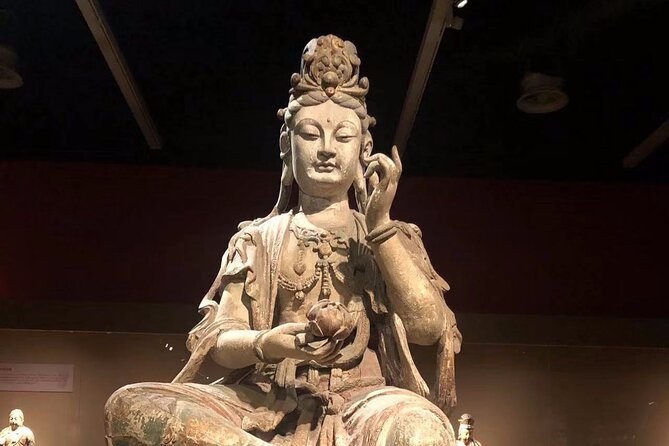
A key piece is a painted wooden statue of Guan Yin from the Song Dynasty. The figure’s calm face and careful painting make it one of the most memorable objects on the route. The comparison to the Mona Lisa is a little grand, but it communicates what makes the statue special: the face rewards a close look, especially the peaceful expression.
This section also gives you a chance to compare works from different periods. Buddhist sculpture changed over time in its proportions, materials, clothing, gestures, and facial expressions. Your guide can point out those differences, which are easy to miss if you simply walk from case to case.
Depending on the day and the time available, you may also see another collection, such as a food culture exhibition or Chinese jade. That flexibility is helpful, but it also means the exact final hour may vary. The Ancient China and Buddhist galleries are the fixed core of the visit.
Crowds, timing, and the limits of four hours
The museum can be extremely crowded. That affects how quickly you move, how long you can stand in front of a popular display, and how easy it is to hear your guide.
This is where the private guide helps most. Mike, Cathy, and the other guides have been praised for adjusting the route around busy areas and taking groups toward objects that can still be viewed comfortably. Even so, you should not expect quiet galleries throughout the morning or afternoon.
Four hours is a sensible length for a first visit. It is long enough to see the main Ancient China exhibition and the Buddhist sculpture room without turning the day into a museum marathon. It is not long enough to examine every permanent collection, and you may leave wishing you had another hour for jade, food culture, or modern history.
If you are a serious museum visitor, treat this as an orientation. You can return later on your own if your schedule allows. If you have only one day in Beijing, the focused route is more realistic than trying to cover the entire building.
Ticket help and why it can be worth paying for
The price is $114 per person. That is not a bargain-priced museum entry, so the value depends on what you need.
You are paying for a private four-hour service, hotel pickup, an English-speaking guide, museum ticket booking, and one-way transport. The biggest practical benefit may be getting help with admission. Museum tickets can be difficult to arrange, and the booking window or online process may not work smoothly for every visitor.
A booking attempt for four people was not available on the desired date in one case, and an alternative date was offered. That is a useful warning: ticket booking is included, but a specific date should not be treated as guaranteed until confirmed.
For a solo visitor who enjoys reading every label and has no trouble getting a ticket, the price may feel high. For a family, first-time visitor, or anyone with limited time in Beijing, the guide and ticket assistance can make the fee easier to justify.
Group discounts are available, so larger private parties should check the final per-person cost. Gratuities are not included. A tip is recommended if the guide provides the attentive service described, especially when the guide helps with transport or spends extra time answering questions.
Who will get the most from this tour
I would choose this tour if you want Chinese history explained in plain English rather than simply displayed behind glass. It suits you especially well if you have four hours, are visiting Beijing for the first time, or find museum ticket systems difficult to manage.
It is also a good fit for families and mixed-interest groups. The Jade Dragon, ancient refrigerator, large bronze vessels, and Sanxingdui objects offer a range of subjects, so not every moment depends on a specialist interest in art.
You may want another option if you prefer to wander alone, spend a long time with modern art, or visit every room at your own pace. The tour concentrates on ancient China and Buddhist sculpture, with only brief attention to other areas.
The private format helps, but it does not turn the museum into a quiet personal gallery. Expect crowds, walking, and a brisk route through a very large institution.
Practical details for a smoother visit
Confirmation is provided at the time of booking, and most people can take part. The meeting point is your hotel lobby, with departures at 8:30 a.m. or 1 p.m.
Wear comfortable shoes. The museum is large, and even a focused route involves substantial walking and standing. Keep your questions coming, since the private format is one of the main reasons to book instead of going alone.
You can cancel for a full refund if you do so at least 24 hours before the start time. Changes or cancellations made inside that window are not accepted and are not refunded.
The operator is Beijing Meitu Travel Agency Co., Ltd. Since guides vary, do not book solely because one particular guide’s name appears in past tour details. Mike, Cathy, William, Diana, Michael, and Herbie have all been associated with positive experiences, but the assigned guide may be different.
Should you book the National Museum tour?
Book it if you want the National Museum reduced to a clear, manageable story, with ticket help and a private English-speaking guide. The Ancient China collection alone gives you major objects, unusual displays, and a long historical sweep, while the Buddhist gallery adds a more intimate art experience.
Skip it if your main goal is independent exploration or a full-day examination of every collection. At $114 per person, the tour is best value when your time is limited, your group wants explanation, or museum admission feels difficult to arrange.
For most first-time visitors who want context rather than a quick photo stop, I would choose the morning departure and treat the four hours as a carefully planned introduction to one of Beijing’s biggest museums.
FAQ
How long does the National Museum tour last?
The experience lasts approximately four hours. About two hours focus on the Ancient China exhibition, followed by about one hour in the Ancient Buddha Statue exhibition room, with remaining time used for travel and additional displays.
What time does the tour begin?
You can meet your guide at your hotel lobby at 8:30 a.m. or 1 p.m.
Is hotel pickup included?
Yes. Hotel pickup is included, and the guide meets you in the hotel lobby.
Is transportation included?
A single-way taxi transfer is included. The tour information also says the guide may use the subway or taxi to reach the National Museum, so confirm the exact transport plan when booking.
Is this a private tour?
Yes. Only your group participates in the activity.
What happens if I need to cancel?
You can cancel at least 24 hours before the experience begins for a full refund. Cancellations or changes made less than 24 hours before the start time are not accepted and are not refunded.
Just added around China
- Beijing’s Forbidden City with Special Viewing of Treasure Gallery and the Great Wall Ruins at Badaling★ 4.5 · 24 reviews
- Forbidden City Ticket/ The Palace Museum or Group Tours Options★ 4.5 · 12 reviews
- 4-Hour Private Tour: Lama Temple, Confucius Temple, Guozijian Museum with Dim Sum★ 5.0 · 21 reviews
- Beijing Private Tour: National Museum of China, Sacred Road and Ming Tombs★ 5.0 · 13 reviews
- China National Museum Ticket Pre-booking and Tiananmen Square★ 3.5 · 23 reviews
- Hong Kong: Aberdeen Boat Tour and Visit Floating Museum★ 4.6 · 27 reviews
- Xian Terracotta Amry& Romantic Show & Grand Tang Bright City★ 4.6 · 52 reviews
- Beijing: Lama Temple, Confucius Temple and Guozijian Museum★ 5.0 · 23 reviews
Private Drivers, compared.
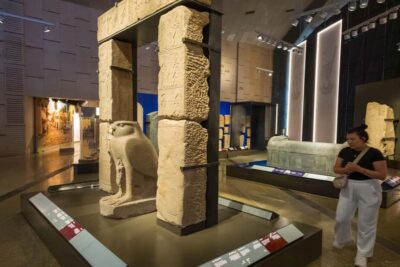
Grand Egyptian Museum Ticket w/ Opt. Guide & Transfer
Read our review →
Lindt Home of Chocolate Museum Ticket & Transfer
Read our review →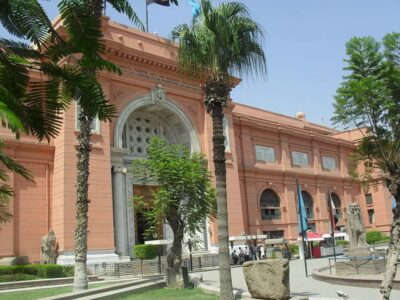
Egyptian Museum 4-Hour Private Tour with Transfer
Read our review →
Modena and Maranello: Combo Ferrari Museums and bus transfer
Read our review →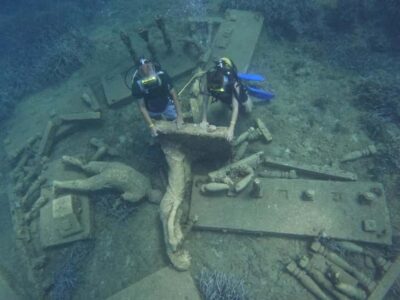
Side: Scuba Diving & Under Water Museum with Hotel Transfer
Read our review →
Antalya Aquarium and Face to Face Wax Museum Private Transfer
Read our review →Browse the lists this tour appears in