
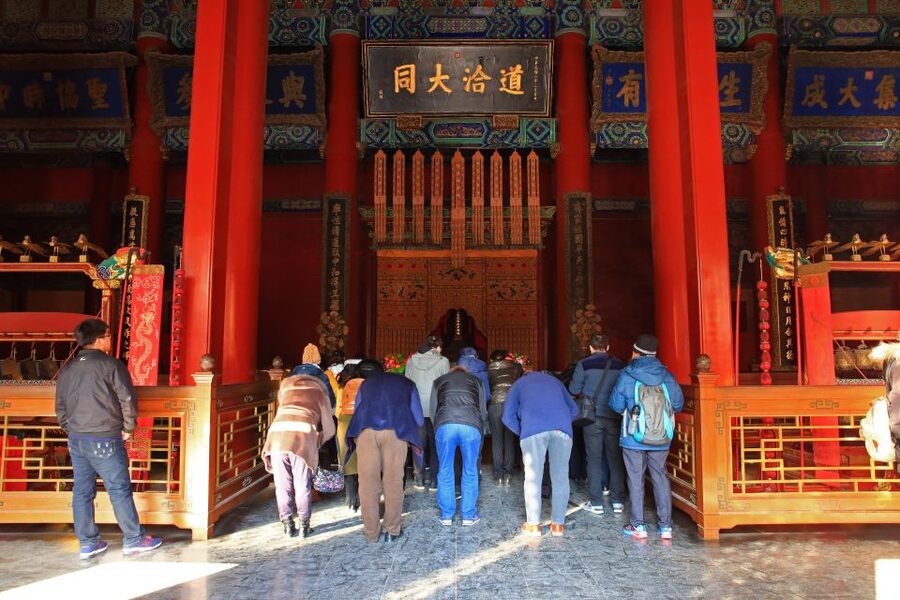
Review · CHINA
Beijing: Lama Temple, Confucius Temple and Guozijian Museum
The 54-foot sandalwood Buddha is the showstopper here. Carved from one white sandalwood log brought from Nepal, the Maitreya statue gives the Lama Temple a moment of real scale and wonder. Just as valuable, you get to watch people worship, rather than only look at buildings behind a guide’s lecture.
I like the way this tour links three parts of Beijing that make sense together: living Buddhist practice, Confucian education, and hutong neighborhood life. I also like the private format, which lets your guide slow down for questions. Guides such as Anne, Cassie, Mike, Aurora, Ranee, and others have been praised for clear English and lively explanations.
The main consideration is time. Four hours is enough for a strong introduction, but not enough for a leisurely inspection of every hall, museum display, and hutong lane. The $80 price is easier to justify if you choose private transport and value context, but less so if you prefer to explore independently.
Key points at a glance
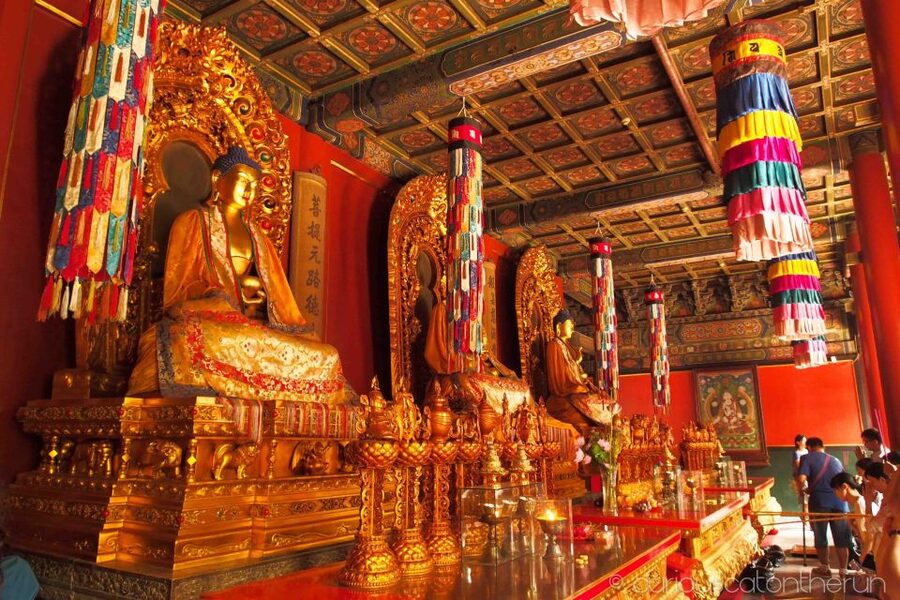
- The Lama Temple’s 54-foot Buddha: See the enormous Maitreya figure carved from a single white sandalwood log.
- A look at present-day worship: Watch local religious practice in the temple courtyards and halls.
- Confucius Temple and Guozijian: Visit the former imperial college founded in 1306, where China’s highest-level education once took place.
- A walk through hutong lanes: Move from grand institutions into narrow neighborhood alleys and a more ordinary side of Beijing life.
- Private English-speaking guidance: Your guide meets you at your hotel and leads a private group.
- Flexible transport and finish: Use the subway or a taxi, or select the private-car option. The tour ends near Wudaoying Hutong, with optional dim sum available.
Why this four-hour route works
This is a compact cultural tour with a clear story. You begin with religion, move into Confucian learning and government, then finish with neighborhood life. That progression helps you understand Beijing as more than imperial palaces and broad ceremonial avenues.
I especially like the contrast between the Lama Temple and the hutongs. Inside the temple, you encounter ornate halls, incense, Buddhist statues, and formal courtyards. A short walk later, the setting becomes quieter and more intimate, with narrow lanes and local homes. The change is quick, but it gives the morning shape.
The private format matters here. Temples can be confusing on a first visit, especially when several halls contain unfamiliar figures and symbols. A guide can explain what you are looking at and answer questions without having to keep a large group moving.
The tour lasts four hours, so expect a focused visit rather than a slow architectural study. If you want to photograph every courtyard or read every museum panel, you may feel hurried. If you want a useful introduction before exploring Beijing on your own, the pace should suit you well.
A few more museum visits around the world worth comparing
- Vatican: Museums & Sistine Chapel Entrance Ticket
★ 4.5 · 144,003 reviews - Vatican Museums, Sistine Chapel & St. Peter’s Basilica Tour
★ 4.3 · 73,970 reviews - Paris: Louvre Museum Timed-Entrance Ticket
★ 4.6 · 71,977 reviews
Starting at the Lama Temple
Your guide meets you in the lobby of your hotel, holding a sign with your name. From there, you go directly to the Lama Temple by taxi or subway, unless you select the private-car option. Hotel pickup is included, but transfer and hotel drop-off are not included with the option without private transport.
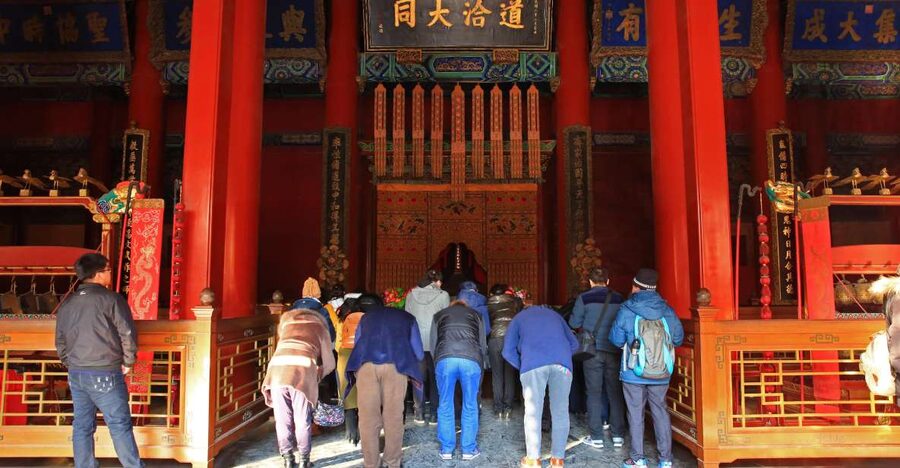
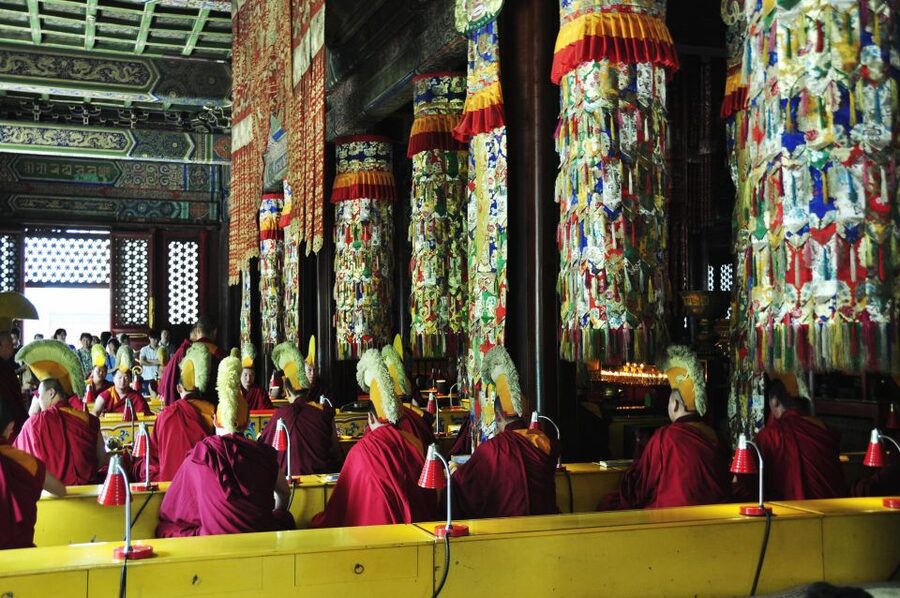
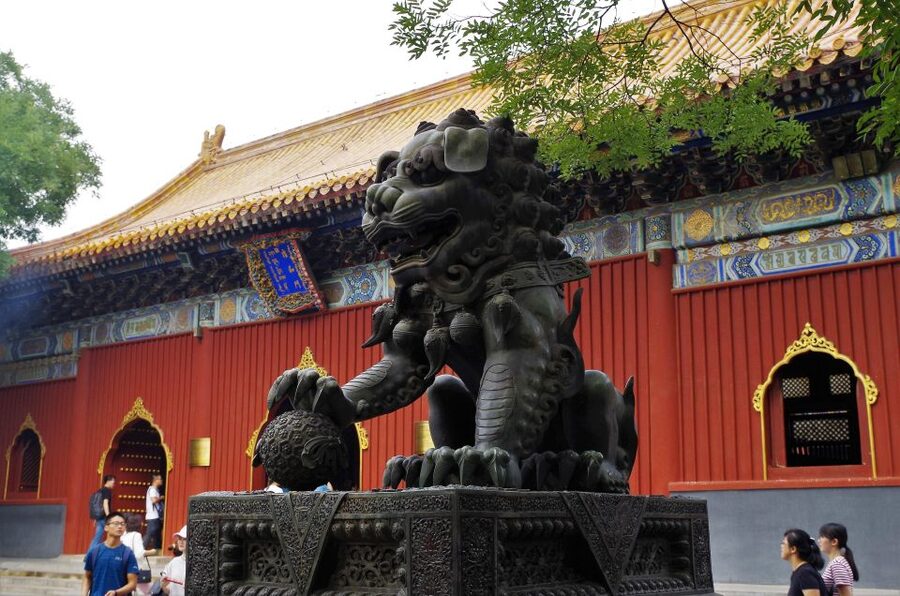
The Lama Temple is the emotional center of the outing. You follow your guide through different courtyards and halls, seeing Buddhist statues and hearing the stories connected with them. The value is not only visual. You also get to see how people use the temple as a place of worship today.
That living element is important. A temple can feel like a museum when you visit alone and do not know what is happening around you. Here, your guide can help explain the gestures, offerings, incense, and general rhythm of worship in a respectful way. The supplied details do not promise a formal religious ceremony, so think of this as observation of everyday practice, not a staged performance.
The temple’s major prize is the Maitreya Buddha. The statue is described as 54 feet high and carved from one precious white sandalwood log from Nepal. It is presented as the world’s largest wooden Buddha. Even if you are not especially interested in Buddhist art, the combination of height, material, and craftsmanship makes this hall difficult to forget.
Give yourself a moment to look upward and take in the scale. A quick photograph will not communicate how tall the statue feels inside the hall. Your guide can also provide the cultural background that turns a large sculpture into something more meaningful.
This is the part of the route most likely to be crowded. One guide, Anne, was specifically praised for keeping the visit moving smoothly on a very busy day. That is a useful reminder that a good guide is not only a source of facts. They also help you find the right viewing position and avoid losing time.
Walking from faith to scholarship
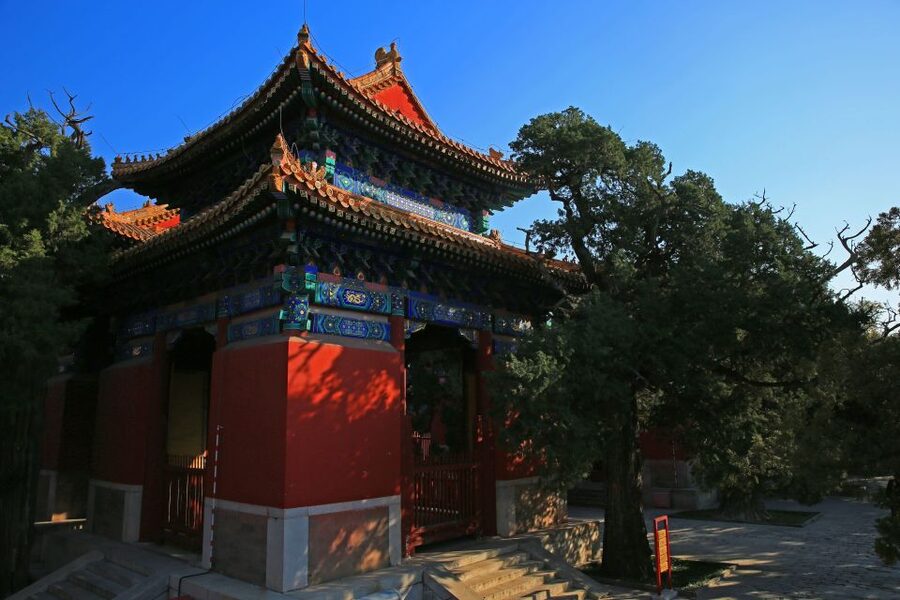
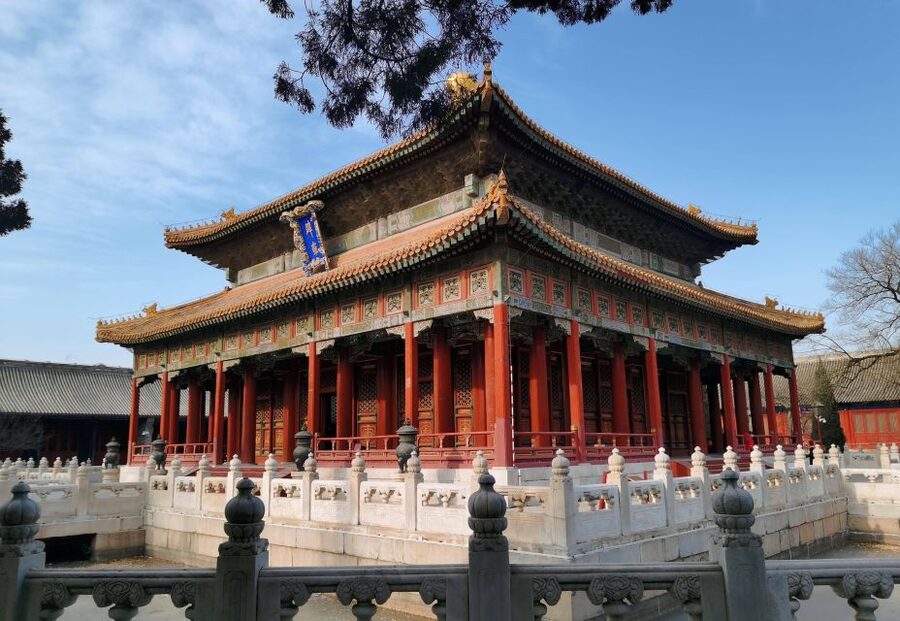
After the Lama Temple, you walk through a quiet hutong alley toward the Temple of Confucius and Imperial College, also known as the Guozijian Museum. The connection between the sites is one of the tour’s best features. You leave a working religious complex and enter a place tied to education, government service, and Confucian values.
The Temple of Confucius and Imperial College were built in 1306 by the grandson of Kublai Khan. The former college served as the supreme academy during the Yuan, Ming, and Qing dynasties. That makes this more than another historic courtyard. It was connected to the training of the officials who helped run imperial China.
Your guide’s explanation is especially useful here because the site can be quiet and understated. Without context, you may see gates, courtyards, and halls without understanding why the institution mattered. With a clear explanation, the buildings become part of a larger story about education, examinations, rank, and the imperial state.
The guides named in the supplied feedback received repeated praise for clear and enjoyable explanations. Mike was described as presenting Chinese culture and thought in an entertaining way. Cassie was praised for giving good context and making the day joyful. Aurora was noted for explaining details in an understandable manner. Those comments point to the sort of help that matters most at a site like this: plain English, useful context, and room for questions.
Do not expect this stop to feel like a grand palace complex. Its strength is intellectual and historical rather than spectacular. If you prefer famous monuments with dramatic views, the Confucius Temple may feel restrained. If you want to understand how education shaped Chinese government and society, it earns its place on the route.
Seeing Beijing through hutong lanes
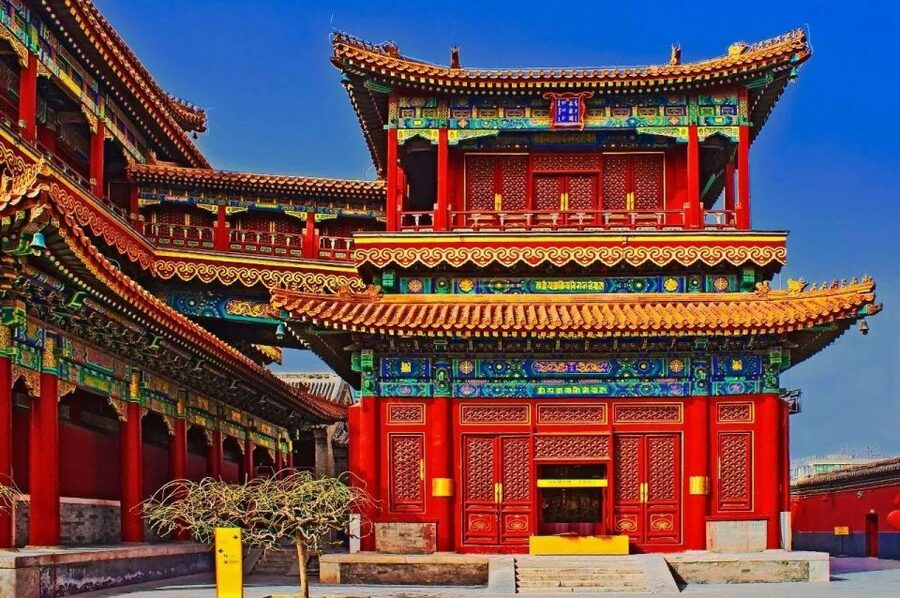
The final walking section takes you through hutong alleys in the area. These lanes offer a look at the shape of older Beijing neighborhoods and the way daily life developed around shared streets and compact homes.
The description of the experience does not promise a staged neighborhood show, and that is a good thing. You are there to walk, observe, and learn how hutong streets fit into Beijing’s past and present. Your guide can explain the history of the lanes and point out how this part of the city differs from the temple compounds.
The alleys also provide a welcome change of pace. The Lama Temple and Confucius Temple ask you to look at formal architecture and important objects. The hutong walk asks you to notice scale, street layout, and ordinary surroundings. You may find this section less visually grand, but it can be more useful for understanding how the city works beyond its major landmarks.
The tour ends in the area of Wudaoying Hutong. You can continue exploring there after the guide leaves, and the guide will suggest how to reach your next destination. This is a practical finish because you are not returned automatically to your hotel. You can keep the afternoon flexible and use the end point as a starting place for more independent exploring.
A dim sum meal can also be added as an option. Since the meal is not part of the standard inclusions, check the exact choice and price when booking. It may suit you if you want to turn the morning into a longer food-and-culture outing.
Same city, a completely different collection:
- Amsterdam: Van Gogh Museum Ticket
★ 4.7 · 52,054 reviews - Vatican Museums, Sistine Chapel & St Peter’s Basilica Guided Tour
★ 4.5 · 39,149 reviews - NYC: 9/11 Memorial & Museum Timed-Entry Ticket
★ 4.8 · 31,428 reviews - London: Tower of London and Crown Jewels Exhibition Ticket
★ 4.6 · 28,769 reviews
What the private format adds
This is a private group experience, not a large shared walking tour. That gives you more control over questions and pace. If someone in your group wants to understand Buddhist statues, Confucian education, or the hutong system in greater detail, you can ask without holding up a busload of people.
An English-speaking guide is included, and the guide meets you at your hotel. The repeated praise for guides such as Ranee, Mike, Cassie, Aurora, and Anne focuses on the same useful traits: clear English, patience, strong explanations, and an ability to keep the day pleasant.
The exact guide is not guaranteed, so do not book solely because you hope for one particular person. Still, the range of positive comments suggests that the provider has several guides who can make the difference between simply seeing three sites and understanding them.
The private car is optional. If you choose it, private transfer is included and the morning becomes easier logistically. If you do not choose it, you can travel by taxi or subway to the first stop, but transfer and hotel drop-off are not included. The right choice depends on your hotel, group size, comfort with Beijing transport, and how much convenience matters to you.
Is $80 a fair price?
At $80 per person, this is not the cheapest way to see the Lama Temple and nearby sites. You are paying for a private group, hotel pickup, an English-speaking guide, entrance fees, and skip-the-ticket-line access. Private transport costs extra through the relevant option.
I think the price is reasonable for visitors who want cultural explanation rather than a checklist of entrances. The three locations are close enough to connect on foot, but their meaning is not always obvious without guidance. The tour also saves you the work of sorting out transport, admission, and the relationship between Buddhism, Confucian education, and hutong life.
The value is weaker if you already know Beijing well, speak Chinese, or are comfortable researching the sites and using public transport. In that case, you may prefer to pay individual entrance fees and spend longer at the places that interest you most.
The free-cancellation policy gives you some protection if plans change, with cancellation up to 24 hours in advance for a full refund. You can also reserve now and pay later, which helps if you are building a China itinerary before every detail is fixed.
Who will enjoy this Beijing morning?
I would recommend this tour to first-time visitors who want more than the usual palace circuit. It is also a strong choice for anyone interested in religion, education, Chinese philosophy, or neighborhood life.
Families may appreciate the private format because the guide can adjust explanations and pace. The 54-foot Buddha gives children a memorable visual anchor, while the hutong walk breaks up the temple visits.
It also suits visitors with only a short stay in Beijing. In four hours, you see three connected parts of the city without committing a full day. The end near Wudaoying Hutong lets you continue with your own plans.
You may want something else if your main goal is food, shopping, or a long relaxed stroll. The optional dim sum addition helps, but the core experience is cultural sightseeing. Also, anyone who dislikes walking between sites should select the private-car option and confirm the transport details before booking.
Should you book it?
Book this experience if you want a private, well-explained introduction to Beijing’s religious sites, Confucian institutions, and hutong neighborhoods. The strongest reasons are the single-log sandalwood Buddha, the chance to observe real worship, and the guide’s role in making the Confucius Temple and Imperial College understandable.
Skip it if you prefer complete independence, long visits at one site, or a cheaper self-guided morning. For most first-time visitors, though, the $80 price buys useful context and a sensible route, not just transportation between attractions.
FAQ
How long does the tour last?
The tour lasts four hours.
Where does the tour begin?
Your English-speaking guide meets you in the lobby of your hotel while holding a sign with your name.
How do I get to the Lama Temple?
You can go by taxi or subway, or select the option that includes a private car.
Is private transportation included?
Private transfer is included only if you choose the related private-car option. With the option without a private car, transfer and hotel drop-off are not included.
Is the tour private?
Yes. The experience is offered for a private group.
What language does the guide speak?
The live tour guide speaks English.
Can I add a meal?
You can choose an option that combines the tour with a dim sum meal.
Just added around the world
- Girona, Figueres, Dalí Museum and Cadaqués Tour from Barcelona★ 4.5 · 36 reviews
- Football Club Barcelona Museum Immersive Tour Guided Visit★ 3.5 · 52 reviews
- Erotic Museum Admission Ticket with Audioguide★ 5.0 · 527 reviews
- Dali Museum and Costa Brava Small Group Day Trip from Barcelona★ 5.0 · 77 reviews
- Madrid by High-Speed Train with Prado Museum Private Tour★ 4.0 · 33 reviews
- Guitar Legends Hall: Entrance to the Immersive Rock Museum★ 5.0 · 25 reviews
- White Rabbit Museum: The Best Immersive Experience in Catalonia★ 5.0 · 538 reviews
- Private Dali Museum, Besalú & Girona Tour from Barcelona★ 5.0 · 15 reviews
Museum Tours in China, compared.
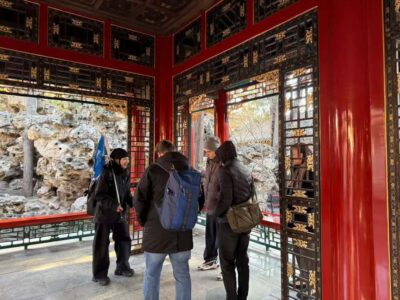
Tianmen Square, Forbidden City & Royal Museum Tours
Read our review →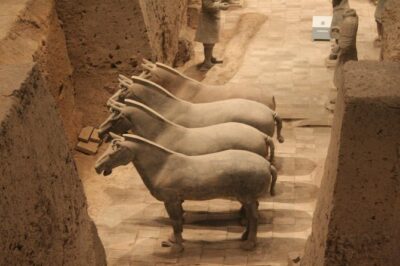
Half-Day Mini Group Xian Tour to Terracotta Warriors Museum
Read our review →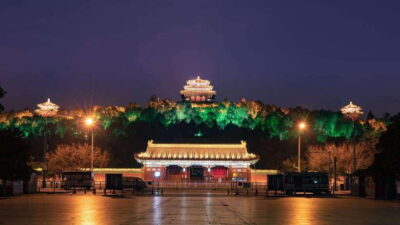
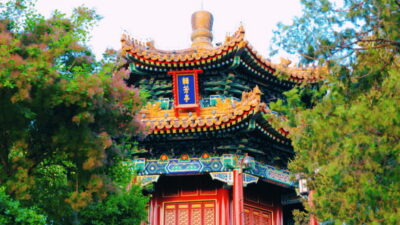
Beijing:Jingshan Park (Palace Museum Garden) Ticket
Read our review →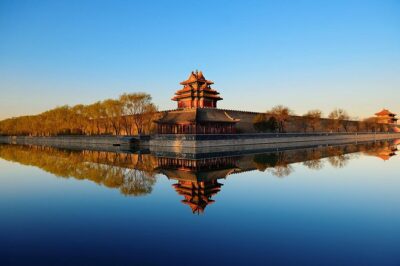
Forbidden City Admission Ticket – With Guide Option
Read our review →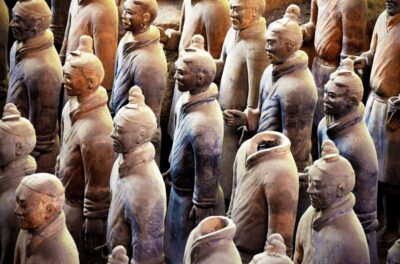
Xian Terracotta Amry& Romantic Show & Grand Tang Bright City
Read our review →
JingShan park (palace museum garden) entry ticket
Read our review →
Browse the lists this tour appears in