
Review · EGYPT
Sharm El Sheikh: King Tut Exhibition Audio Tour
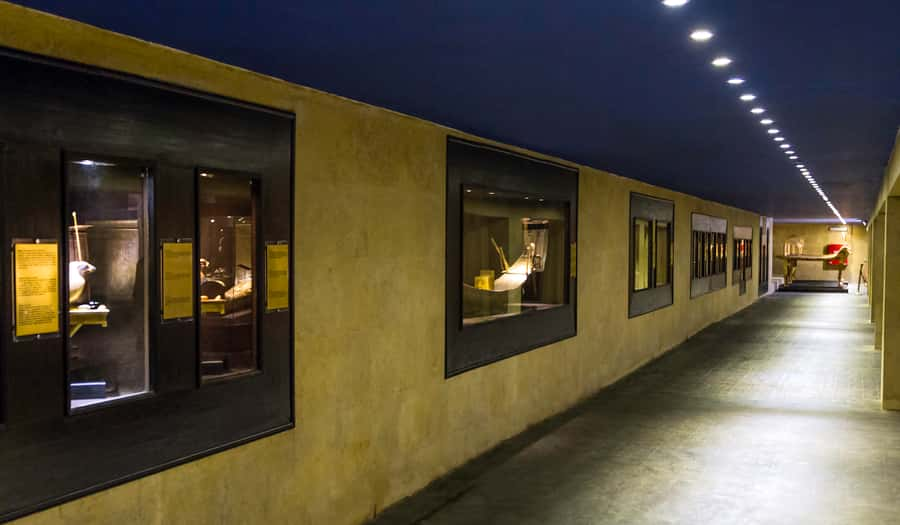
Tutankhamen’s famous gold mask is the star here, but the real surprise is the scale of the collection around it. This Sharm El Sheikh exhibition presents 135 replicas of objects from the young pharaoh’s tomb, letting you see how the burial treasures fit together rather than viewing one famous face in isolation.
I like the included audio guide, which gives the displays a clear story in four languages, and I like the easy two-hour format inside Genena City. The main drawback is important: these are replicas, not the original treasures from Cairo’s Egyptian Museum, so anyone expecting the actual mask may feel let down.
- 135 tomb replicas: See a broad selection of objects linked to Tutankhamen’s burial.
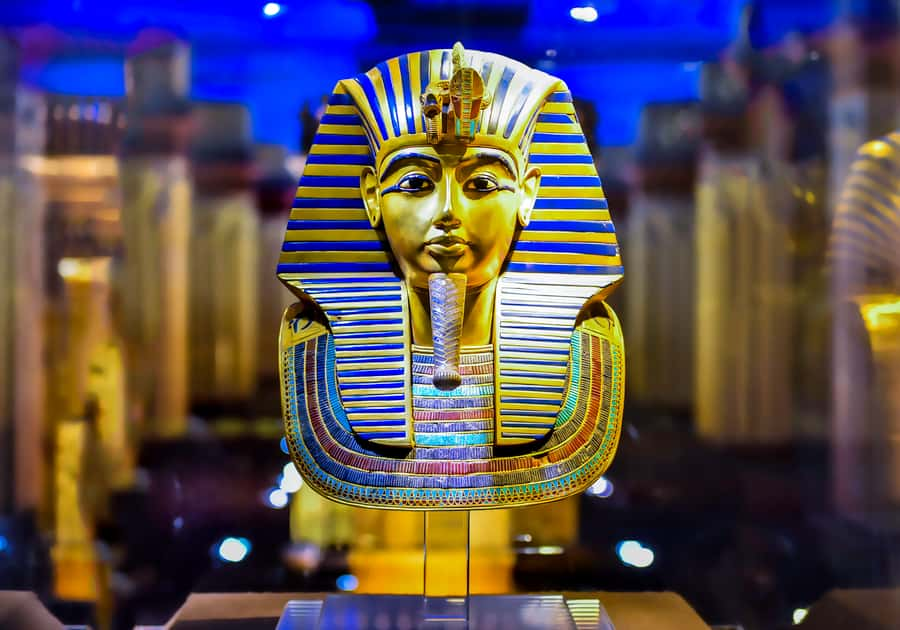
- 11 kilograms of gold: The mask replica gives you the exhibition’s most famous photo stop.
- 110-kilogram coffin: A large-scale piece helps show the wealth and ceremony of the royal burial.
- Four audio languages: Listen in English, Italian, Arabic, or Russian.
- Central meeting point: Meet at Genena City’s gate, then follow a representative to the exhibition.
- Two-hour visit: A manageable indoor cultural stop for a morning, afternoon, or evening plan.
What You See Inside the King Tut Exhibition
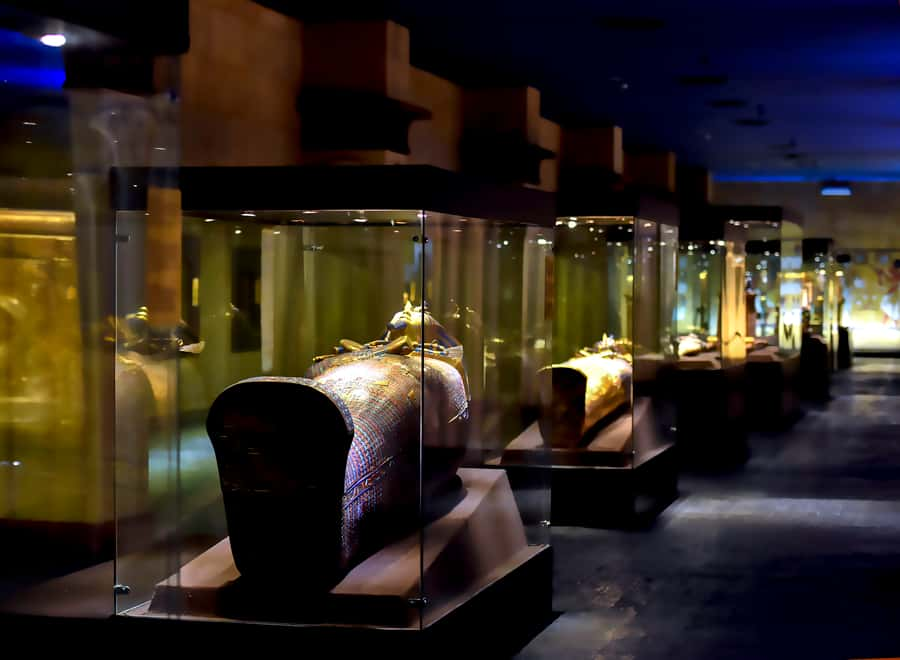
The King Tut Exhibition in Sharm El Sheikh offers a compact lesson in ancient Egypt, built around the burial of Tutankhamen. You enter at Genena City, meet a representative at the main gate, and are directed to the exhibition. That meeting arrangement matters because the activity does not include hotel pickup or drop-off.
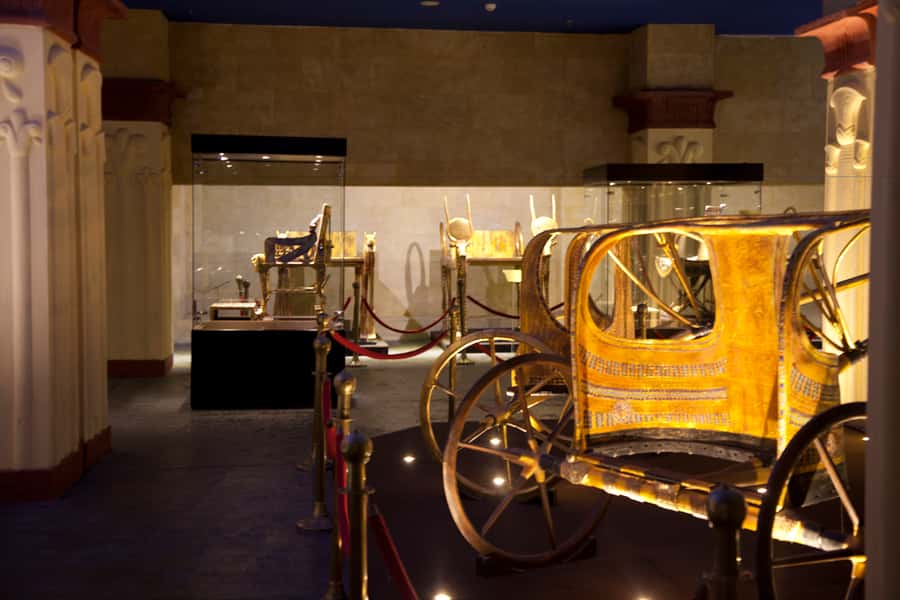
Inside, the audio guide explains all 135 pieces. I would treat this as a collection to view in sequence, rather than a quick photo stop. The objects are designed to show the contents and ceremonial world of Tutankhamen’s tomb, giving you more context than a single reproduction of the mask could provide.
The displays are identical replicas of objects from the tomb. That wording deserves attention. You are seeing carefully made copies intended to represent the originals, not the archaeological objects excavated in Egypt. For many people, this is a fair trade for seeing the complete group in Sharm El Sheikh. For others, authenticity will matter more than convenience.
The exhibition was made under the supervision of Egypt’s Ministry of State for Antiquities Affairs. That provides useful context about how the collection was prepared, but it does not change the fact that the pieces are reproductions. I would set your expectations correctly before you arrive.
The Gold Mask Is the Main Photo Stop
The mask is the object most people picture when they hear Tutankhamen’s name. Here, the mask replica is described as being made with 11 kilograms of pure gold. It is the clear centerpiece and the place where you can take a selfie.
The photo opportunity gives the visit a light, personal touch. You are not simply listening to a lecture about a distant ruler. You can leave with a picture of yourself beside one of Egypt’s best-known royal symbols.
Still, I would not judge the whole exhibition by the mask alone. The value of the visit comes from seeing the mask in relation to the other tomb objects. The surrounding pieces help explain how a pharaoh’s burial was presented, protected, and loaded with symbols of royal power.
Because this is a replica, the gold figure should be understood as an exhibition reconstruction. It can still be impressive, especially if you have not seen the original in Cairo, but it is not the same as standing before the authentic burial mask.
A few more museum visits around Egypt worth comparing
- Istanbul: Topkapi Palace & Harem Museum Ticket & Audio Guide
★ 4.1 · 3,977 reviews - Paris: Orsay Museum Entry Ticket and Digital Audio Guide App
★ 4.4 · 3,170 reviews - Florence: Uffizi Gallery Timed Entry Ticket & Audio Guide
★ 4.2 · 2,794 reviews
The 110-Kilogram Coffin Puts the Tomb in Scale
The golden coffin is another major stop. The exhibition describes it as containing 110 kilograms of gold, a figure that gives you a sense of the wealth devoted to Tutankhamen’s burial.
I find large objects useful in a museum like this because they make abstract facts easier to grasp. A short audio explanation about royal burial customs can be hard to picture. A huge golden coffin gives those ideas physical scale.
The coffin also helps balance the visit. If you only want the famous mask, you may be finished quickly. If you spend time with the coffin and the rest of the 135-piece collection, the exhibition becomes a fuller account of the tomb and its contents.
The supplied details do not identify a separate guide or explain a special presentation at the coffin, so you should expect the audio guide to provide the main explanation. You will hear the same recorded commentary rather than receiving a personal talk from a named Egyptologist.
Tutankhamen’s Life, Family, and Early Death
The audio tour covers Tutankhamen’s life and family, not just the objects found in his burial place. That makes the visit more useful for anyone who wants a basic introduction to the pharaoh rather than a gallery of attractive replicas.
Tutankhamen remains famous partly because he ruled Egypt as a young king and left behind an unusually famous tomb. The audio material also explains the legends connected with his life and burial. You get a narrative thread to follow as you move through the displays.
I would listen carefully instead of rushing from one object to the next. The exhibition contains 135 pieces, and the guide is meant to explain each one. If you give every item equal time, two hours may feel full. If you focus on the mask, coffin, and key royal objects, you can make the visit more relaxed.
The activity description links the story of the tomb’s discovery to the English archaeologist and Egyptologist Howard Carter. That part adds a modern chapter to the visit: you are learning not only about the pharaoh, but also about how the tomb entered public knowledge through archaeology.
Why an Audio Guide Works Well Here
An audio guide is a practical choice for this exhibition. It lets you move at your own pace and gives you information in English, Italian, Arabic, or Russian. You are not tied to a live guide’s schedule, and you can spend more time at the pieces that interest you.
I especially like this format for visitors who want a structured museum visit without committing to a long guided tour. Two hours is enough time to take in the main collection, listen to the explanations, and stop for photographs.
The trade-off is personal contact. An audio guide cannot answer a question about an object or adjust the explanation to your interests. If you prefer conversation, debate, and spontaneous questions, this will feel more limited than a private guide.
The listing does not name an individual guide, so do not book this expecting a tour led by a person such as an archaeologist or Egyptologist. The representative at Genena City’s gate helps direct you to the exhibit, while the recorded audio provides the interpretation.
More audio-guided museum visits in Egypt:
- Athens: Acropolis Museum Ticket with optional Audio Guide
★ 4.4 · 2,652 reviews - Bruges: Choco-Story Museum with Audio Guide and Tastings
★ 4.2 · 1,825 reviews - Athens: National Archaeological Museum Ticket & Audio Guide
★ 4.3 · 1,330 reviews - Madrid: Prado Museum Ticket with In-App Audio Guide
★ 3.6 · 1,154 reviews
A Simple Two-Hour Visit at Genena City
Your visit begins at the gate of Genena City. Look for the exhibition representatives there, since that is the stated meeting point. They direct you to the King Tut Exhibition inside the complex.
There is no hotel transportation included. That makes this best for you if you can reach Genena City independently or are already spending time in the area. The meeting point is clear, but you should not assume a driver will collect you from a resort.
Once inside, you listen to the audio guide while viewing the collection. The route is not described as a long walking tour, so the two-hour duration should feel manageable for most people. The exhibition is also wheelchair accessible, which makes it a practical cultural option for visitors who need step-free access.
The activity includes admission and says you can skip the ticket line. That saves a little time and removes the need to buy a separate entrance ticket at the venue. You still need to get to Genena City yourself.
Is 15 Dollars Good Value?
At $15 per person, the experience is priced as a modest museum visit rather than a full-day excursion. You receive entry and the audio guide, and the visit occupies about two hours. For a self-contained cultural stop in Sharm El Sheikh, that is reasonable if you enjoy ancient Egypt and want more than beach time.
The value depends on what you expect from a museum. If you want the original artifacts, $15 will not solve that problem because this exhibition uses replicas. If you want a convenient way to see a large set of Tutankhamen-related objects without traveling to Cairo, the price makes more sense.
I would compare the cost with the time you have available. A two-hour stop can fit neatly into a day when you are staying in Sharm El Sheikh. It does not include transport, so your total cost will be higher if you need to arrange a taxi or other ride to Genena City.
The reserve-now-and-pay-later option also helps if your plans are still shifting. You can reserve without paying immediately, and cancellation is free up to 24 hours before the activity for a full refund. Those terms are useful in a resort town where weather, beach plans, and day trips can change.
Who Will Enjoy This Exhibition Most?
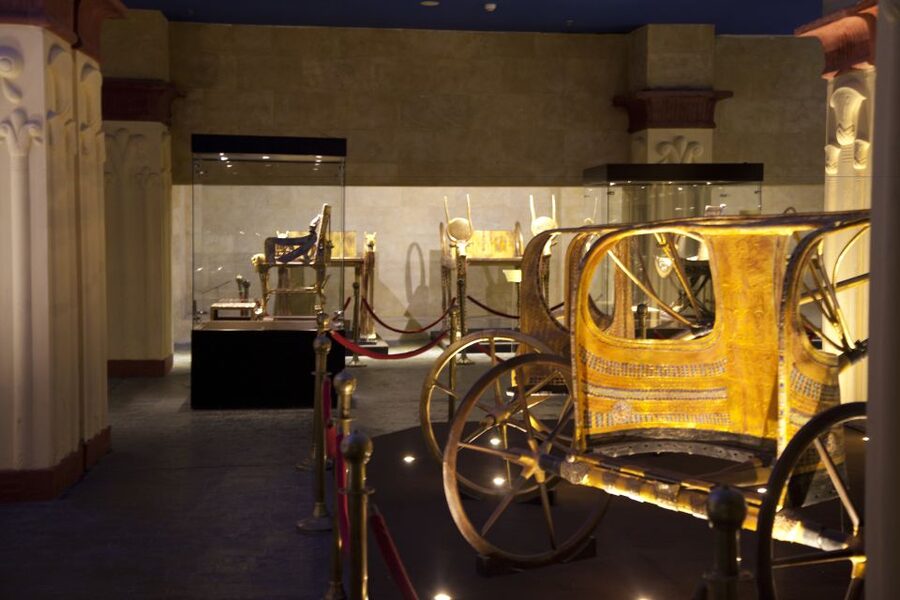
I would recommend this for first-time visitors to Egypt who want a clear introduction to Tutankhamen. The audio guide gives you a simple path through his life, family, tomb, and the story of its discovery.
Families may also find the mask, coffin, and selfie opportunity easier to enjoy than a long, formal museum visit. The two-hour duration keeps the cultural stop from taking over the whole day.
It suits history fans who understand the replica format and want to see the collection in one place. You can study the objects, hear their role explained, and connect them to the wider story of royal burial in ancient Egypt.
I would be more cautious if your main goal is archaeological authenticity. In that case, the absence of the original objects is a serious limitation. The experience is best approached as an educational exhibition with high-quality representations, not as a substitute for seeing the original treasures.
The four language choices also make the visit easier to follow for international visitors. Choose English, Italian, Arabic, or Russian when you book, then keep the audio running as you move through the displays.
My Practical Verdict on the King Tut Visit
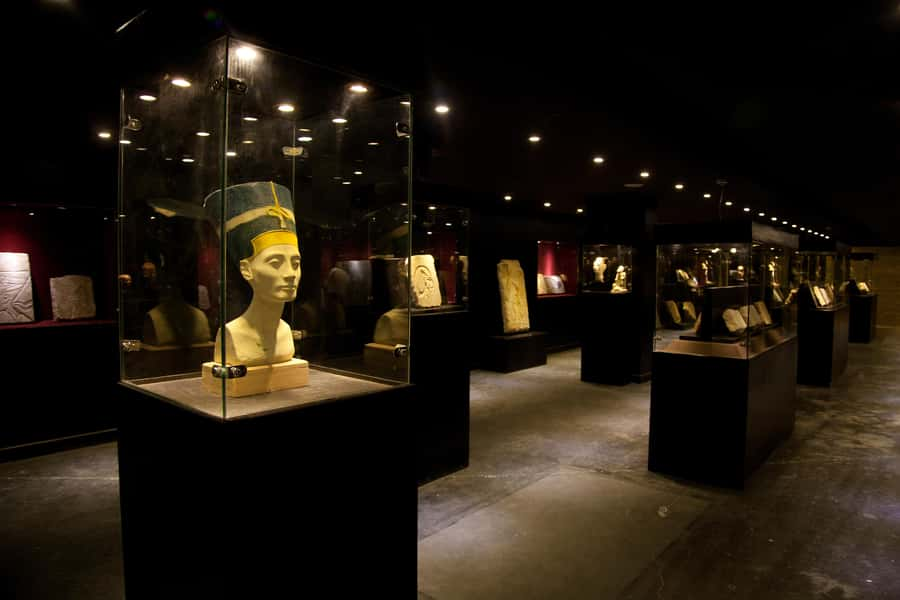
The King Tut Exhibition gives you a focused, affordable way to spend two hours with ancient Egyptian themes in Sharm El Sheikh. The strongest parts are the number of pieces, the clear audio format, and the chance to photograph yourself beside the gold mask replica.
The key limitation is just as clear: replicas are not originals. If you accept that from the start, the exhibition can be a satisfying introduction to Tutankhamen’s life and burial treasures. The overall public rating is 4 out of 5 from 25 reviews, with short comments describing the experience as good, very enjoyable, and satisfying overall.
I would book it if you want an easy cultural break, already have your own way to Genena City, and are curious about the story behind the famous mask. I would skip it if you are seeking an original-artifact museum or a live expert guide. For everyone in between, the $15 price and two-hour format make it a sensible add-on to a Sharm El Sheikh stay.
FAQ
Where is the King Tut Exhibition located?
The exhibition is inside Genena City in Sharm El Sheikh, South Sinai, Egypt.
Where do I meet for the activity?
Meet the representatives at the gate of Genena City. They will direct you to the King Tut Exhibition.
How long does the visit last?
The activity lasts about two hours.
What does the ticket include?
The price includes entrance to the exhibition and an audio guide.
Is hotel pickup or drop-off included?
No. Pickup and drop-off are not included.
Which languages are available for the audio guide?
The audio guide is available in English, Italian, Arabic, and Russian.
Are the objects original or replicas?
The exhibition contains 135 identical replicas of objects from Tutankhamen’s tomb.
Can I take photographs?
Yes. Photography is allowed, including pictures with the replica of Tutankhamen’s gold mask.
Is the exhibition wheelchair accessible?
Yes. The activity is wheelchair accessible.
Just added around Egypt
- Multi-Day Sites of Giza and Cairo City Tour plus Egyptian Antiquities Museum★ 5.0 · 15 reviews
- Private Tour to Giza pyramids & Grand Museum from Alexandria Port★ 4.5 · 17 reviews
- The pyramids & Museum day tour★ 4.5 · 20 reviews
- Egypt Shore tours to Giza Pyramids & Museum& bazaar from Alexandria or Port said★ 5.0 · 20 reviews
- Sharm El Sheikh: Great Pyramids, Sphinx, Museum Tour by Bus★ 3.7 · 287 reviews
- Museum Diving Experience in the Red Sea★ 4.7 · 15 reviews
- Hurghada: Giza Pyramids, Sphinx, Museum & Old Souq Day Trip★ 4.5 · 152 reviews
- Hurghada: Cairo Pyramids, Sphinx, Museum & Bazaar Day Tour★ 4.4 · 149 reviews
Museum Tours in Egypt, compared.
Tour to Giza Pyramids and The Egyptian Museum
Read our review →
Cairo 8 Hour Private Tour of Pyramids, Egyptian Museum and Bazaar
Read our review →
Grand Egyptian Museum, Pyramids, Sphinx Tour & Lunch
Read our review →
Cairo Pyramids, Sphinx & Egyptian Museum Day Trip
Read our review →
Female-Guided Pyramids, Sphinx & Museum City Tour
Read our review →
Private tour to Giza Pyramids,Sphinx,Egyptian Museum with Local Lunch
Read our review →
Best Private Giza Pyramids,Sphinx, New Grand Egyptian Museum
Read our review →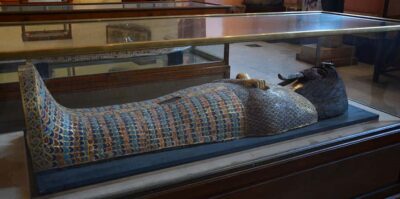
Egyptian Museum, Citadel, and Old Cairo Guided Tour
Read our review →Browse the lists this tour appears in