
Review · ROME
Rome: Private Leonardo da Vinci Exhibition Guided Tour
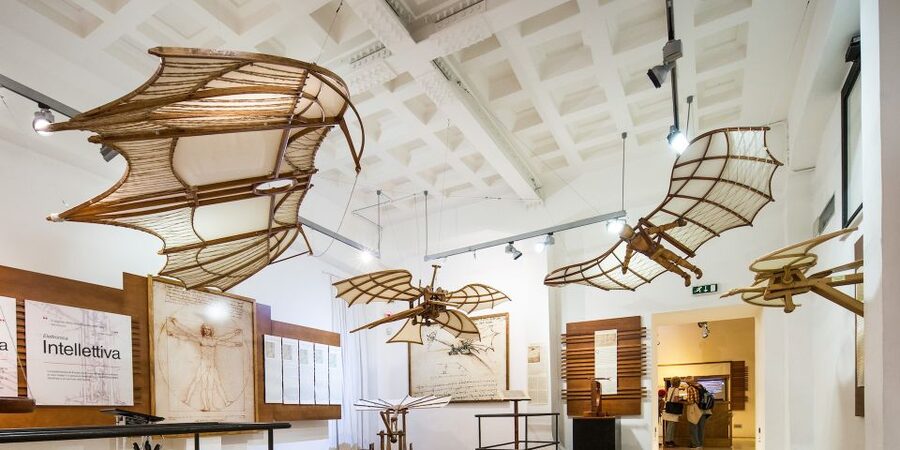
Leonardo da Vinci’s genius becomes easier to grasp when you can touch his machines, test their movement, and build a bridge from his designs. This private tour at Palazzo della Cancelleria turns the famous Renaissance thinker from a distant name into a practical inventor who studied water, air, fire, and earth.
I like the nine three-dimensional holograms and the chance to handle many of the 65-plus full-scale machines. I also like the unusual Roman tomb below the palace, set in an underground natural pond. The main consideration is that the exhibition focuses more on reproductions and engineering than on original Leonardo paintings.
I like the private format, too. A guide can adjust the pace, answer questions, and explain the machines in English, Italian, French, Spanish, German, or Portuguese. Families should note that the tour is engaging for children, though younger visitors may enjoy it even more if the guide adds extra hands-on activities between explanations.
Key points to know before booking
- Nine Leonardo holograms: See famous paintings and inventions presented in three dimensions.
- More than 65 full-scale machines: Examine reproductions linked to aviation, military design, science, and engineering.
- Hands-on learning: You can touch and operate many displays, then try building a bridge based on Leonardo’s work.
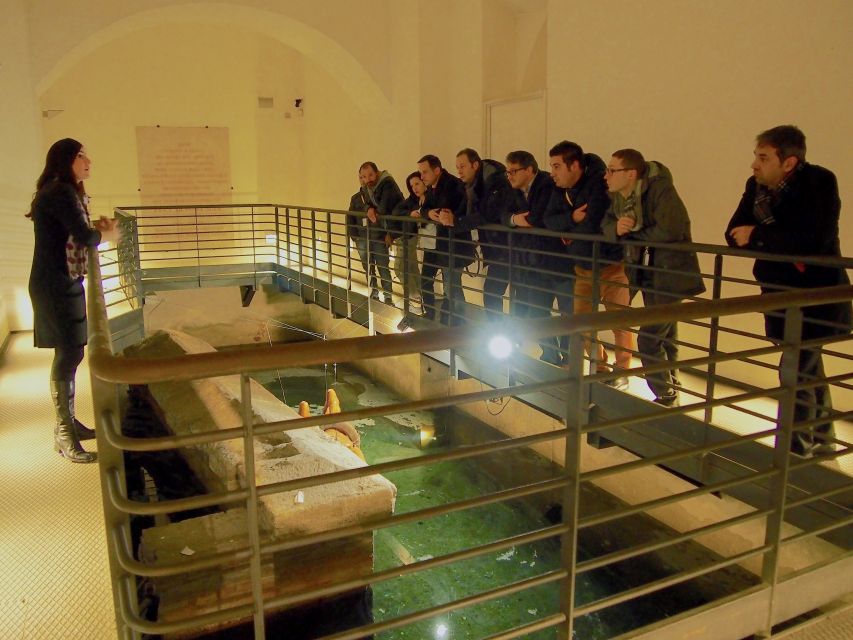
- A Roman tomb below the palace: Visit the tomb of Auro Irzio, dated to 43 B.C., beside an underground natural pond.
- Private multilingual guiding: Tours are offered in six languages, with explanations that can be adjusted for children.
- Short central Rome visit: Allow 1.5 to 2 hours, plus time to arrive 15 minutes before departure.
Why Leonardo’s machines work better than a painting lecture
Leonardo is often introduced through the Mona Lisa, The Last Supper, and a handful of famous sketches. This exhibition takes a different route. It asks you to look at how he thought, tested ideas, and connected the natural world to practical design.
The displays cover four broad subjects: water, air, fire, and earth. These are not just labels on gallery walls. They give your guide a useful way to explain why Leonardo studied flowing water, flying birds, mechanical force, firepower, and the structure of the ground beneath him.
You will see full-scale reproductions based on Leonardo’s drawings. That distinction matters. The machines are made according to his designs, but they are not original objects from his workshop. Their value is that you can understand size, balance, movement, and purpose in a way that a small drawing cannot provide.
The exhibition includes machines connected with science, aviation, and military engineering. You might see how Leonardo approached flight, how he imagined bridges, or how he used simple mechanical principles to solve difficult problems. The guide’s role is important here because many devices can look confusing without an explanation of what problem each one was meant to solve.
More Museum Tours in Rome
- Vatican Museums, Sistine Chapel & St. Peter’s Basilica Tour
★ 4.3 · 73,970 reviews - Vatican Museums, Sistine Chapel & St Peter’s Basilica Guided Tour
★ 4.5 · 39,149 reviews - Rome: Vatican Museums, Sistine Chapel and Basilica Tour
★ 4.3 · 16,039 reviews
Entering Palazzo della Cancelleria
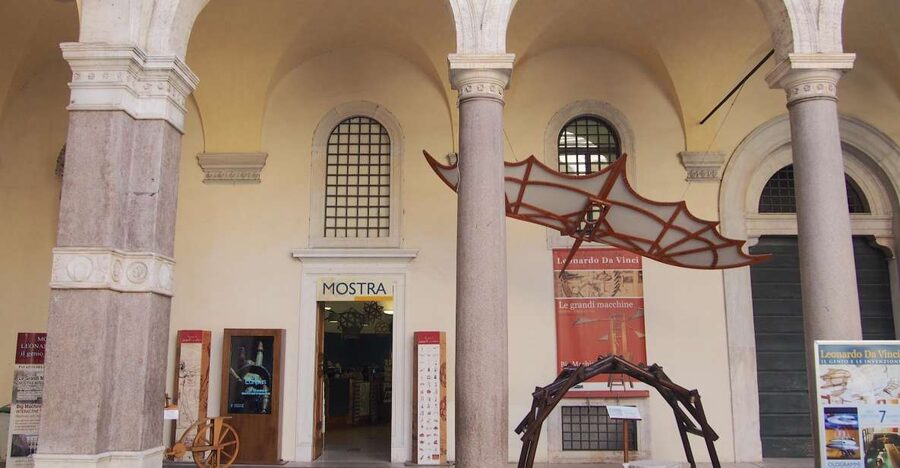
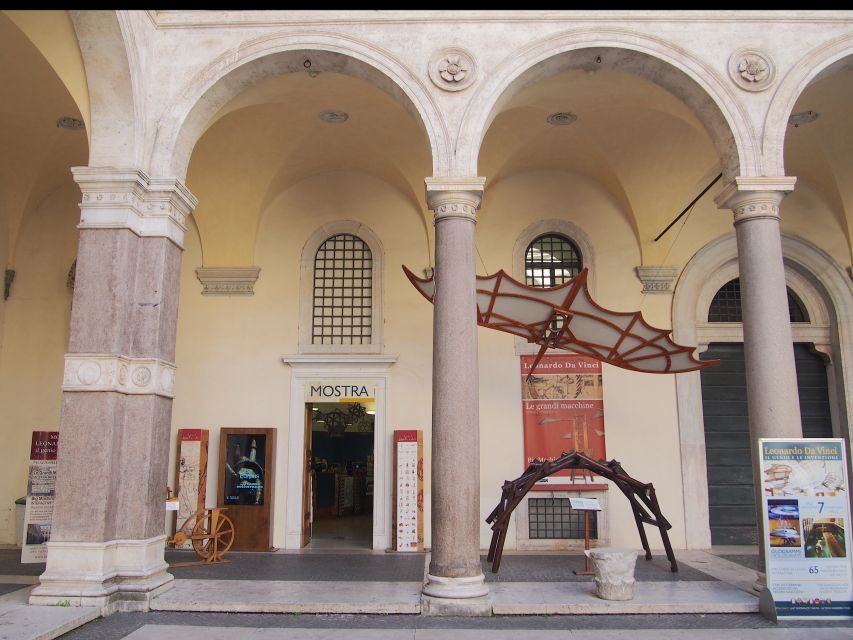
The exhibition is housed in Palazzo della Cancelleria, a Vatican-owned palace with architectural interest of its own. You are not simply entering a modern science center. The building gives the visit a Roman setting, and the contrast between Renaissance engineering displays and an old ecclesiastical palace adds character.
The upper floor hosts the Sacra Rota, the church court associated with marriage annulments. That part of the building is not the main subject of the tour, but it helps explain why the palace has more layers than a standard museum venue.
The meeting point is at the exhibition, and you should arrive 15 minutes before departure. That small buffer is worth taking seriously in central Rome, where streets can be busy and navigation takes longer than expected. The tour itself lasts about 1.5 to 2 hours, so it fits well into a morning or afternoon plan.
Nine holograms that make Leonardo feel present
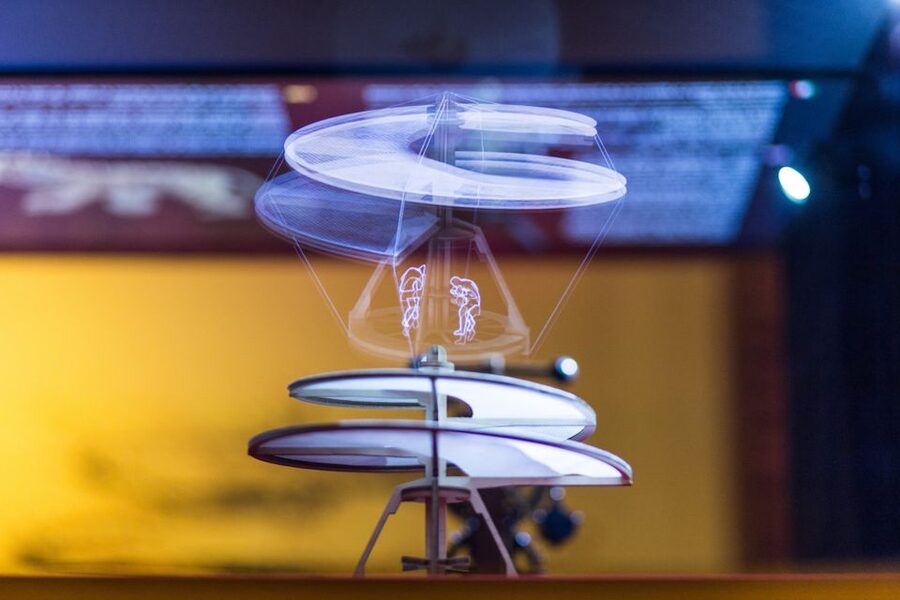
The nine holograms are among the exhibition’s most unusual features. They show Leonardo’s paintings and inventions in three dimensions, giving you a visual bridge between his drawings and the machines around you.
A hologram cannot replace an original artwork, and this is not an art museum built around authentic Leonardo canvases. Its purpose is different. The projected images help you see how Leonardo moved between art, observation, and invention.
I find this especially useful for visitors who know the famous names but have trouble connecting them to his scientific work. A three-dimensional presentation can make a design easier to follow, particularly when you are comparing a projected concept with a full-size reconstruction nearby.
The technology also gives the guide a natural way to explain hidden features and symbols linked to Leonardo’s work. Some of these details remain open to interpretation, so expect discussion rather than a final answer to every mystery.
The hands-on machine room
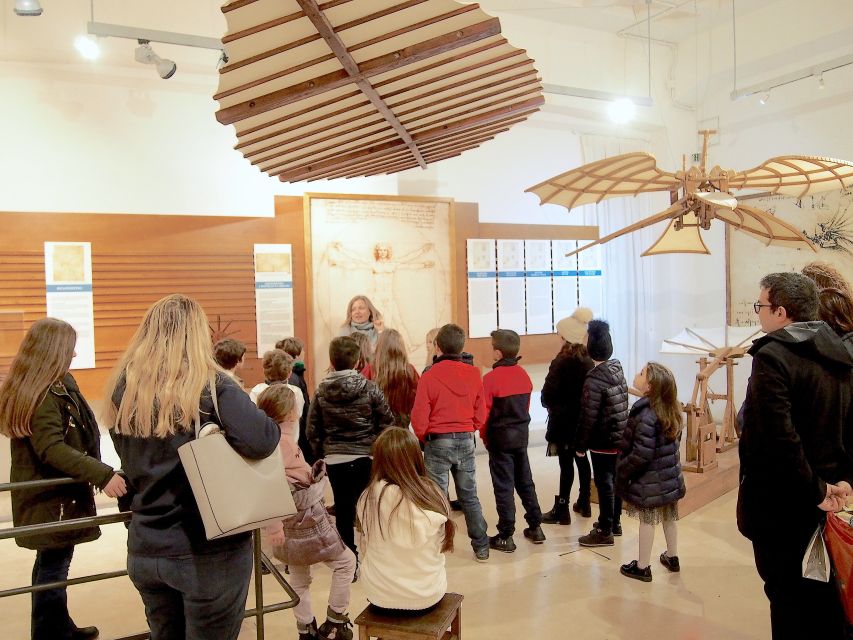
The strongest part of the visit is the chance to interact with many of the machines. You can touch and play with almost all of the displays, rather than walking past objects behind glass.
That makes the tour a good choice for families and for adults who learn by doing. A machine that seems simple on paper can become much clearer when you move a lever, watch a mechanism turn, or see how a structure supports weight.
The bridge activity is a useful example. You may have the chance to build your own version of a bridge designed by Leonardo. It is a small task, but it shows the practical side of his work: balance, weight, materials, and structure all have to cooperate.
The experience is not only about admiring a famous mind. You get to test the logic behind the idea. That is the difference between reading that Leonardo studied engineering and seeing why his designs still interest people today.
Parents should ask the guide to keep the visit active for children. The tour can include child-friendly explanations, and the guide may have access to additional workshops. One family-focused suggestion is to add drawing, construction, or group activities between longer explanations. That would make the experience even stronger for children with short attention spans.
More private museum tours in Rome:
- Private Vatican Museums and St. Peter’s Basilica Early Bird Tour
★ 5.0 · 980 reviews - Vatican City: Sistine Chapel, Museums, Basilica Private Tour
★ 4.8 · 158 reviews - Skip the line Vatican Museum Sistine & St.Peter Private Tour
★ 4.7 · 40 reviews - Rome: Private Vatican Museums and Sistine Chapel Tour
★ 4.7 · 37 reviews
Four subjects that explain Leonardo’s thinking
The sections on water, air, fire, and earth help organize a very wide subject. Leonardo’s work covered painting, anatomy, mechanics, architecture, military design, and natural science. Without a structure, that range can feel scattered.
Water offers a way to discuss movement, flow, and force. Air leads toward flight and the study of birds. Fire connects to energy and military machinery. Earth brings the discussion back to the physical world and the materials that support human construction.
Your guide can show how these subjects overlap. Leonardo did not treat art and science as separate boxes. He observed bodies, rivers, birds, machines, and buildings with the same habit of close attention.
This is also where a private guide earns the admission price. You can pause when a topic catches your interest, ask for a simpler explanation, or move faster through a display that does not hold your attention. In a larger group, the pace would be less flexible.
Anatomy, inventions, and the video presentation
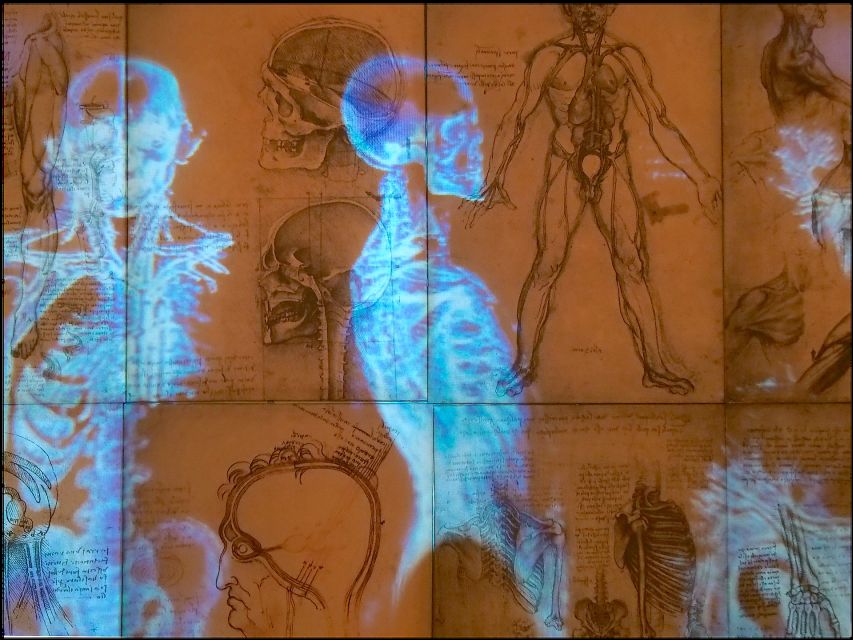
A video about Leonardo’s inventions and his anatomy studies forms another part of the visit. Leonardo’s anatomical work matters because it shows how carefully he examined the human body, not merely how skillfully he drew it.
The video gives you a break from the machines while keeping the focus on observation and discovery. It also helps connect Leonardo’s artistic training with his scientific curiosity.
The supplied information does not give the video’s exact running time, so you should think of it as one component of the wider tour rather than a separate film screening. If you are traveling with children, ask the guide how the video fits into the visit and request a child-friendly explanation when needed.
The exhibition can also give you a better sense of Leonardo’s working method. He was not simply producing finished inventions. He was studying, revising, testing, and recording ideas. That process is often more revealing than the polished result.
The 43 B.C. tomb below the palace
The most unexpected stop is the tomb of Auro Irzio, an architect who lived in the first century B.C. The tomb dates to 43 B.C. and sits beside an underground natural pond.
This changes the mood of the visit. One moment you are looking at flying machines and mechanical bridges. The next, you are below the palace with a Roman burial feature and water under the building.
The tomb is not a Leonardo exhibit, so it should be viewed as an added archaeological feature rather than the main reason to book. Still, it gives the tour a strong Rome-specific detail. You could see mechanical replicas in many cities. You cannot get the same combination of Leonardo and an ancient Roman tomb in most science museums.
The supplied details do not specify how long the group remains at the tomb or whether the pond area is always accessible in the same way. Treat it as part of the guided route, not as a separate archaeological tour.
Why the private format can be worth $93
The listed price is $93 per group up to one, which is an unusual way to display the cost. Check the booking screen carefully to confirm how the price applies to your party before paying.
The value depends on how much you want from the guide. If you only want to wander through replicas, a standard admission option might be enough if available. If you want explanations, questions answered, language support, and access to more workshops, the private format becomes more appealing.
You are paying for more than entry. The package includes the exhibition entrance, a guided tour, and a gadget. The guide can help you understand machines that may otherwise look like wooden frameworks and gears without a clear purpose.
A private visit is especially useful for a family, a couple, or a small group with mixed interests. Children can receive simpler explanations, while adults can ask about engineering, anatomy, architecture, or Renaissance ideas. The cost makes less sense for someone who prefers to read labels alone and move quickly.
The tour has earned a 4.6 rating from 54 reviews, and the most consistent praise centers on the guides. Visitors have described guides as attentive, patient with children, clear in German, and able to answer questions. Julia received particular praise for a German-language visit, while other guides have been thanked for making the experience lively and personal.
Language choice and guide quality
You can book the tour in Italian, French, Spanish, English, German, or Portuguese. This is more than a box to tick during booking. Complex machines are much easier to understand when the explanation flows naturally in your strongest language.
The guide can also shape the mood of the visit. A patient guide who pauses for questions will help you get more from the hands-on displays. A guide who focuses only on long explanations may make the same exhibition feel slower, especially for children.
The best use of the private format is to tell your guide what interests you at the start. Ask for extra attention to aviation if that is your priority. Request more time with the bridge if you are visiting with children. Ask for context about the palace or the Roman tomb if you want the visit to feel more connected to Rome.
The guide may also provide access to more workshops. The information does not list every workshop or promise a specific activity, so consider this an added possibility rather than a guaranteed sequence of projects.
Who should book this Leonardo tour
I would recommend this experience to you if you want a short, focused museum visit with a guide. It works particularly well for:
- Families looking for something more active than a traditional art gallery
- Adults curious about Leonardo’s engineering and scientific studies
- Visitors who enjoy building, testing, and handling displays
- Anyone who wants a central Rome activity lasting less than two hours
- Small groups that benefit from a private pace and language choice
- Visitors interested in adding an ancient Roman feature to a Renaissance-themed visit
I would be more cautious if your main goal is to see original Leonardo paintings. The exhibition uses holograms and full-scale reproductions, so it is about ideas, mechanisms, and interpretation rather than authentic masterpieces.
You should also avoid expecting a full tour of Palazzo della Cancelleria. The palace matters because of its architecture, Vatican connection, and underground tomb, but the main visit remains the Leonardo exhibition.
Practical details that affect your visit
The tour is wheelchair accessible, which makes it a practical option for many visitors. The activity lasts 1.5 to 2 hours, and starting times depend on availability.
You should arrive 15 minutes before the scheduled departure. Bring your booking details and allow extra time to reach the palace, especially if this is part of a tightly planned day.
Free cancellation is available up to 24 hours before the tour for a full refund. You can also reserve now and pay later, which helps if your Rome schedule is still changing.
Because the tour is relatively short, you can pair it with nearby sightseeing before or afterward. Do not pack the surrounding day too tightly, though. The guide may spend more time on a machine, workshop, or question than you expect.
Should you book it?
Book this tour if you want Leonardo presented as an inventor and investigator, not only as the painter of famous masterpieces. The hands-on machines, nine holograms, child-friendly guiding, and ancient tomb give the visit more variety than a basic exhibition stop.
The best reason to choose the private option is the guide. Someone like Julia, praised for a German-language tour, or a patient guide who can adjust explanations for children, can make the difference between a display of replicas and a clear lesson in how Leonardo thought.
Skip it if you need original artworks, a long museum visit, or a detailed tour of the entire palace. For families, curious adults, and visitors with limited time, this is a useful two-hour window into Leonardo’s practical mind, with an unexpected Roman archaeological bonus below the floor.
FAQ
Where does the Leonardo da Vinci tour take place?
The exhibition is inside Palazzo della Cancelleria in Rome, in the Lazio region of Italy. The palace is owned by the Vatican.
How long does the tour last?
The guided experience lasts about 1.5 to 2 hours. Starting times depend on availability.
What languages are offered?
You can take the tour in Italian, French, Spanish, English, German, or Portuguese.
What is included in the price?
The package includes exhibition entry, a guided tour, and a gadget.
Can I interact with the machines?
Yes. You can touch and play with almost all of the machines on display. You may also have the chance to build your own version of one of Leonardo’s bridges.
Is the tour suitable for children?
Yes. The tour can include child-friendly explanations, and the private format allows the guide to adjust the pace. Additional workshops may also be available.
Is the exhibition wheelchair accessible?
Yes, the activity is listed as wheelchair accessible.
Just added around Rome
- Vatican City: Sistine Chapel, Museums, Basilica Private Tour★ 4.8 · 158 reviews
- Rome: Hop-on Hop-off Bus & Vatican Museums Ticket★ 3.5 · 41 reviews
- Rome: Vatican Museums, Sistine Chapel, and St. Peter’s Tour★ 4.5 · 49 reviews
- Skip-The-Ticket Line-Vatican Museum & Sistine Chapel★ 3.9 · 383 reviews
- Skip the line Vatican Museum Sistine & St.Peter Private Tour★ 4.7 · 40 reviews
- Skip-the-Line Vatican Museums and Sistine Chapel Guided Tour★ 4.3 · 130 reviews
- Skip-the-Line Tickets: Vatican Museum and Sistine Chapel★ 3.5 · 114 reviews
- MAXXI – Museum of Contemporary Art of 21st century★ 4.0 · 91 reviews
Museum Tours in Rome, compared.
Vatican Museums, Sistine Chapel & St. Peter’s Basilica Tour
Read our review →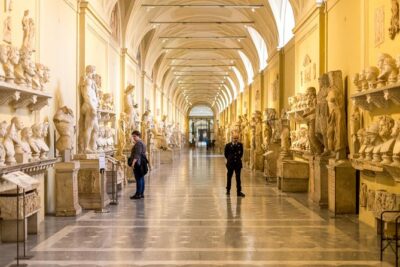
Vatican Museums, Sistine Chapel & St Peter’s Basilica Guided Tour
Read our review →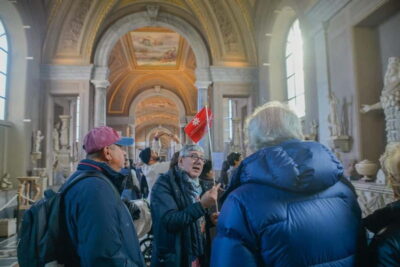
Vatican Museums, Sistine Chapel and Basilica Tour
Read our review →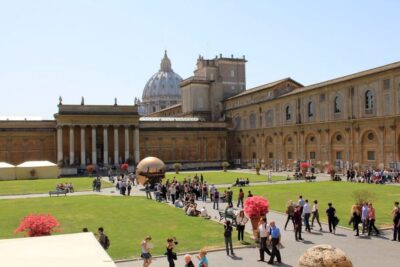
Vatican Museums & Sistine Chapel Skip-the-Line Entry Ticket
Read our review →
Vatican Museums, Sistine Chapel & Basilica Tour
Read our review →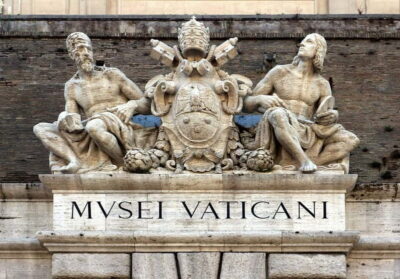
Vatican Museums & Sistine Chapel Guided Tour
Read our review →
Vatican Museums & Sistine Chapel Skip-the-Ticket-Line Tour
Read our review →
Vatican Museums, Sistine Chapel and St. Peter’s Basilica Tour
Read our review →Browse the lists this tour appears in