
Review · ROME
Rome: Skip the line Vatican Museums & Sistine Chapel Tour
Michelangelo’s Sistine Chapel is the grand finale, but the art-filled route getting there is just as important. This three-hour Vatican tour takes you through the Belvedere Courtyard, the Gallery of Maps, the Gallery of Tapestries, Raphael’s Rooms, and the Sistine Chapel with a guide explaining what your eyes are seeing.
I like the skip-the-ticket-line entry, especially when Rome is packed, and I like the use of headsets, which helps you follow the guide in echoing rooms. Guides such as Lorena, Alessandra, Marco, and Alexandra have earned praise for clear storytelling and steady group management. The main drawback is crowding: even a small-group tour moves through one of Europe’s busiest museums, and three hours can feel long if you prefer to wander at your own pace.
Key points to know before booking
- Michelangelo comes at the end: You spend about 30 minutes in the Sistine Chapel after seeing major Vatican collections.
- The route covers more than the chapel: Expect the Belvedere Courtyard, ancient sculptures, Maps, Tapestries, Raphael Rooms, and other museum galleries.
- Skip the ticket line saves real time: You still pass airport-style security, and that queue can reach 30 minutes in high season.
- Headsets make a difference: You can hear the guide while walking through crowded rooms and long corridors.
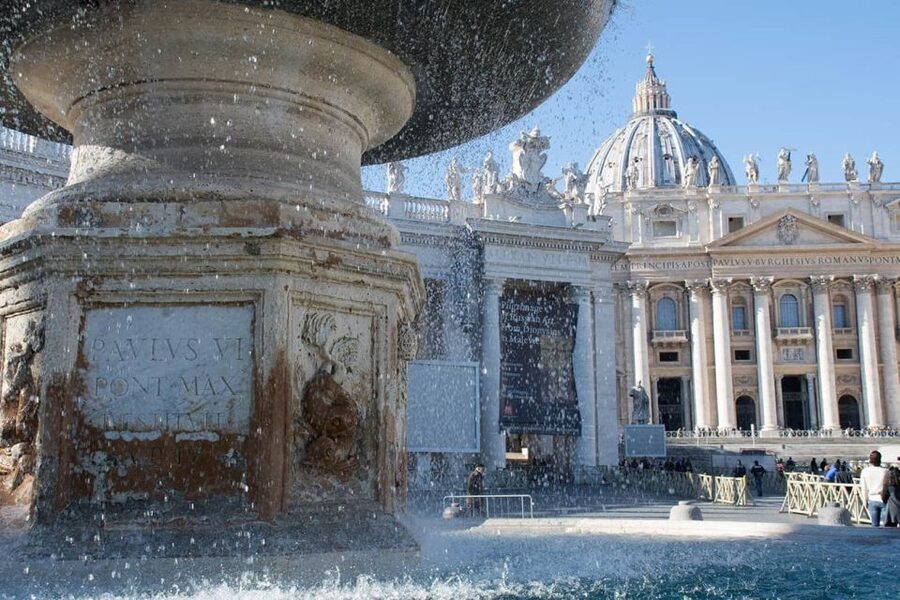
- St. Peter’s Basilica is not included: The tour finishes at Piazza Pio XII, near the basilica, but basilica entry is separate.
- Dress for the Vatican: Shoulders and knees must be covered, and comfortable shoes are essential.
Why the Vatican route works so well
The Vatican Museums can feel like an enormous art warehouse if you enter without a plan. There are vast corridors, statues from different eras, decorated rooms, and more famous paintings than you can absorb in one visit.
This tour gives you a route and a storyline. Instead of stopping at random works, you move through a carefully chosen sequence that leads from ancient sculpture to Renaissance painting and finally to Michelangelo’s ceiling and altar wall.
That structure matters. You see how artists studied the human body, perspective, geography, religion, and classical mythology. By the time you reach the Sistine Chapel, you have more context for the artistic choices in front of you.
The guide also keeps the pace moving. You are not simply handed an admission ticket and left to find the chapel on your own. English and Spanish tours are available, and the radio headsets let you listen without standing shoulder to shoulder with the guide.
The group size is described as small, though the experience can still feel crowded inside the museum. One group reported around 20 people, which is manageable but not private. In summer, narrow corridors and packed galleries can make any tour feel larger than it is.
More Museum Tours in Rome
- Vatican Museums, Sistine Chapel & St. Peter’s Basilica Tour
★ 4.3 · 73,970 reviews - Vatican Museums, Sistine Chapel & St Peter’s Basilica Guided Tour
★ 4.5 · 39,149 reviews - Rome: Vatican Museums, Sistine Chapel and Basilica Tour
★ 4.3 · 16,039 reviews
Meeting the guide and getting inside
The listed starting point is at Viale Giulio Cesare 229, though the exact meeting point can depend on the option you book. Pay close attention to the instructions, arrive early, and look for the guide’s sign or flag. One useful bit of advice from the tour experience is to follow only the official guide’s flag, since the street outside the Vatican is full of groups gathering at similar times.
Your ticket includes entry to the Vatican Museums and the Sistine Chapel. The skip-the-line benefit applies to the ticket queue, not to security. Every visitor still passes through airport-style screening, and in high season that wait can reach 30 minutes.
That distinction is important. Skip-the-line entry can save you from a long ticket queue, but it does not promise an instant entrance. Keep your bag small, leave large luggage elsewhere, and expect some standing before the tour begins.
Once inside, you receive earphones. These were praised as helpful during the tour, especially in crowded spaces. One practical weakness is that sound can be harder to follow in rooms with strong acoustics, so tell the guide if you cannot hear clearly.
Belvedere Courtyard and ancient sculpture
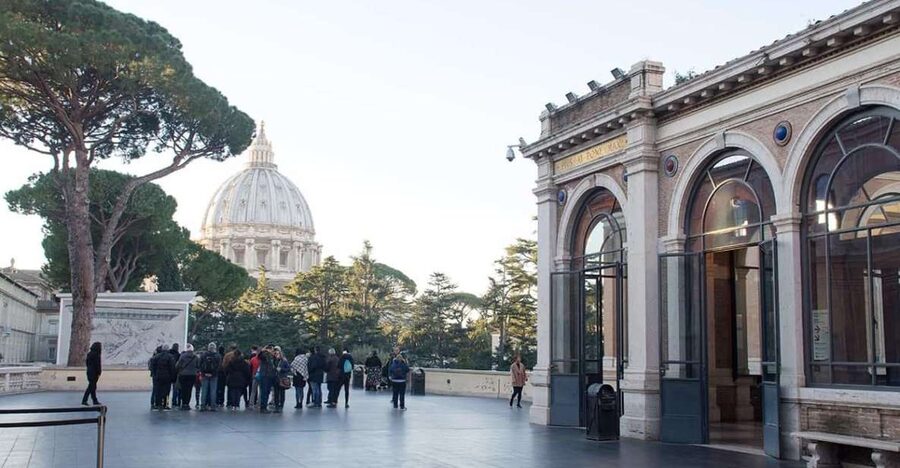
The route begins with the Cortile del Belvedere, an important setting for some of the Vatican’s best-known ancient sculptures. This is where the tour starts connecting Michelangelo and later artists to the classical world they studied so closely.
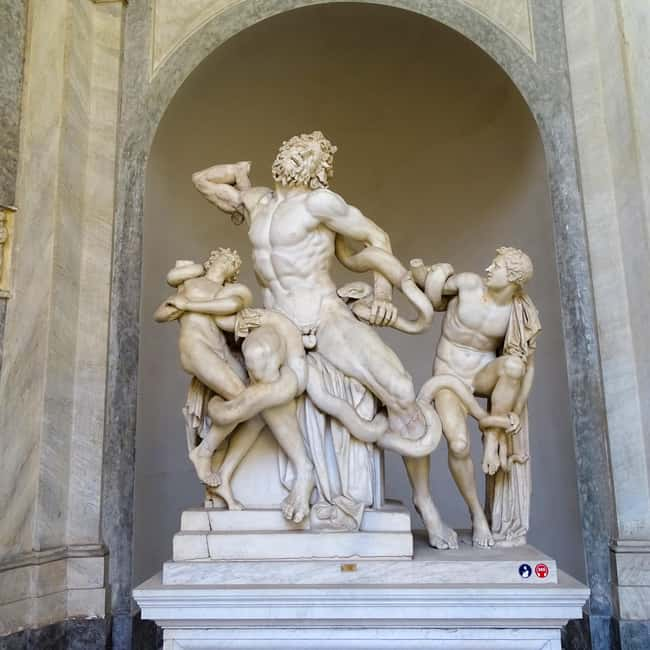
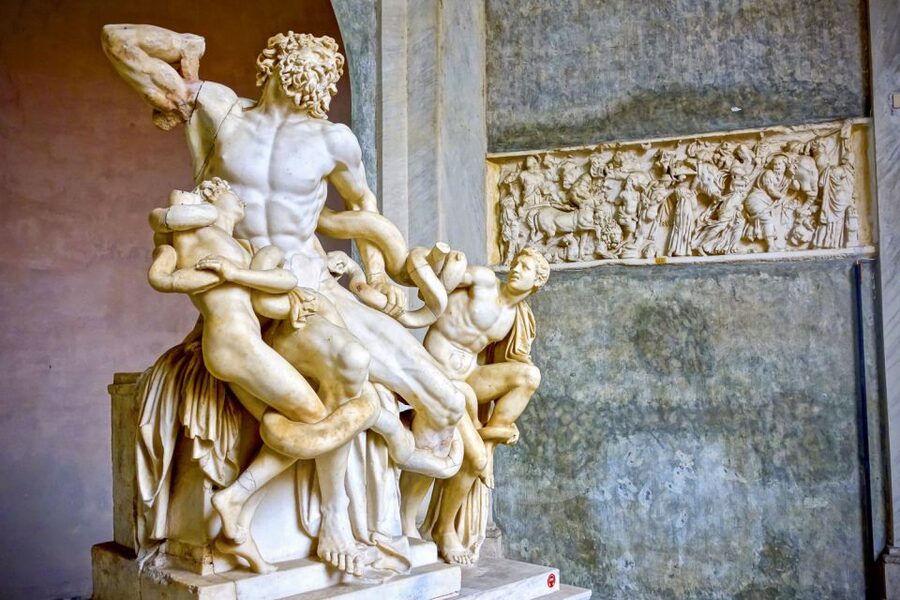
Look for Laocoön and His Sons, a dramatic sculpture showing a father and his sons fighting a deadly serpent. The work is famous for its twisting bodies and emotional force, and it gives you an early lesson in how the human figure becomes a vehicle for movement and fear.
You also see the Belvedere Torso. It is incomplete, but that is part of its power. The muscular body and turned posture had a major effect on Michelangelo’s study of anatomy. Your guide can help you understand why a damaged ancient sculpture mattered so much to a Renaissance artist.
This stop is more than a parade of famous names. It explains the training ground behind the Vatican’s later art. Michelangelo did not invent his figures from nothing. He looked closely at ancient bodies, movement, and proportion, then pushed those ideas in new directions.
The courtyard and sculpture galleries can be crowded, so you may not have much time to stand alone with each work. The benefit of the guided visit is that you get the main point before the group moves on.
The Gallery of Maps and Renaissance geography
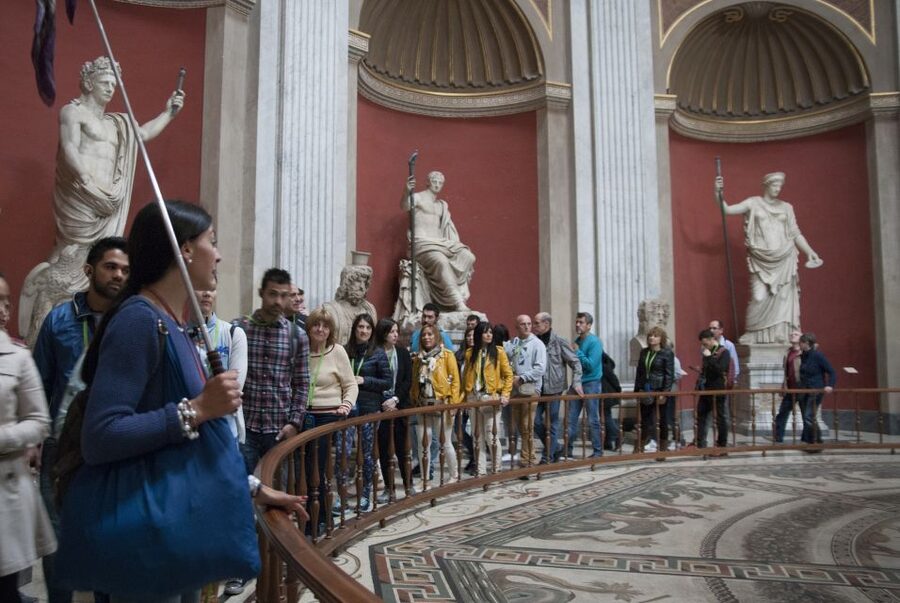
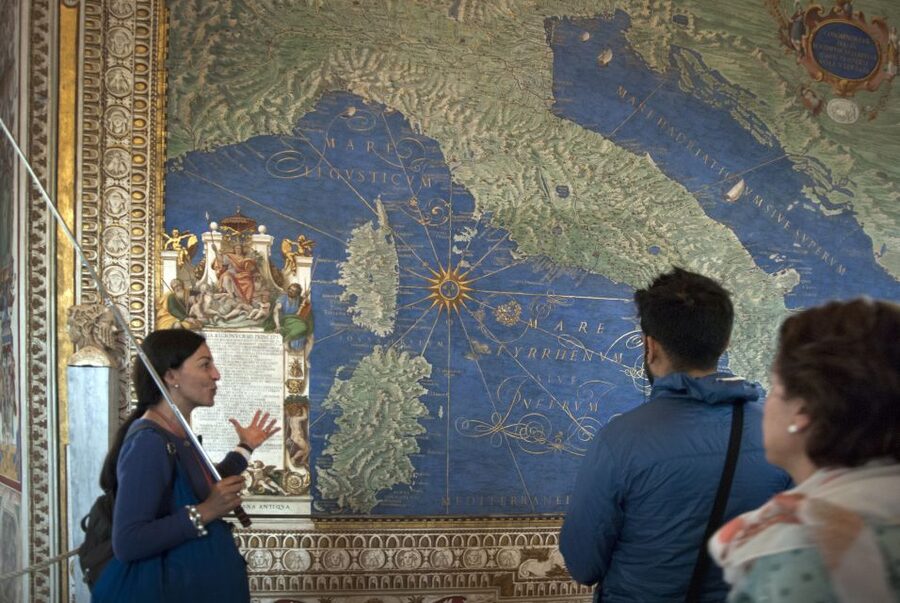
The Gallery of Maps is one of the most memorable corridors in the Vatican Museums. Its walls and ceiling are covered with elaborate sixteenth-century decoration, while large painted maps show how artists and scholars represented Italy before modern mapping tools.
This is a good place to listen carefully rather than rush through. The maps are not simply decorative wall panels. They show how geography, politics, faith, and artistic display came together in the Vatican.
The guide points out details that are easy to miss when you are walking through a crowded hallway. You might notice coastlines, towns, mountain ranges, and regional symbols that reveal how Italy was understood at the time.
The corridor is long and visually busy. Without a guide, it is easy to admire the colors and move on without knowing what you are seeing. With a guide, you can pause on selected details rather than trying to read every map.
Do not expect a quiet, private viewing. Groups funnel through this section, and you will be standing for much of the visit. Comfortable shoes are not optional here.
More ways into the Vatican Museums:
- Vatican Museums & Sistine Chapel Skip-the-Line Entry Ticket
★ 4.4 · 13,838 reviews - Rome: Vatican Museums, Sistine Chapel & Basilica Tour
★ 4.7 · 13,217 reviews - Rome: Vatican Museums & Sistine Chapel Guided Tour
★ 4.3 · 12,117 reviews - Vatican Museums & Sistine Chapel Skip-the-Ticket-Line Tour
★ 4.3 · 10,486 reviews
The Gallery of Tapestries and the Raphael Rooms
The Gallery of Tapestries follows the map corridor and continues the Vatican’s display of large-scale decorative art. Look at the way figures, fabric, architecture, and perspective create the illusion of depth. The works reward a closer look, but the guide will usually select a few pieces rather than discuss every panel.
Next come the Raphael Rooms, among the Vatican’s most important Renaissance spaces. The centerpiece for many people is The School of Athens, where philosophers gather beneath a grand architectural setting.
This painting is ideal for a guided explanation. Raphael used perspective to pull your eye toward the center, where Plato and Aristotle appear together. The figures around them are not placed at random. Their gestures and positions help express different approaches to knowledge and philosophy.
The guide can also point out the possible likenesses of Renaissance figures within the scene, along with the painting’s balance of architecture, movement, and symbolism. You will get more from the work if you know where to look before the crowd carries you forward.
The Room of the Fire in the Borgo adds another layer to Raphael’s rooms. It presents a dramatic historical and religious scene, with figures reacting to danger and disorder. Details in the gestures and expressions are easy to miss when you see the painting as part of a larger decorated wall.
This section can be one of the tour’s strongest moments for art lovers. It also shows the value of a guide who can keep the discussion focused. You do not need a lecture on every painting in the building. You need a clear explanation of a few key works and enough time to look at them.
The Sistine Chapel, saved for the finale
The tour culminates in the Sistine Chapel, with roughly 30 minutes assigned to the visit. Silence is required inside, so the guide explains the major points before you enter or provides instructions through the headset and then allows you to look.
The ceiling is the obvious focus. Michelangelo’s Creation of Adam is often the image people arrive expecting to see, but the surrounding scenes, prophets, figures, and painted architecture help make the full ceiling a larger visual program.
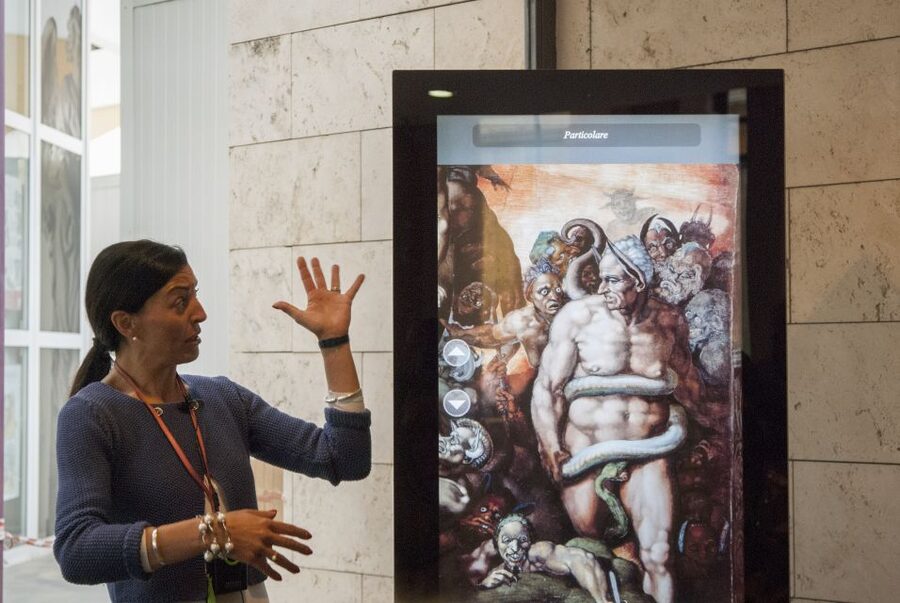
You will also see The Last Judgment on the altar wall. It is darker and more forceful than the ceiling scenes, with figures arranged in a great movement around Christ. The contrast between the ceiling and altar wall gives you a better sense of Michelangelo’s changing style and the different demands of the two projects.
A guide adds real value here because the chapel is not a simple picture gallery. You need help understanding which scenes you are looking at, how the ceiling is organized, and why the work caused such a sensation.
The limitation is time. Thirty minutes is enough for an introduction and a careful look upward, but not enough to study every panel. One visitor wished for more time, a common feeling in a room with this much to see.
The chapel can also be packed. You may find yourself standing among many other people, looking for a clear view of the ceiling. The silence and crowd control can make the experience feel more formal than relaxed, but they also protect the chapel from becoming a noisy passageway.
Photography and other chapel rules are controlled by museum policy, so follow the guide’s instructions. Dress modestly, covering shoulders and knees. Sleeveless shirts, short skirts, and shorts are not suitable for entry.
What the $71 price gets you
At about $71 per person, this is not the cheapest way to enter the Vatican Museums. You are paying for more than admission: the ticket, skip-the-ticket-line access, a live guide, headsets, and assistance are included.
I think the price makes the most sense if you are visiting Rome for a short stay, dislike museum logistics, or want a clear introduction to the Vatican’s major works. The time saved at the ticket entrance can be valuable, particularly during the busiest months.
The value is less clear if you already know the Vatican well or want several hours of quiet, independent viewing. A three-hour guided route gives you highlights, not unlimited museum time. You will see important rooms, but you will not explore every gallery.
The guide is the main factor that determines how much you get for your money. Past guides including Lorena, Alessandra, Alexandria Maria Vargara, Marco, Monica, Laura, and Frederica received especially warm praise for clear explanations, kindness, humor, and organization. The strongest experiences came when the guide combined big historical points with small visual clues.
The tour has earned an overall rating of 4.2 from 251 reviews, which suggests a generally strong experience with some variation. The less positive comments focus on crowds, group size, price for some budgets, and the fact that three hours can feel long. Those are fair concerns, and none can be removed entirely by a guide.
Practical planning for the three-hour visit
Wear shoes that are comfortable for long periods of walking and standing. The Vatican route includes broad museum spaces, long corridors, steps or uneven movement through busy areas, and a chapel visit where you may spend much of your time on your feet.
Bring a passport or ID card, including for children. Do not bring large bags or luggage. A small backpack or compact bag is the safer choice, since large backpacks are not permitted through the monuments.
This tour is not suitable for wheelchair users, people with mobility difficulties, or strollers. The tight corridors and crowded rooms make strollers especially awkward, and the tour operator specifically warns that the group format is not designed for them.
There are no transfers included. You make your own way to the meeting point and leave at the end near Piazza Pio XII, at the edge of St. Peter’s Square. Entry to St. Peter’s Basilica is also not included, so plan that separately if it is part of your Rome schedule.
Cancellation is flexible up to 24 hours before the tour for a full refund, and you can reserve now and pay later. In the unusual event of a museum closure or imposed restriction, the route may change without a refund, though the tour should retain the same duration.
Who should book this Vatican tour?
I would choose this tour if you want the Vatican’s main artistic landmarks explained in plain language, need help with the route, and value getting past the ticket queue. It is especially useful for a first visit, a short Rome stay, or anyone who does not want to spend an evening planning which corridor leads to which room.
It suits adults and older children who can walk and stand for three hours. It is less suitable for very young children, stroller users, visitors with mobility limits, or anyone who strongly prefers to explore alone.
Book it for the guide and the structure, not because the Vatican will be empty. The skip-the-line ticket saves time, but security and interior crowds remain part of the experience. If you accept that trade-off, the tour gives you a solid first look at the Vatican’s greatest rooms and a much better understanding of why the Sistine Chapel matters.
FAQ
How long does the Vatican tour last?
The tour lasts three hours, with about 30 minutes assigned to the Sistine Chapel.
What places are included?
The route includes the Cortile del Belvedere, Vatican Museums, Gallery of Maps, Gallery of Tapestries, Raphael Rooms, and Sistine Chapel.
Is the Sistine Chapel included in the ticket?
Yes. Entrance to the Vatican Museums and access to the Sistine Chapel are included.
Is St. Peter’s Basilica included?
No. Entry to St. Peter’s Basilica is not included in this tour.
Does the tour skip all lines?
The tour includes skip-the-ticket-line entry. All visitors must still pass airport-style security, and that wait can reach 30 minutes during high season.
What languages are available?
Live tours are available in English and Spanish.
Are headsets provided?
Yes. Earphones are included so you can hear the guide during the visit.
What should I wear?
Wear clothing that covers your shoulders and knees. Comfortable shoes are strongly recommended because you will walk and stand for a long time.
Can I bring a large backpack or luggage?
No. Large bags and luggage are not allowed, and large backpacks cannot be taken through the monuments. Bring a small bag instead.
Is the tour suitable for wheelchair users or strollers?
No. The group tour is not suitable for wheelchair users, people with mobility issues, or strollers.
Can I cancel the booking?
You can cancel up to 24 hours in advance for a full refund. A reserve-now, pay-later option is also available.
Where does the tour finish?
The listed drop-off point is Piazza Pio XII, near St. Peter’s Square. Transfers are not included.
More Skip-the-Line Tickets in Rome
- Rome: Vatican Museums & Sistine Chapel Skip-the-Line Ticket
★ 4.3 · 8,103 reviews - Skip the Line: Vatican Museum, Sistine Chapel + Optional Basilica
★ 4.5 · 6,181 reviews - Rome: Borghese Gallery Skip-the-Line Ticket & Audioguide
★ 4.3 · 4,318 reviews - Rome: Borghese Gallery Guided Tour with Skip-the-Line Entry
★ 4.8 · 2,649 reviews
Just added around Rome
- Vatican City: Sistine Chapel, Museums, Basilica Private Tour★ 4.8 · 158 reviews
- Rome: Hop-on Hop-off Bus & Vatican Museums Ticket★ 3.5 · 41 reviews
- Rome: Vatican Museums, Sistine Chapel, and St. Peter’s Tour★ 4.5 · 49 reviews
- Skip-The-Ticket Line-Vatican Museum & Sistine Chapel★ 3.9 · 383 reviews
- Skip the line Vatican Museum Sistine & St.Peter Private Tour★ 4.7 · 40 reviews
- Skip-the-Line Vatican Museums and Sistine Chapel Guided Tour★ 4.3 · 130 reviews
- Skip-the-Line Tickets: Vatican Museum and Sistine Chapel★ 3.5 · 114 reviews
- MAXXI – Museum of Contemporary Art of 21st century★ 4.0 · 91 reviews
Museum Tours in Rome, compared.
Vatican Museums, Sistine Chapel & St. Peter’s Basilica Tour
Read our review →
Vatican Museums, Sistine Chapel & St Peter’s Basilica Guided Tour
Read our review →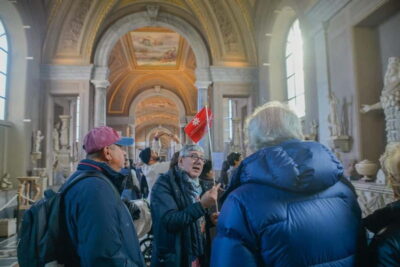
Vatican Museums, Sistine Chapel and Basilica Tour
Read our review →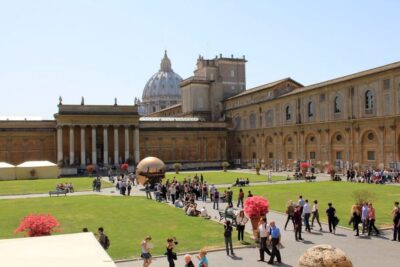
Vatican Museums & Sistine Chapel Skip-the-Line Entry Ticket
Read our review →
Vatican Museums, Sistine Chapel & Basilica Tour
Read our review →
Vatican Museums & Sistine Chapel Guided Tour
Read our review →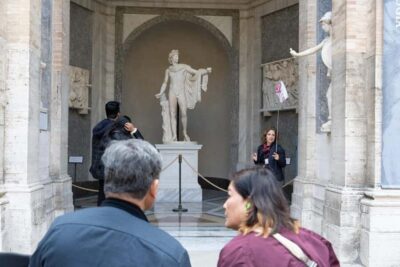
Vatican Museums & Sistine Chapel Skip-the-Ticket-Line Tour
Read our review →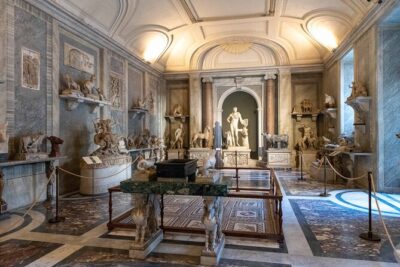
Vatican Museums, Sistine Chapel and St. Peter’s Basilica Tour
Read our review →Browse the lists this tour appears in