
Review · ROME
Rome: Capitoline Museums Private Guided Tour
The best part of this tour is the way it connects Rome’s famous symbols with the art and buildings that preserve them. In one 2.5-hour visit, you’ll see the Capitoline Wolf, the original Marcus Aurelius, Caravaggio paintings, and a tunnel with views over the Roman Forum. I like the private format and the clear route through both historic museum palaces.
I also like that the tour does not stop at ancient statues. You’ll see Renaissance and Baroque art, Greek and Etruscan vases, inscriptions, mosaics, and the remains of ancient temples. Guides such as Martin are praised for making links between art, politics, and Roman society. The main consideration is pace: there is a lot to cover, and the museum’s size means you may spend less time with individual works than you would on a narrower art tour.
Key points to know before booking
- The original Marcus Aurelius: See the ancient equestrian statue in the museum’s indoor exedra, rather than only the modern copy in the piazza.
- Two historic palaces: The route covers the Palace of the Conservatives and the New Palace, linked by an underground passage.
- Art beyond ancient Rome: The Pinacoteca includes works by Caravaggio, Titian, Rubens, Guido Reni, and other major painters.
- Roman Forum views: The Tabularium tunnel opens onto a striking view of the Forum without requiring a separate archaeological visit.
- Private guidance: Your group can include from one to 20 people, with an English or Italian-speaking art historian.
- Good practical value: Entry, skip-the-line access, and a private guide are included in the $201.65 per-person price.
Why the Capitoline Museums deserve a place on your Rome schedule
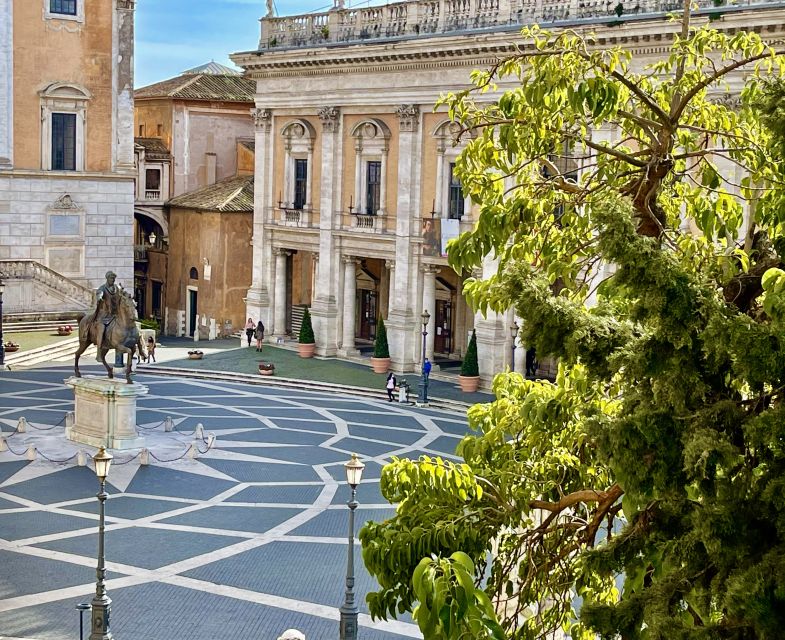
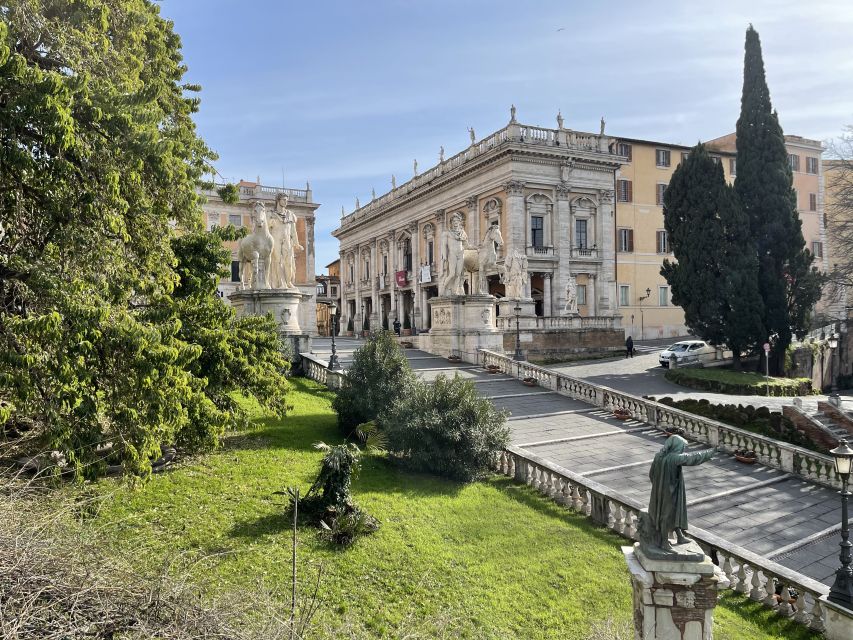
The Capitoline Museums sit on Capitoline Hill, one of the most important hills of ancient Rome. This is not simply a gallery filled with old statues. The museum occupies two historic palaces designed around Michelangelo’s famous piazza, and the collection traces Rome from early myth and republican government to imperial power, Christianity, Renaissance taste, and Baroque art.
I like this tour for that reason. It gives you a story with a beginning, middle, and end. You start with the city’s legendary founders and Roman political symbols, move through paintings and decorative art, then cross above the old Roman administrative center before reaching another collection of ancient sculpture.
The museum is also known as the first museum in the world. That label matters because these objects were assembled for public viewing long before the modern museum became common. The purpose was not only to store Rome’s treasures, but to place them in the civic heart of the city.
More Museum Tours in Rome
- Vatican Museums, Sistine Chapel & St. Peter’s Basilica Tour
★ 4.3 · 73,970 reviews - Vatican Museums, Sistine Chapel & St Peter’s Basilica Guided Tour
★ 4.5 · 39,149 reviews - Rome: Vatican Museums, Sistine Chapel and Basilica Tour
★ 4.3 · 16,039 reviews
Starting at the Equestrian Statue of Marcus Aurelius
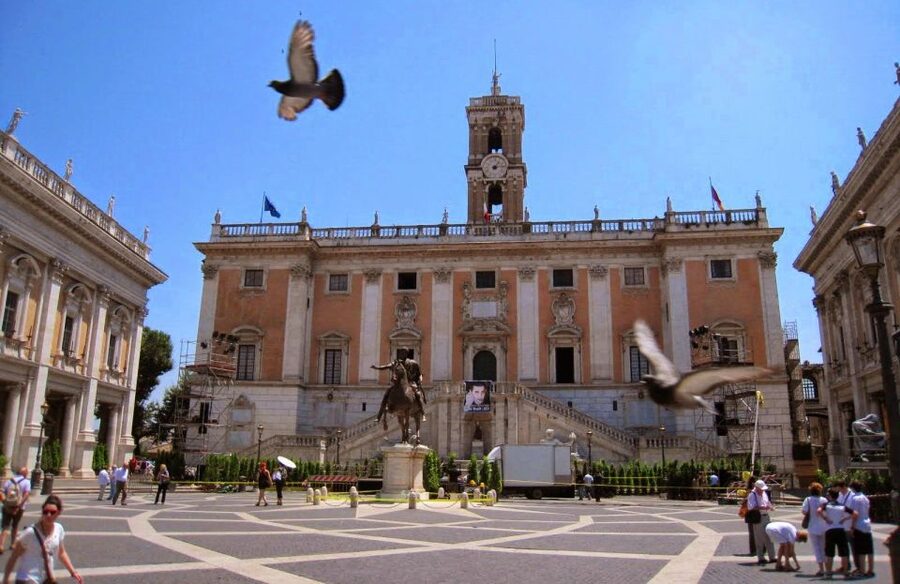
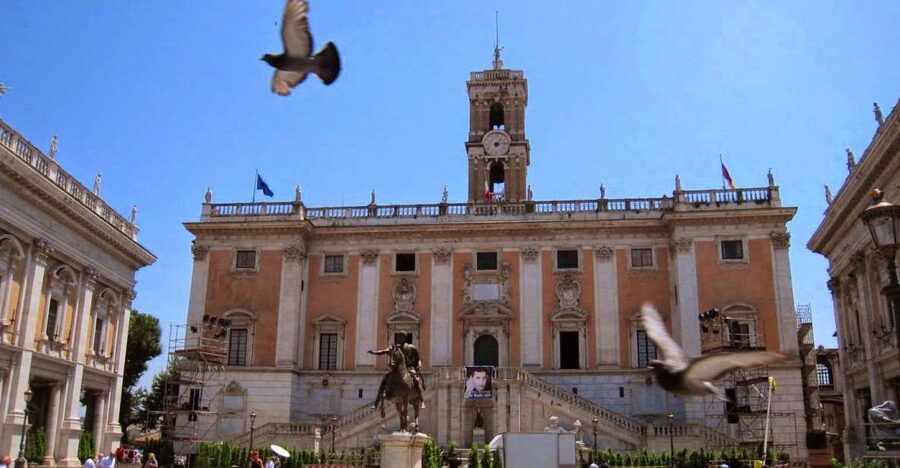
Your meeting point is the entrance to the Capitoline Museums, near the Equestrian Statue of Marcus Aurelius. The guide waits with a sign bearing your name, and the tour ends back at this same point.
The statue outside is a modern copy. The original is inside the museum, protected from weather and pollution. That contrast gives the first part of the visit an immediate point of interest: you see the public image in the piazza, then the ancient bronze itself later in the tour.
Arrive ready for a museum visit rather than a city walking tour. Comfortable shoes are sensible, although the route is mainly indoors. You need a passport or identity card, and oversize luggage is not allowed. Smart-casual dress is requested.
The Palace of the Conservatives and Constantine’s colossal remains
The visit begins in the courtyard of the Palace of the Conservatives. Here you’ll see fragments of a colossal acrolith representing Constantine. An acrolith used different materials for the body and the exposed parts, so the remaining pieces give you a sense of the enormous scale of imperial sculpture.
This is a useful opening because the fragments are not treated as isolated ruins. They introduce the Roman habit of presenting rulers as larger than life, both physically and politically. Your guide can help explain how a broken hand, foot, or head once belonged to a figure designed to dominate a public space.
The courtyard also prepares you for the museum’s mix of architecture and objects. You are not moving through a neutral white gallery. Ancient fragments sit within Renaissance and later buildings, so Rome’s layers remain visible around you.
Roman symbols on the first floor
On the first floor, the tour turns to some of the museum’s most recognizable works. The Capitoline Brutus is a key stop. The bust is linked to the early Roman Republic and is often read as an image of stern civic duty. Its importance is not only artistic. It is part of the visual language Rome used to describe its founders and political ideals.
You’ll also see the Spinario, a small Greco-Roman bronze showing a boy pulling a thorn from the sole of his foot. Its subject is simple and almost domestic, which makes it a pleasant change from the grand gods, emperors, and military figures elsewhere in the collection. Look closely at the body’s balance and the careful treatment of the pose.
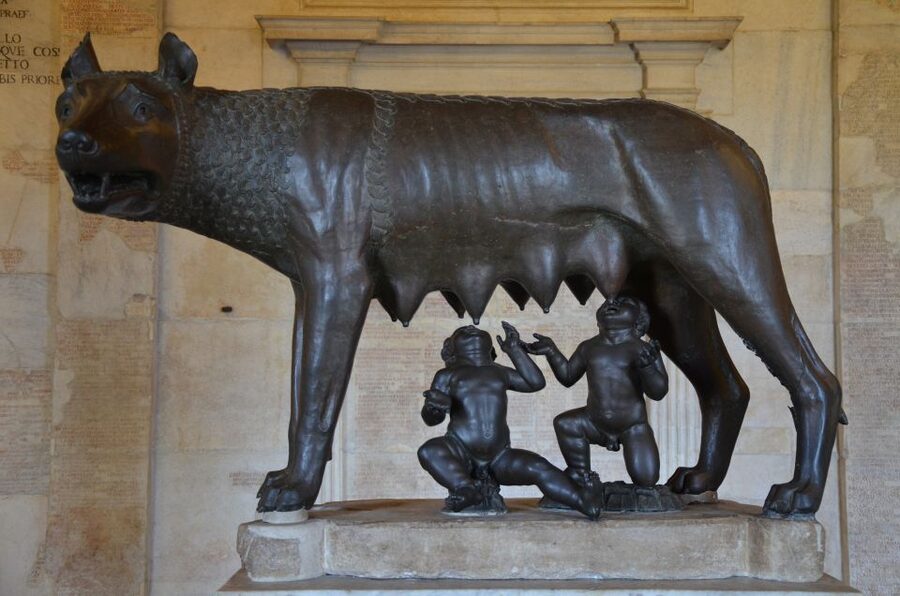
Then comes the Capitoline Wolf, the she-wolf nursing Romulus and Remus. It has become one of the most familiar symbols of Rome. The work carries a great deal of political weight because the city repeatedly used the story of its mythical founders to explain its own identity.
Dating and interpretation of ancient works can be complex, and a private guide is useful here. Instead of just taking a photograph of the wolf, you can ask how Roman symbols were reused over time and why this particular image became so powerful.
More private museum tours in Rome:
- Private Vatican Museums and St. Peter’s Basilica Early Bird Tour
★ 5.0 · 980 reviews - Vatican City: Sistine Chapel, Museums, Basilica Private Tour
★ 4.8 · 158 reviews - Rome: Private Leonardo da Vinci Exhibition Guided Tour
★ 4.6 · 54 reviews - Skip the line Vatican Museum Sistine & St.Peter Private Tour
★ 4.7 · 40 reviews
The Castellani collection and its Greek and Etruscan vases
The Castellani collection includes about 700 Greek and Etruscan vases. This is one of the tour’s less obvious pleasures. Large statues naturally draw attention, but painted pottery can reveal daily habits, religious stories, burial customs, and ideas about beauty.
You’ll see that the museum’s ancient collection is not limited to marble gods. Vases, inscriptions, jewelry, coins, and small objects fill out the picture of Roman and pre-Roman life. They show how art moved between Greek, Etruscan, and Roman cultures.
This section rewards questions. Ask your guide to point out differences in shape, decoration, or use. With only 2.5 hours, you will not study all 700 pieces, but the guide can help you understand why the collection matters instead of letting it become a quick procession past glass cases.
The Pinacoteca Capitolina and its major painters
The second floor brings a sharp change of mood. The Pinacoteca Capitolina is described as the oldest public collection of paintings, and it includes major works by Caravaggio, Guido Reni, the Carracci, Guercino, Domenichino, Veronese, Titian, Tintoretto, Rubens, and Pietro da Cortona.
This is where the private format can be especially helpful. Ancient Roman sculpture is often the main reason people book the Capitoline Museums, so the paintings may come as a surprise. If your interest is mainly archaeology, you might be tempted to move quickly. I would not. The Pinacoteca shows how later Rome looked back at religion, mythology, power, and the ancient world.
Caravaggio’s paintings bring strong light, ordinary human faces, and dramatic action. Titian and Tintoretto offer different approaches to color and movement. Rubens and the Italian Baroque painters add another chapter to Rome’s artistic story. You do not need to know every name before arriving. The value of the guide is in showing you what to notice and how the works differ.
The tour also includes Renaissance and Baroque frescoes and statues. These works connect the museum to the city outside. Rome’s churches and palaces are filled with similar artistic ideas, so this stop can sharpen your eye for the rest of your visit.
The original Marcus Aurelius in the museum exedra
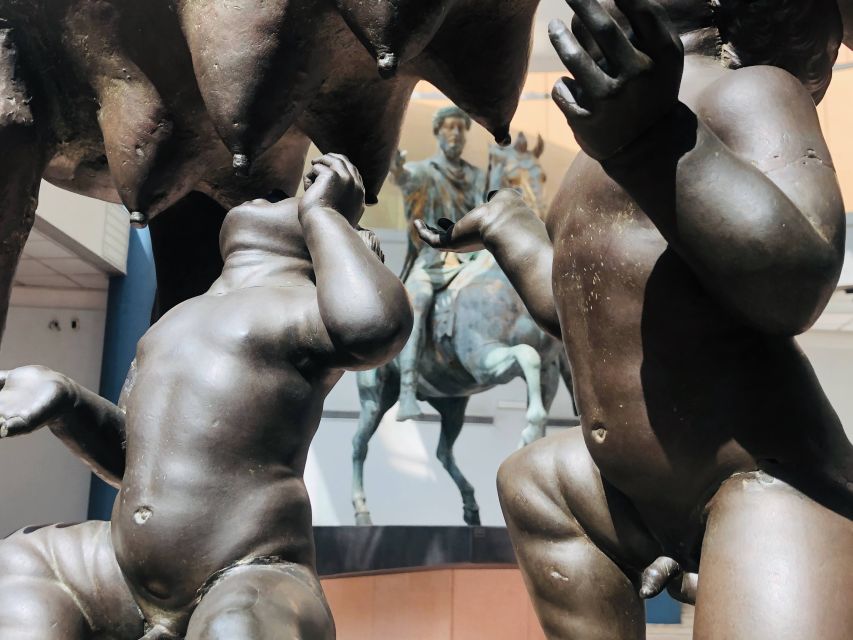
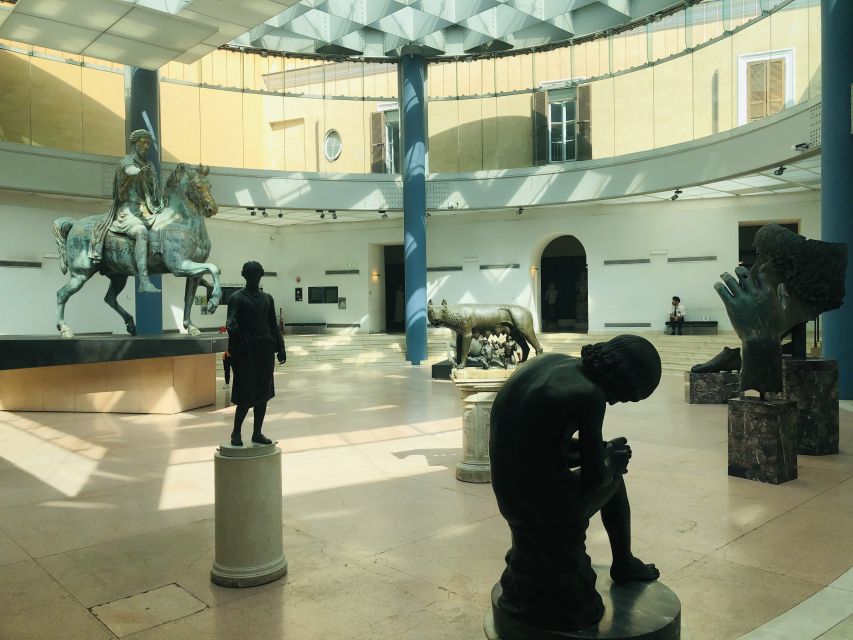
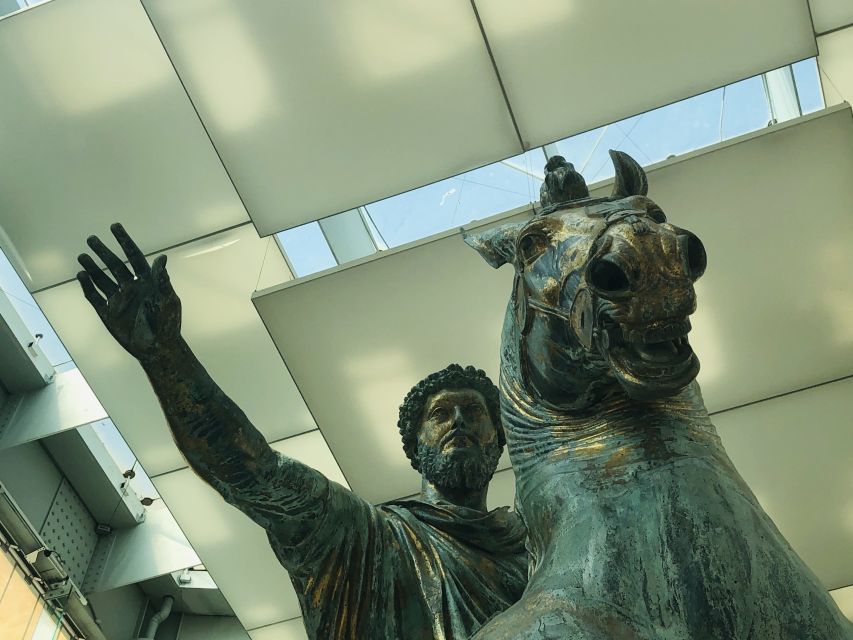
On the ground floor, you’ll reach the exedra holding the original equestrian statue of Marcus Aurelius. The statue once occupied the center of the Capitoline complex, but it was moved indoors to protect it. The copy now outdoors preserves the original setting for the public, while the museum allows you to see the ancient bronze itself.
Marcus Aurelius is shown as a calm, commanding rider. The gesture of his raised hand has often been read as one of authority and restraint rather than simple military force. The statue gives you a chance to consider how an emperor wanted to be seen, and how later generations chose to preserve that image.
This is one of the tour’s strongest moments, especially if you have already seen the copy in the piazza. The two versions make the difference between a public monument and a protected museum object clear.
Around the exedra, you can also see remains of ancient temples built into the structure. These ruins are easy to miss if you are focused only on the famous bronze. Let your guide show you where the old building fabric survives.
The Tabularium tunnel and Roman Forum views
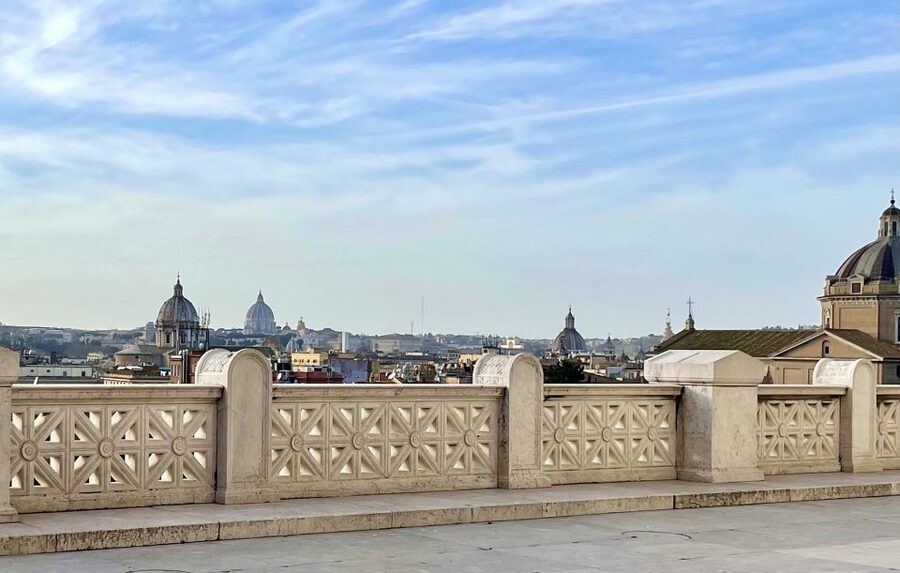
The route then continues through an underground passage crossing the Tabularium. The Tabularium was associated with Roman public records and administration, and the passage gives the tour a physical connection to the city’s ancient political center.
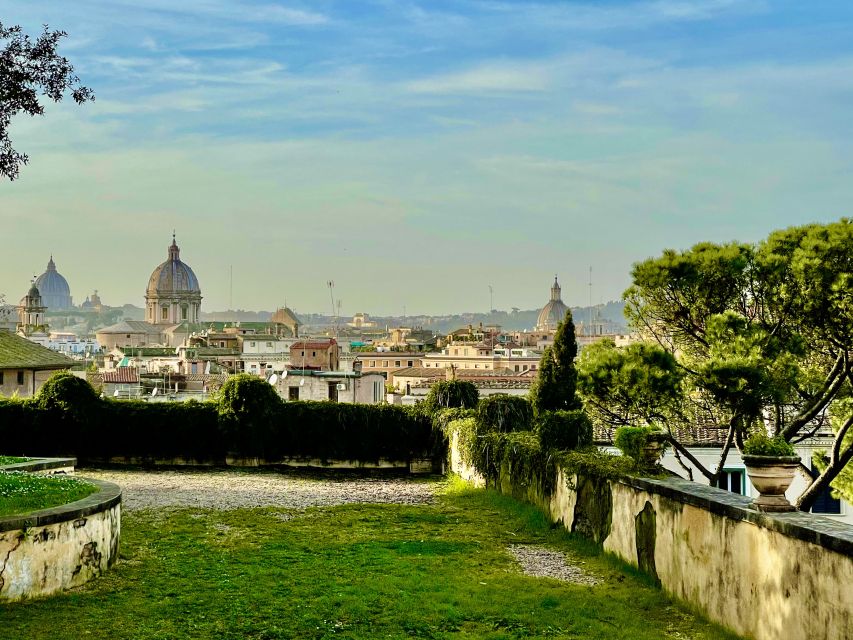
This is not a long outdoor stop. The itinerary allows about 20 minutes for scenic views on the way, and the tour returns to the starting point. Still, the view over the Roman Forum is one of the most useful parts of the visit. From above, the broken columns, temples, and open spaces make more sense as parts of a civic center rather than a collection of unrelated ruins.
You do not need a separate Forum ticket to appreciate this viewpoint. At the same time, the view is not a substitute for walking through the Forum itself. If you want to explore the archaeological area at ground level, plan that for another visit.
The New Palace and its ancient Roman sculpture
The underground route brings you to the New Palace, the museum’s second historic seat. This building holds more statues, inscriptions, sarcophagi, busts, mosaics, and other Roman objects.
The collection here offers a different experience from the first palace. The first side of the tour mixes famous civic symbols with paintings and decorative art. The New Palace feels more focused on ancient sculpture and Roman collecting.
You’ll see Marforio, a large reclining river god associated with Rome’s famous talking statues. You’ll also see the Dying Gaul, a powerful sculpture of a fallen enemy, and Cupid and Psyche, which presents a softer mythological subject.
The Dying Gaul deserves time. The figure is shown with physical dignity even in defeat, and the work invites questions about how ancient Rome represented foreign peoples and military victory. Cupid and Psyche provides a gentler contrast, with myth, affection, and idealized beauty replacing the harshness of war.
The New Palace also contains sarcophagi and inscriptions that help explain Roman funerary customs and public identity. A private guide can choose stops that suit your interests, but remember that the maximum booking size is 20 people. That is private compared with a mixed public group, though a group of 20 will feel less personal than a booking for two or four.
What the $201.65 price includes
At $201.65 per person, this is not a low-cost museum visit. You are paying for the Capitoline Museums entry ticket, skip-the-line access, and a private professional art historian for 2.5 hours.
The value depends heavily on your group size. For one or two people, the per-person cost is high, but you get a guide focused on your interests and the convenience of not planning your own route through two palaces. For a larger private group, the price may compare more favorably with several separate guided visits, though the group limit is 20 people.
The skip-the-line access also matters when your Rome schedule is tight. It does not make the museum empty, and the tour still has a fixed length, but it reduces the risk of spending part of your visit waiting at the ticket line.
There is no hotel pickup or drop-off. You must reach the Capitoline Museums yourself, which is reasonable for a central Rome attraction but worth noting if you are building a day around transport or a distant hotel.
Guide quality and the pace of the visit
The strongest praise is directed at the guides’ command of art and history, especially Martin. He is described as making links between events and societies, rather than simply reciting dates and names. That approach suits the Capitoline Museums, where a bust, vase, painting, and temple fragment can all point to different parts of Roman life.
The guiding also appears warm and flexible. During one visit, a participant felt light-headed after about 90 minutes. The guide paused for water, went to the cafe, and added roughly 30 minutes afterward. You should not count on extra time, but the example suggests a human approach when the visit does not go exactly to plan.
A private guide can also adjust emphasis. You might ask for more time with Caravaggio, ancient bronze, Roman politics, or mythology. The 2.5-hour limit means you cannot give equal attention to everything, so tell the guide early what matters most to you.
Who should book this Capitoline Museums tour?
I would recommend it to first-time Rome visitors who want a strong introduction to Roman art without wandering through the museum alone. It also suits couples, families with an interest in history, and small groups who prefer a guide to organize the visit.
Art lovers will appreciate the Pinacoteca, while archaeology fans will have plenty to see in both palaces. The tour is also useful for anyone who has already seen the Forum from street level and wants a better view from the Capitoline side.
You may want a different option if you prefer slow, quiet study of a small number of paintings. You may also find the tour too broad if your only goal is ancient sculpture. The route covers a lot, and the museum’s range is both its strength and its challenge.
English and Italian tours are available. The minimum booking is one person, and the maximum is 20. Free cancellation is available up to 24 hours before the tour, and you can reserve now and pay later, which helps if your Rome plans are still shifting.
Should you book it?
Book this tour if you want the Capitoline Wolf, Marcus Aurelius, Roman sculpture, Renaissance art, and Forum views explained as one connected story. The private format, included entry, and skip-the-line access make the price easier to justify for a small group that values personal guidance.
Skip it if you want a cheap museum entry or prefer to set your own pace. For everyone else, this is a well-focused way to meet Rome’s civic art collection, with enough variety to keep the visit from feeling like a parade of marble heads.
FAQ
Where does the Capitoline Museums tour begin?
The tour begins at the entrance to the Capitoline Museums. Your guide waits with a sign showing your name.
Where does the tour end?
The activity ends back at the Capitoline Museums meeting point, near the Equestrian Statue of Marcus Aurelius.
How long does the tour last?
The tour lasts 2.5 hours. The guided museum visit is listed as two hours, with about 20 minutes for scenic views along the route.
What does the tour price include?
The price includes entry to the Capitoline Museums, skip-the-line access, and a professional art historian guide.
Is the tour private?
Yes. It is offered as a private group activity, with bookings from one person up to a maximum of 20 people.
Which languages are available?
The live guide is available in English or Italian.
Is hotel pickup included?
No. Hotel pickup and drop-off are not included. You must reach the Capitoline Museums meeting point yourself.
What should I bring?
Bring a passport or identity card and wear comfortable shoes. Smart-casual dress is requested.
Can I cancel the tour or pay later?
You can cancel up to 24 hours in advance for a full refund. The reserve-now, pay-later option lets you book without paying immediately.
Just added around Rome
- Vatican City: Sistine Chapel, Museums, Basilica Private Tour★ 4.8 · 158 reviews
- Rome: Hop-on Hop-off Bus & Vatican Museums Ticket★ 3.5 · 41 reviews
- Rome: Vatican Museums, Sistine Chapel, and St. Peter’s Tour★ 4.5 · 49 reviews
- Skip-The-Ticket Line-Vatican Museum & Sistine Chapel★ 3.9 · 383 reviews
- Skip the line Vatican Museum Sistine & St.Peter Private Tour★ 4.7 · 40 reviews
- Skip-the-Line Vatican Museums and Sistine Chapel Guided Tour★ 4.3 · 130 reviews
- Skip-the-Line Tickets: Vatican Museum and Sistine Chapel★ 3.5 · 114 reviews
- MAXXI – Museum of Contemporary Art of 21st century★ 4.0 · 91 reviews
Museum Tours in Rome, compared.
Vatican Museums, Sistine Chapel & St. Peter’s Basilica Tour
Read our review →
Vatican Museums, Sistine Chapel & St Peter’s Basilica Guided Tour
Read our review →
Vatican Museums, Sistine Chapel and Basilica Tour
Read our review →
Vatican Museums & Sistine Chapel Skip-the-Line Entry Ticket
Read our review →
Vatican Museums, Sistine Chapel & Basilica Tour
Read our review →
Vatican Museums & Sistine Chapel Guided Tour
Read our review →
Vatican Museums & Sistine Chapel Skip-the-Ticket-Line Tour
Read our review →
Vatican Museums, Sistine Chapel and St. Peter’s Basilica Tour
Read our review →Browse the lists this tour appears in