
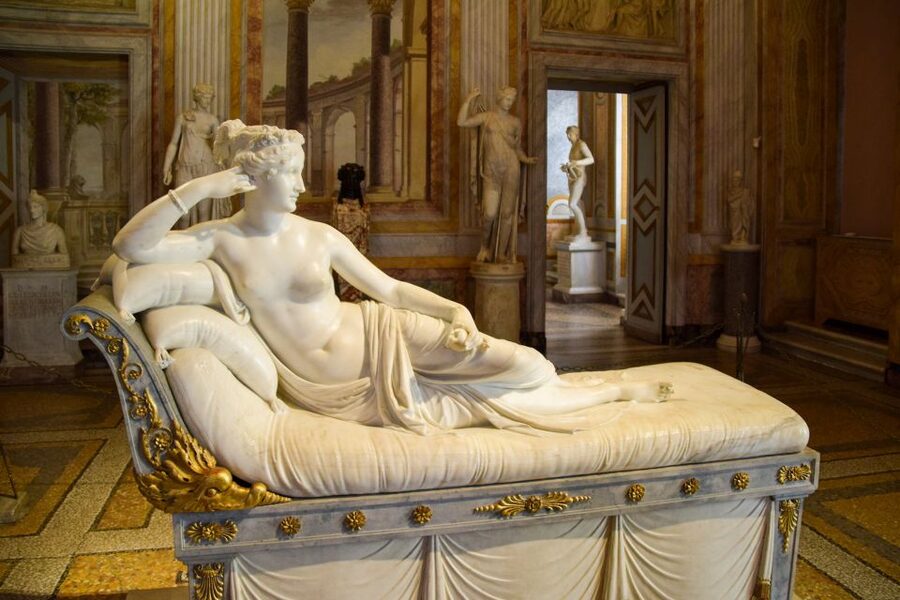
Review · ROME
Rome: Borghese Gallery Skip-the-Line Tickets with Audioguide
Rome’s Borghese Gallery puts an astonishing amount of art inside one relatively compact villa. In a single visit, you can stand before Bernini’s Apollo and Daphne, study Caravaggio’s dark David with the Head of Goliath, and then turn to Raphael, Titian, Rubens, and Canova. The collection feels focused rather than exhausting.
I like the limited timed admission, which keeps the rooms from becoming a shoulder-to-shoulder contest. I also like the freedom to move at your own pace, with a digital audioguide available when you want context and quiet when you simply want to look.
The main consideration is price. At about $53 per person, this is a useful last-minute option when regular tickets have sold out, but it can cost considerably more than buying directly through the official channel. The audioguide is convenient, though some of the gallery’s own labels and QR codes may be more useful for certain works.
Key points to know before booking
- Two-hour gallery access: Your timed admission is designed around a fixed visit period, so plan your priorities before entering.
- Crown Tours host at the fountain: Look for the purple shirt and flag at Fontana dei Mascheroni, directly in front of the gallery.
- Bernini and Caravaggio are the stars: The sculptures and paintings are the main reason to make room for this museum.
- Small bags only: Large luggage and strollers are not allowed, though a free cloakroom is available.
- Audioguide choice: The digital guide adds useful background, but you can also use the gallery’s own labels and QR codes.
- Book ahead when possible: Tickets often sell out weeks in advance, especially during busier periods.
Why the Borghese Gallery deserves a place in your Rome plans
The Borghese Gallery is not simply a museum with a famous name. It is the former home of Cardinal Scipione Borghese, a powerful 17th-century collector whose taste shaped what you see today. The art remains in an ornate villa rather than a plain modern exhibition hall, so the building itself is part of the experience.
I find the scale especially appealing. You can see a great deal in two hours without feeling as if you have crossed an entire city indoors. That makes this a good choice if the Vatican Museums sound too large or if you want one concentrated art stop between Rome’s churches, piazzas, and ancient sites.
The collection brings together Renaissance, Roman, and Baroque works. For many people, Bernini’s marble sculptures provide the big emotional hit. Caravaggio supplies the drama in paint, while Raphael offers a calmer, more balanced style. Canova, Titian, Rubens, and ancient Roman works give the rooms more range than a single-period museum would have.
More Museum Tours in Rome
- Vatican Museums, Sistine Chapel & St. Peter’s Basilica Tour
★ 4.3 · 73,970 reviews - Vatican Museums, Sistine Chapel & St Peter’s Basilica Guided Tour
★ 4.5 · 39,149 reviews - Rome: Vatican Museums, Sistine Chapel and Basilica Tour
★ 4.3 · 16,039 reviews
Meeting Crown Tours at Fontana dei Mascheroni
Your first task is finding the host, not the art. The meeting point is Fontana dei Mascheroni on Viale del Museo Borghese, directly in front of Galleria Borghese. The host wears a purple Crown Tours shirt and carries a flag.
From the Pinciana or Museo Borghese bus stop, walk along Viale dell’Uccelliera for about two minutes. From S. Paolo Del Brasile, follow Viale del Museo Borghese for roughly eight minutes. The fountain is about 40 meters from the gallery entrance.
This meeting point has caused some confusion, so use the exact landmark rather than simply searching for a large fountain. It is described as a small drinking-water fountain, and from some approaches it may look more like two statues near the gardens. Look for the purple clothing.
The host’s job is mainly practical: handing over the timed tickets, showing you where to enter, and helping with the audio app. That assistance can be valuable when you are in a hurry or when the gallery is sold out. Several hosts have received praise for being friendly and helpful, including Migo, Amjad, Victoria, Sylvia, Frederica, and Amanda.
If you have selected a guided option, your experience may include more explanation before or during the visit. If you book admission with the audioguide, expect a self-guided museum visit rather than a personal tour. Check the exact option before paying, since the host service and guided tour are not the same thing.
Entering the villa with a timed ticket
Once your host has given you the ticket, you proceed into the gallery for your reserved time. The skip-the-line benefit matters most when the museum is busy or sold out. At opening time in a quieter month, the regular line may not be much of a problem, but securing a place can still be the bigger advantage.
That distinction matters. You are not only paying to walk past a queue. You are paying for access to a museum with tightly controlled entry, where same-day tickets may disappear. Several bookings were made at short notice because regular tickets were no longer available.
Security is strict. Only small bags and purses are allowed in the galleries. Large bags can be left in the free cloakroom, but it is better to arrive with as little as possible. Baby strollers, luggage, and electric wheelchairs are not permitted. Bring your passport or identification card, as it may be required.
A water bottle may not be allowed inside. One practical approach is to drink before entry and avoid carrying extra items that you will need to check.
The first rooms: a home built to impress

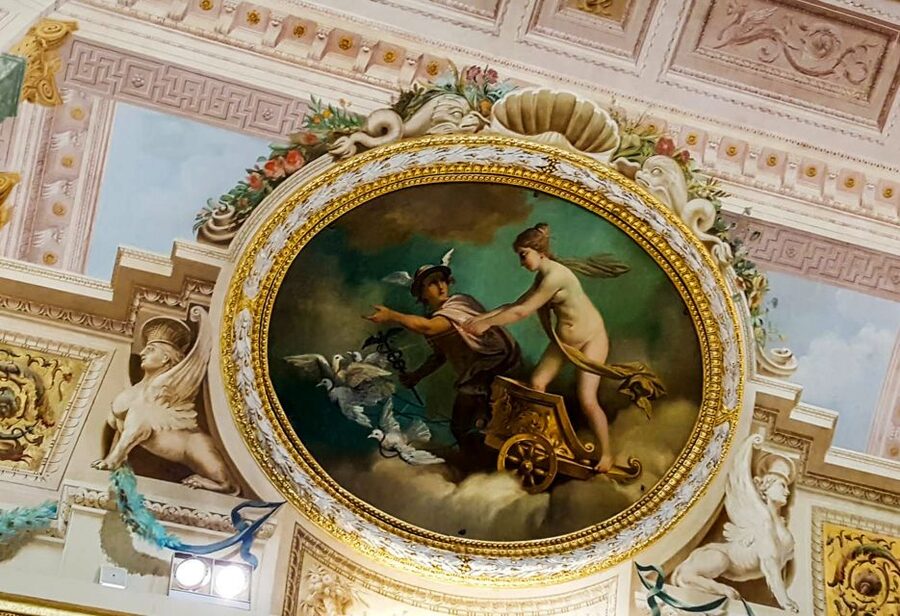
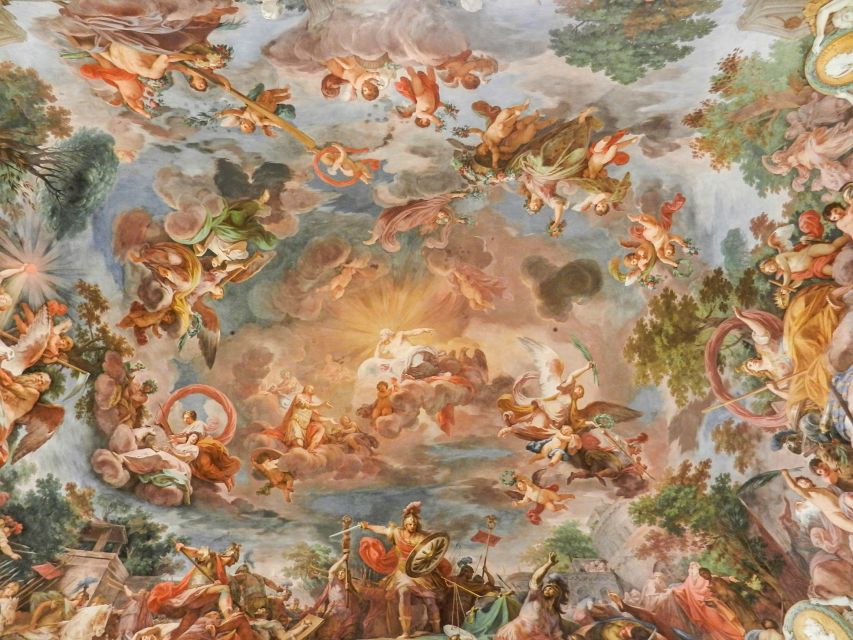
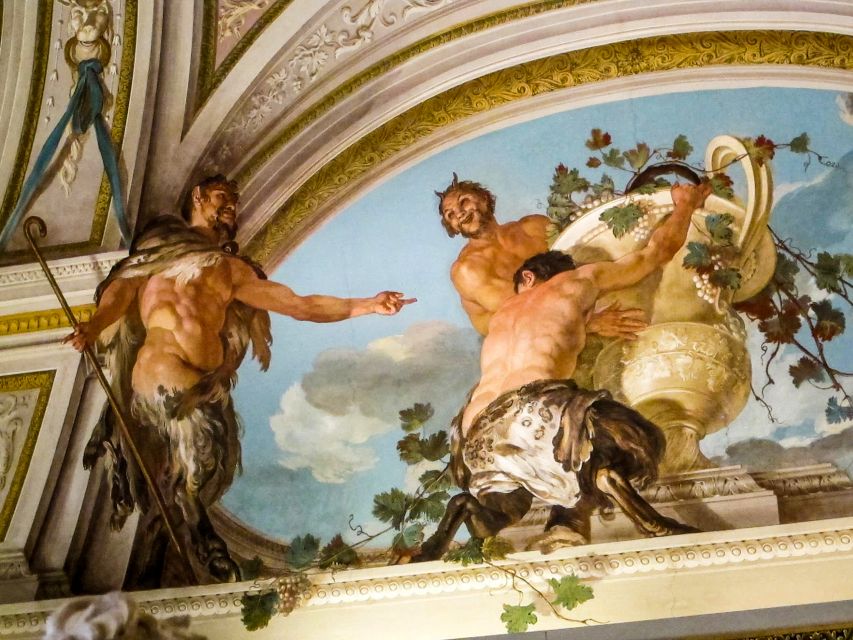
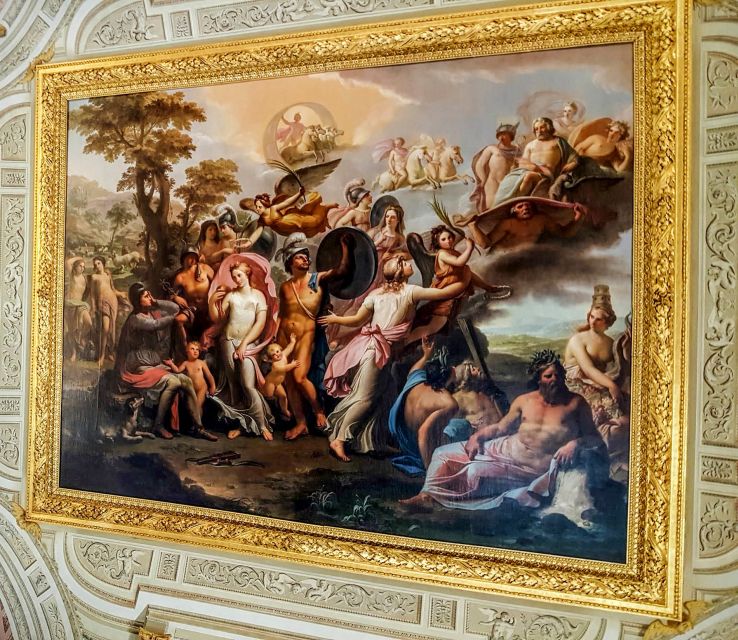
The villa was designed to display power as much as art. Look up, look down, and notice how the sculpture, wall decoration, painted ceilings, and furniture work together. You are not walking through a neutral gallery. You are moving through a cardinal’s private world, shaped to impress guests and reinforce his status.
That setting changes how the collection feels. A marble sculpture is not isolated against a white wall. It appears among ornate decoration and other works that compete for your attention. This can be visually thrilling, though it also means you should slow down and decide what deserves your full focus.
The gallery’s manageable size helps. You can take in the major rooms without rushing from one distant wing to another. Still, the fixed visit period means you should avoid spending your entire time on the first few works that catch your eye.
A few more museum visits around Rome worth comparing
- Rome: Borghese Gallery Skip-the-Line Ticket & Audioguide
★ 4.3 · 4,318 reviews - Rome: Borghese Gallery Ticket + Audioguide or Guided Tour
★ 4.6 · 3,219 reviews - Rome: Borghese Gallery Guided Tour with Skip-the-Line Entry
★ 4.8 · 2,649 reviews - Rome: Borghese Gallery & Gardens Small Group Guided Tour
★ 4.5 · 2,190 reviews
Bernini’s marble drama
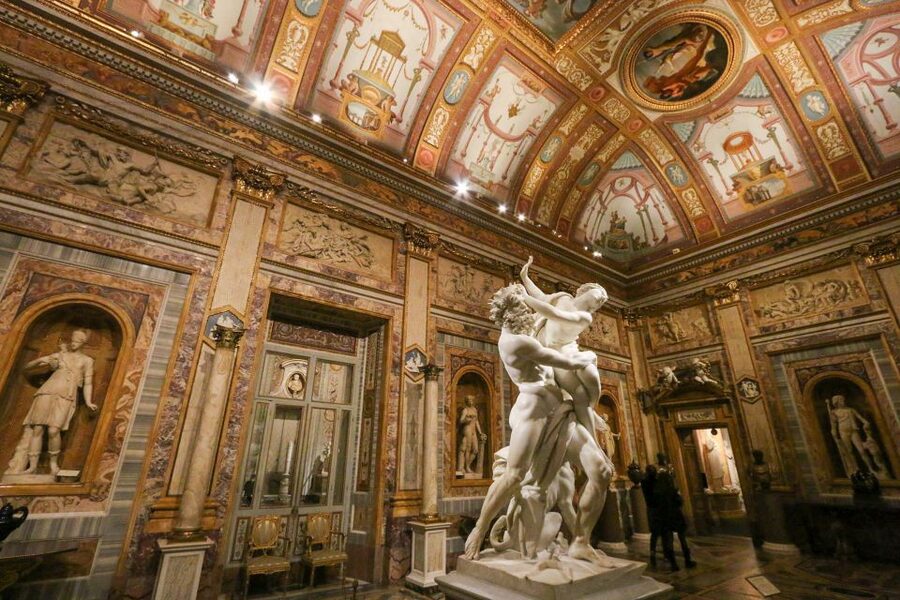
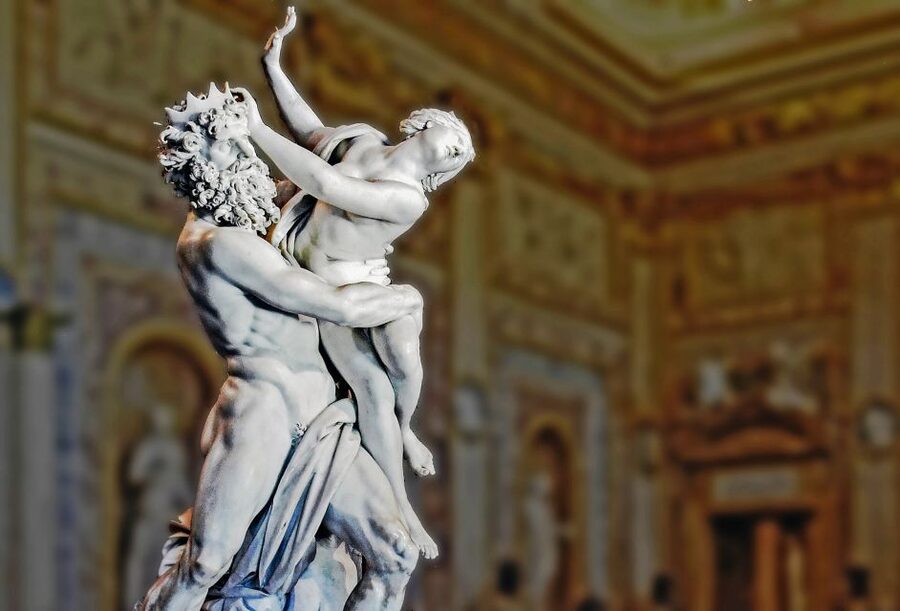
Bernini is the main event for many people. His sculptures are famous not merely because they are made from marble, but because the figures seem caught in action. Apollo and Daphne is the essential stop: the moment of transformation is rendered with astonishing detail, from the movement of the bodies to the changing branches and leaves.
You will also find Bernini’s David, which feels very different from the calm, idealized versions you may know from other Italian museums. This David is tense and active, his body twisting as he prepares to strike. Walk around the sculpture rather than viewing it from one angle. The changing profile is part of the design.
The value of seeing these works in person is scale and surface. Photographs cannot fully show how polished skin, rough bark, hair, and fabric are differentiated in stone. The audioguide can explain the mythological stories and artistic choices, but give yourself time to observe before pressing play.
This is also where the two-hour limit becomes real. Bernini’s sculptures can hold your attention for a long time, especially if you are interested in technique. Decide in advance that you will see the major works first, then return to less familiar pieces if time allows.
Caravaggio’s paintings and the power of darkness
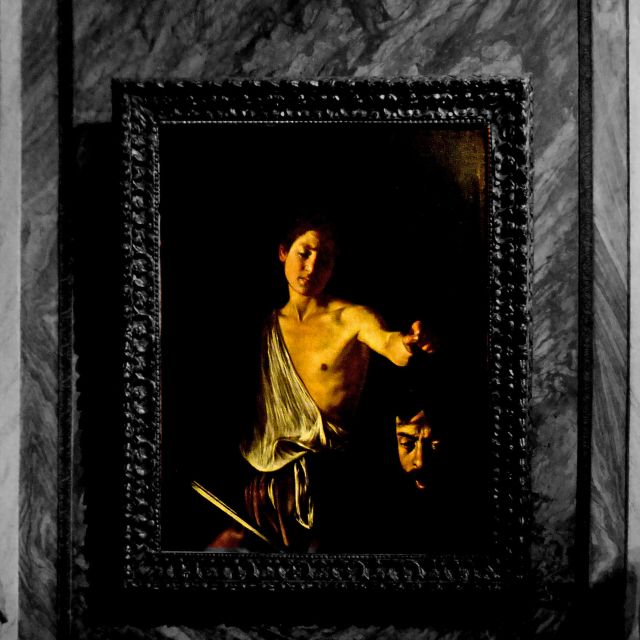
Caravaggio brings a different kind of force. His paintings use strong light and shadow to make biblical and historical scenes feel immediate. David with the Head of Goliath is especially unsettling, with an emotional charge that depends on the expressions as much as the subject.
The gallery includes several important Caravaggio paintings, so you can compare how he handles faces, gestures, bodies, and dramatic lighting. His figures do not feel remote or decorative. They appear caught in a hard moment, and the dark backgrounds pull your eye directly toward the action.
I recommend standing close enough to see the brushwork, then stepping back to understand the overall composition. The digital audioguide can help explain the subject and the artist’s methods, but it should support your looking rather than replace it.
The gallery’s labels and QR codes may also provide useful information. One practical approach is to use the digital guide for the best-known works and the museum’s own resources for pieces that catch your attention unexpectedly.
Raphael, Titian, Rubens, and Canova
Raphael gives the visit a calmer rhythm after Bernini and Caravaggio. His art is associated with balance, classical beauty, and graceful human feeling. The contrast is useful: you begin to see that the collection is not only a parade of dramatic Baroque effects.
Titian and Rubens add color and movement, while Canova represents the later Neoclassical taste for refined marble and controlled elegance. Canova’s work can look smooth and restrained beside Bernini’s theatrical motion, but that difference is exactly what makes the collection interesting.
You do not need to know every artist before arriving. The audioguide is designed to explain techniques, stories, and cultural meaning in accessible terms. If you prefer reading, gallery labels and QR codes can fill in the gaps. You can also choose to skip commentary and simply follow your own eye.
The second floor has not always been fully open during past visits, and sections of the gallery may occasionally close. Because room access can change, do not plan your entire visit around one particular work without checking current conditions.
How the audioguide affects the visit
The digital audioguide is included with the relevant option and is usually accessed through an app or QR code. Your host may help you download it, connect to the service, and get started. Some hosts have also helped families and groups connect several phones using shared Wi-Fi.
The guide works best when you use it selectively. Listening to every entry can turn a two-hour visit into a race. I would choose a few major Bernini and Caravaggio works, then add Raphael, Canova, or another artist whose style interests you.
The quality of the experience depends partly on what you want. If you like a clear explanation of symbolism and technique, the audioguide adds useful structure. If you prefer to read short labels, the gallery’s own QR codes may be enough. One advantage of self-guiding is that you can pause, replay, or ignore information without holding up a group.
A private or small-group guided option is the better choice if you want a person to connect the collection and answer questions. Standard admission with the digital guide is better for people who value independence.
Time, pace, and the two-hour limit
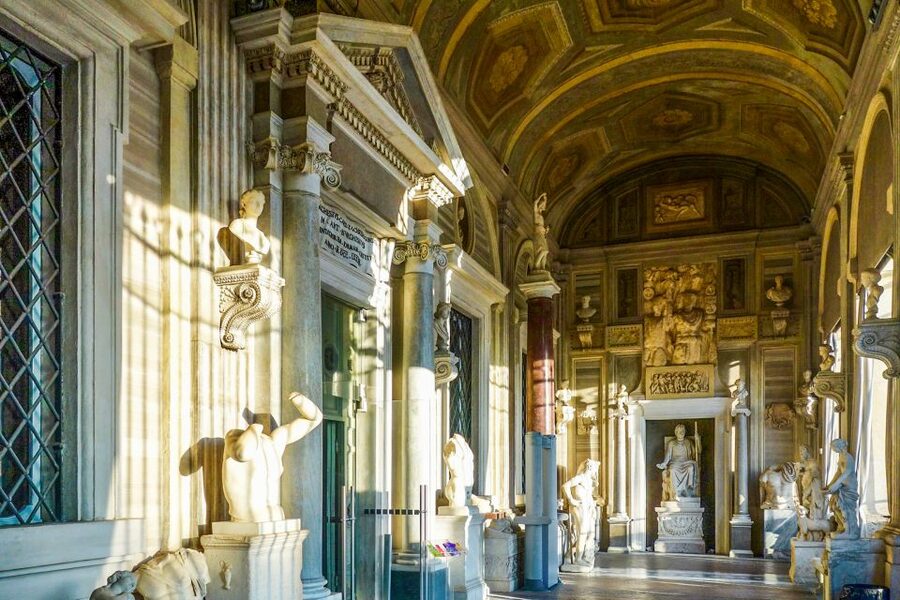
The advertised activity lasts two to four hours, but the gallery portion is generally built around a timed visit of about two hours. The extra time may include meeting your host, sorting bags, downloading the guide, and entering the museum.
Two hours is enough to see the principal works, especially because the villa is not overwhelming in size. It is not enough for a slow study of every painting, sculpture, ceiling, and decorative detail. If you are a serious art student, you may leave wishing for more time.
Start with the works you most want to see. Bernini and Caravaggio should be priorities if this is your first visit. Then use the remaining time for Raphael, Titian, Rubens, Canova, ancient Roman pieces, and rooms that appeal to you visually.
Re-entry is not guaranteed once you leave. Do not exit early assuming you can return to a room you skipped. The timed structure rewards a little planning.
What the $53 price really buys you
At around $53 per person, this is not the cheapest way to see the gallery. The regular official route may cost less, and several people have found that third-party booking is noticeably more expensive. If you can reserve early through the official channel, compare the prices before committing.
The value improves when regular tickets are sold out. The Borghese Gallery limits entry, and last-minute availability can be scarce. In that situation, paying more may be the practical difference between seeing the collection and missing it.
You also receive a host, timed admission, and a digital audioguide with the appropriate option. Think of the host as an arrival assistant, not automatically as a personal art expert. If you want a full explanation from a guide, select the guided tour option and confirm what is included.
Free cancellation up to 24 hours before the experience and reserve-now-pay-later terms add flexibility. They do not erase the price difference, but they can help when your Rome schedule is still shifting.
Who should book this experience
I would consider this a strong choice for a first visit to the Borghese Gallery, especially if you are booking late or visiting during a busy season. It also suits families and independent-minded couples who want help getting inside but do not want to follow a guide from room to room.
Art lovers will appreciate the concentrated collection, particularly if Bernini and Caravaggio are high on the list. People who rarely visit museums may also like the compact scale and the mix of sculpture, painting, architecture, and decoration.
This is less suitable if you need step-free access or use a wheelchair. The experience is not recommended for people with mobility impairments, and electric wheelchairs are not permitted. Strollers are also prohibited.
The surrounding Villa Borghese area is worth allowing extra time for, but access to the Borghese Gardens is not included in this ticket. Treat the gallery and the park as separate parts of your day.
Should you book the Borghese Gallery ticket?
Book it if you want a reliable timed place at one of Rome’s most important art museums and regular tickets are unavailable. The host system is particularly useful for first-time visitors who want help finding the entrance, handling bags, and starting the audio app.
If you can plan well ahead, compare this $53 option with the official ticket price first. You may save money by booking directly. If the museum is sold out and this is your best available route, the extra cost can be justified by the access alone.
Choose the audioguide for flexibility. Choose a private or small-group option if you want a guide to explain the art in person. Either way, put Bernini and Caravaggio first, arrive with a small bag, and meet the purple-shirted host at the correct fountain.
FAQ
How much does the Borghese Gallery ticket cost?
The listed price is $53 per person. Prices can vary by booking option, so check whether you are selecting admission with an audioguide or a guided tour.
How long does the experience last?
The activity is listed as lasting two to four hours. Gallery admission is organized around a timed visit, with the museum portion generally limited to about two hours.
Where do I meet the host?
Meet at Fontana dei Mascheroni on Viale del Museo Borghese, directly in front of Galleria Borghese. The Crown Tours host wears a purple shirt and carries a flag.
What languages are available?
Host assistance is available in English and French. The digital audioguide and any guided option should be checked at booking for the specific language provided.
Is a guided tour included?
The listed ticket includes host assistance and a digital audioguide. A guided tour is included only when you select that option.
Can I bring a large bag or suitcase?
No. Large bags, luggage, and baby strollers are not allowed inside. A free cloakroom is available for larger bags, while only small bags and purses may enter the gallery.
Can wheelchair users join this experience?
The activity is not suitable for wheelchair users or people with mobility impairments. Electric wheelchairs are also listed as not permitted.
Can I cancel the booking?
You can cancel up to 24 hours in advance for a full refund. The reserve-now-pay-later option lets you hold a place without paying immediately.
More Skip-the-Line Tickets in Rome
- Vatican Museums & Sistine Chapel Skip-the-Line Entry Ticket
★ 4.4 · 13,838 reviews - Rome: Vatican Museums & Sistine Chapel Skip-the-Line Ticket
★ 4.3 · 8,103 reviews - Skip the Line: Vatican Museum, Sistine Chapel + Optional Basilica
★ 4.5 · 6,181 reviews - Skip the line: Vatican Museums, Sistine Chapel & St Peters Tour
★ 4.5 · 1,888 reviews
Just added around Rome
- Vatican City: Sistine Chapel, Museums, Basilica Private Tour★ 4.8 · 158 reviews
- Rome: Hop-on Hop-off Bus & Vatican Museums Ticket★ 3.5 · 41 reviews
- Rome: Vatican Museums, Sistine Chapel, and St. Peter’s Tour★ 4.5 · 49 reviews
- Skip-The-Ticket Line-Vatican Museum & Sistine Chapel★ 3.9 · 383 reviews
- Skip the line Vatican Museum Sistine & St.Peter Private Tour★ 4.7 · 40 reviews
- Skip-the-Line Vatican Museums and Sistine Chapel Guided Tour★ 4.3 · 130 reviews
- Skip-the-Line Tickets: Vatican Museum and Sistine Chapel★ 3.5 · 114 reviews
- MAXXI – Museum of Contemporary Art of 21st century★ 4.0 · 91 reviews
Museum Tours in Rome, compared.
Vatican Museums, Sistine Chapel & St. Peter’s Basilica Tour
Read our review →
Vatican Museums, Sistine Chapel & St Peter’s Basilica Guided Tour
Read our review →
Vatican Museums, Sistine Chapel and Basilica Tour
Read our review →
Vatican Museums & Sistine Chapel Skip-the-Line Entry Ticket
Read our review →
Vatican Museums, Sistine Chapel & Basilica Tour
Read our review →
Vatican Museums & Sistine Chapel Guided Tour
Read our review →
Vatican Museums & Sistine Chapel Skip-the-Ticket-Line Tour
Read our review →
Vatican Museums, Sistine Chapel and St. Peter’s Basilica Tour
Read our review →Browse the lists this tour appears in