
Review · PRAGUE
Prague: Story of Prague Immersive Museum Experience
At the entrance to Charles Bridge, Prague’s past comes alive through film scenes, sound, objects, and phone-based effects. You move across three floors, from medieval Prague to the Second World War, communism, and the present day.
I like the strong location and the way the museum gives you useful clues for the rest of your visit. I also like the interactive photo points, which give younger visitors something to do besides read labels. The main drawback is that the app uses plenty of phone battery, and its audio can feel slow if you prefer to move at your own pace.
Key points
- Right beside Charles Bridge: Enter through the passage inside the building at the bridge entrance.
- Three periods of Prague history: Follow the city from the Middle Ages through war, communism, and modern achievements.
- Audio and app included: Use your own phone and headphones, or borrow a headset at reception.
- Interactive scenes: Scan tags to trigger audio, film, augmented reality, and other effects.
- Useful first-day orientation: Pick up tips about monuments, legends, and places to visit around Prague.
- Plan for a battery drain: Bring a portable charger if you expect to use your phone for the full visit.
Starting beside Charles Bridge
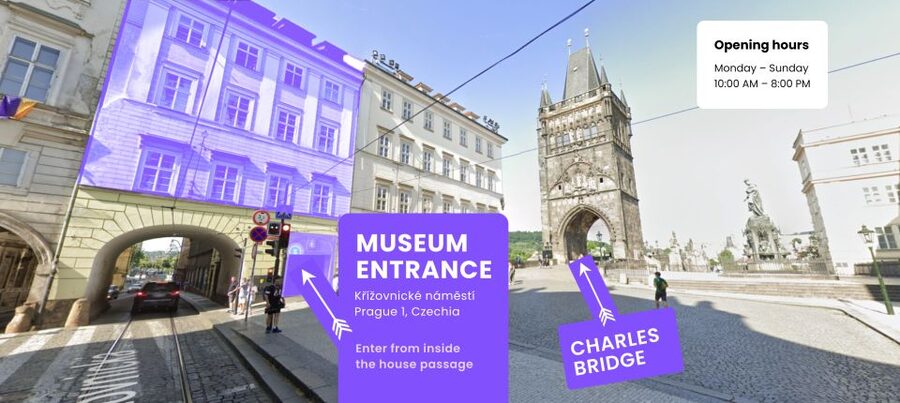
The Story of Prague is easy to place on your sightseeing map. It sits right at the entrance to Charles Bridge, with access through the passage inside the house. That makes it a practical stop before or after crossing the bridge, though the location also means you should expect a central, busy setting.
I like museums that help you read the city outside their walls. This one is designed to do exactly that. It points out stories connected with Prague’s monuments and gives you ideas for special places to visit later. You can also look out toward the Clementinum and the square below, adding a useful visual link between the displays and the city itself.
The experience is not built around long rows of cases and small labels. Instead, you use an app, scan tags, listen to audio, watch film installations, and interact with displays. You remain part of the action rather than simply walking past objects.
That approach works especially well if you are visiting Prague for the first time. You get a quick framework for the city, then see familiar buildings and streets with more context. I would place this near the beginning of your sightseeing, not at the end.
More Museum Tours in Prague
- Prague: Museum of Fantastic Illusions Entry Ticket
★ 4.3 · 4,337 reviews - IAM Illusion Art Museum Entry Ticket
★ 4.2 · 1,664 reviews - Prague: Museum of Senses Admission Ticket
★ 4.0 · 1,445 reviews
How the three-floor route unfolds
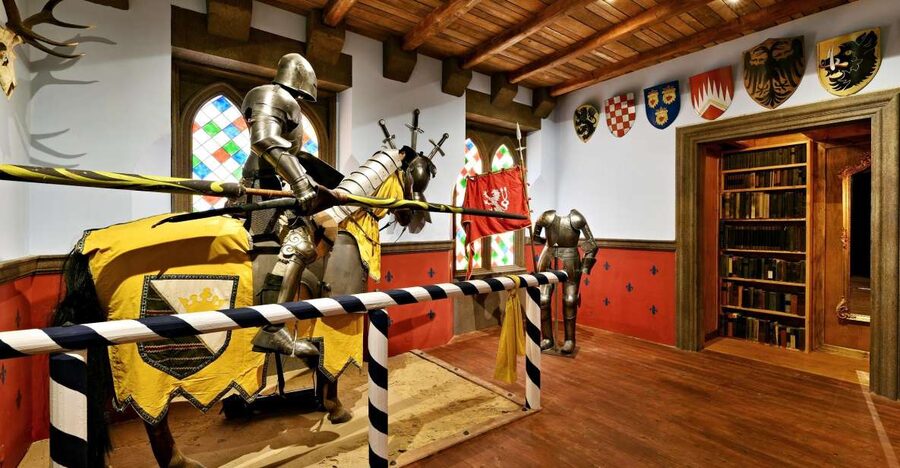
The museum takes you through different periods of Prague’s story, starting in the Middle Ages. The exact pace is yours, since the audio and app elements are triggered as you move from one point to another.
The medieval section gives you the foundations of the city’s story. This is the period that helps explain why Prague’s center looks the way it does and why landmarks around the Charles Bridge matter. You will hear stories and legends connected with monuments visible outside the museum.
Next, the experience moves through later chapters, including the Second World War. This part gives the city’s history a more serious tone. The film and sound elements help turn dates and events into human stories, though the presentation remains designed for a broad audience rather than for specialist study.
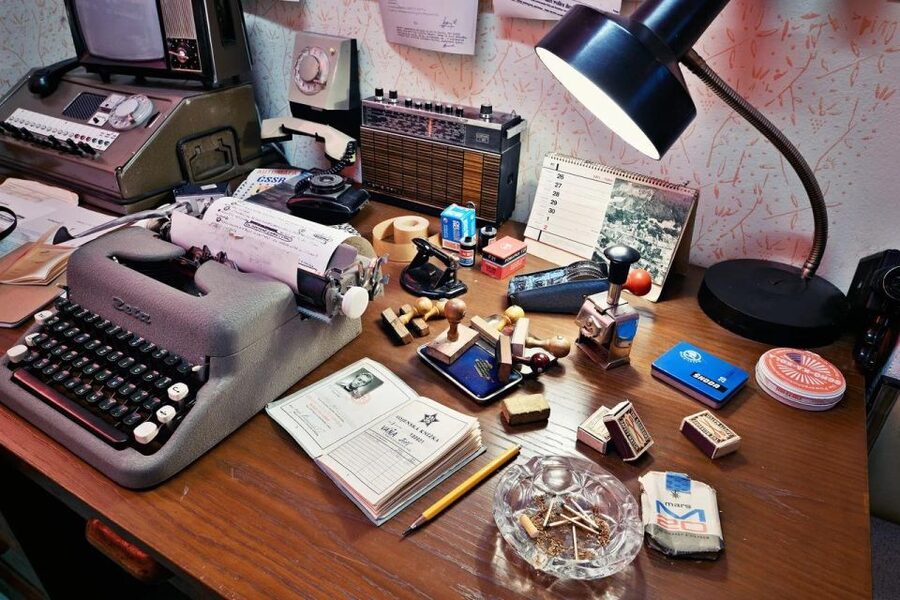
The route then reaches the years of strict communist rule. This is an important section because it keeps Prague’s past from becoming only a parade of castles, churches, and pretty squares. You get a look at the political period that shaped modern Czech life and the city you see today.
The final section covers recent history, the present, and Czech achievements around the world. It brings the story closer to your own time and helps connect the earlier displays with modern Prague.
I would not expect a full academic account of every period. The strength here is compression. You get Prague’s main chapters in a format that is easy to follow, then you can spend the rest of your trip looking more closely at the places and events that catch your interest.
Film, sound, and augmented reality
The museum’s central idea is simple: the displays should do more than sit quietly behind glass. Film installations, audio elements, physical objects, and augmented reality give the exhibits movement and personality.
You scan the first tag with the app, connect your own headphones, and follow the route. Headsets are included, and you can borrow them at reception if you do not want to use your own. The app is available in Czech, English, Spanish, German, and French, matching the listed audio-guide languages.
The audio guide is more than a plain reading of labels. It uses a script and a story format, with the goal of making the information easier to remember. That works well for people who find traditional museum narration dry. It also makes the visit more approachable for families with teenagers who may lose interest in a standard historical display.
Still, the audio style will not suit everyone. The narration can take its time getting to the main point, with jokes and extra wording intended to keep things lively. If you like a brisk museum visit, you may find yourself reading the plaques instead or skipping some audio sections.
The app and camera functions can also be a little awkward. You may need patience while scanning codes or positioning your phone. The technology is part of the attraction, but it is not invisible. Think of it as a useful tool with a few rough edges, not as a perfectly smooth digital system.
The photo points are more than a gimmick
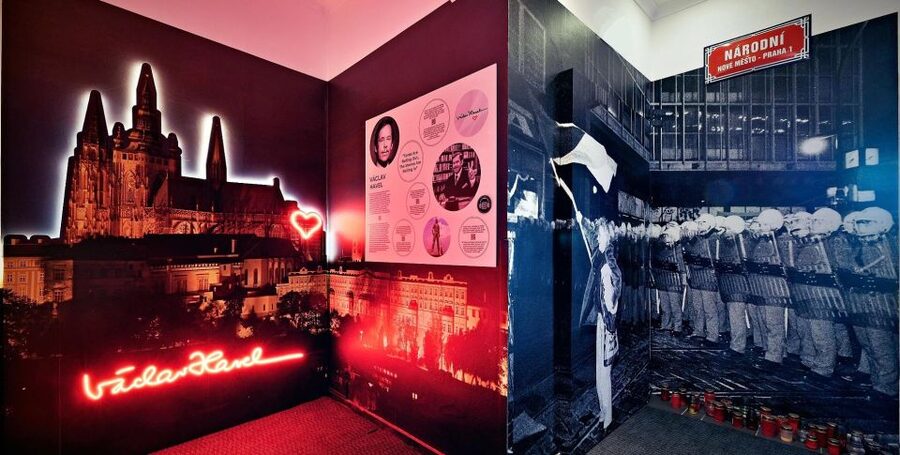
The interactive photo points tell you where to stand for the best picture. As you take photos or video, the installations come alive in front of you.
I like this feature because it gives you a reason to slow down and play with the displays. You are not just collecting a picture of yourself in a room. You are using the scene as part of the exhibit, which can make the historical material easier to recall later.
This is also where the museum works well for families. Younger visitors can take part in the action while adults listen to the historical background. You can take pictures and film the effects yourself, though you should expect the phone functions to use battery.
One practical tip matters here: bring a portable charger. The app, audio, scanning, camera, and video features can use a large amount of power. If your phone is already low after a morning of maps and photographs, you may need to limit your use or borrow the museum headset.
A few more museum visits around Prague worth comparing
- IAM Illusion Art Museum Prague Fast Pass Ticket
★ 5.0 · 957 reviews - Admission Ticket to Museum of Senses in Prague
★ 4.5 · 861 reviews - Prague: Museum of Bricks Entry Ticket
★ 4.2 · 851 reviews - Prague: Ticket to Audiovisual Light Art at Lumia Gallery
★ 4.4 · 607 reviews
Why the audio guide can shape your visit
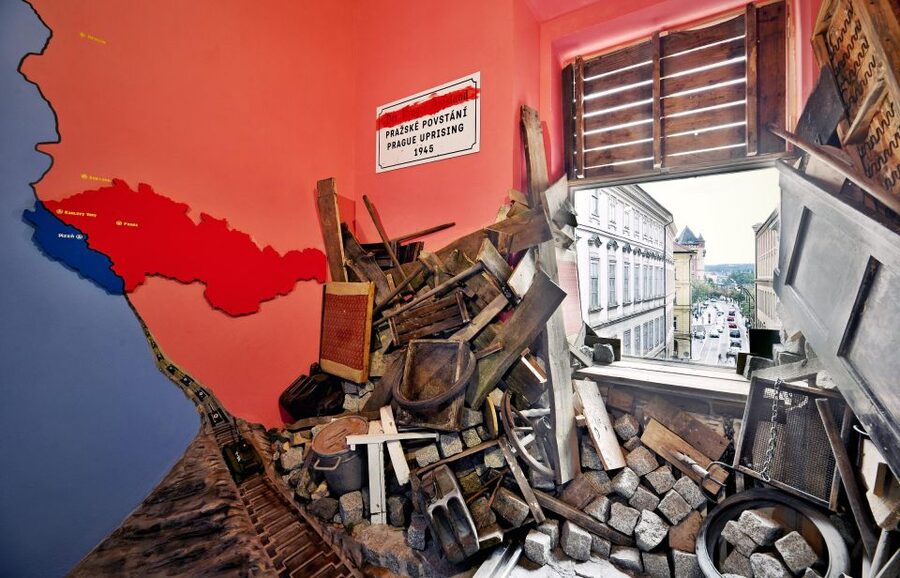
The included audio guide is one of the best reasons to choose this experience instead of simply walking through a display. It gives the museum a clear voice and connects the objects, films, legends, and city views.
You can use English, Czech, Spanish, German, or French. The audio is available through the app, and headsets can be borrowed at reception. That makes the visit fairly easy to set up, though you need to download the app and scan the first tag before beginning.
I would listen selectively rather than assume you must hear every word. The narration aims to be funny and engaging, but some sections move slowly. If you want every detail, give yourself time. If you are mainly looking for a quick introduction before heading across Charles Bridge, read the shorter labels and choose the audio sections that interest you most.
The museum does not always make the order of the displays clear. You might find yourself reading items out of sequence and then returning to earlier points. To avoid that, pause at the start of each room and look for the next tag or obvious beginning point before moving on.
That small bit of attention can make the experience more coherent. The content is strongest when you follow the story in order, since each period builds on the one before it.
Views of the Clementinum and the square
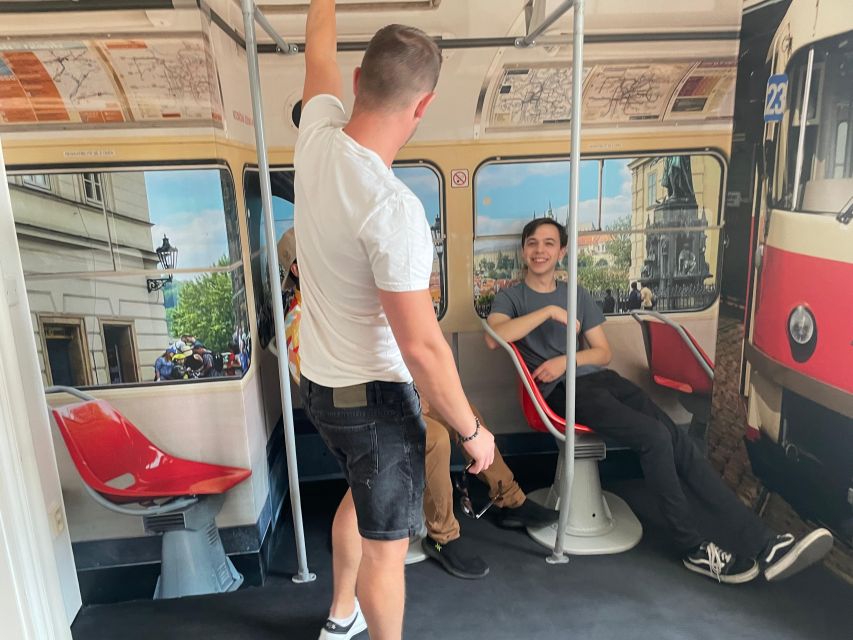
The windows add something that many history museums cannot. You get views of the Clementinum and the square below, along with sight lines toward monuments mentioned in the audio.
I find this especially useful because Prague can sometimes feel like a collection of beautiful buildings without a clear connection between them. Here, the museum gives you a story to carry outside. Afterward, you can look at the city and recognize that the buildings in front of you are part of the material you have just heard.
These views are not a replacement for walking around Prague. They are a preview and a prompt. The value comes from using them to plan what you want to see next.
How much time and energy should you allow?
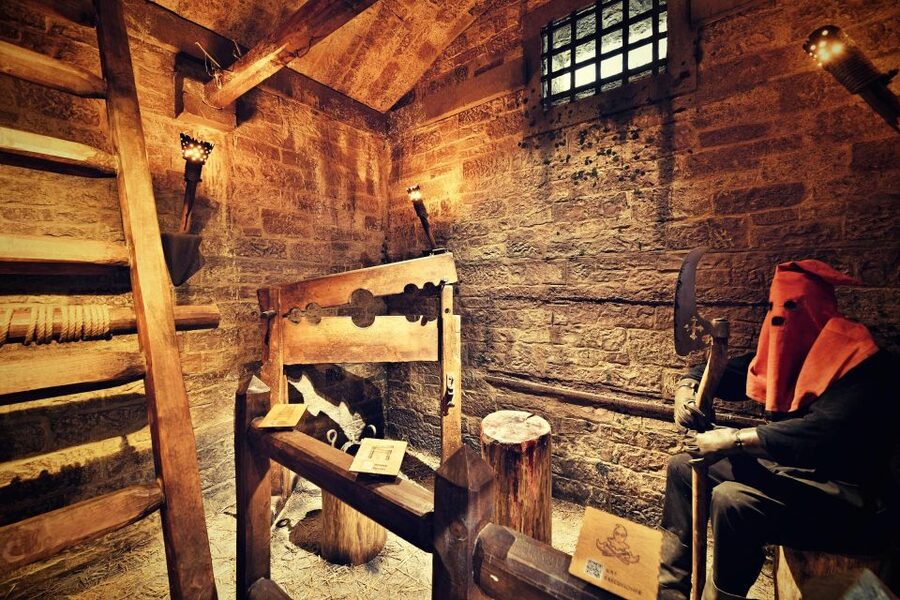
The ticket is valid for one day, but the supplied information does not give a fixed visit length. You should treat the timing as flexible and allow enough room to listen, scan the displays, take photos, and move between the three floors.
The experience is not described as a full-day activity in the sense of spending an entire day inside. Its value comes from fitting it into a sightseeing schedule near Charles Bridge. You can visit before crossing the bridge, after exploring the Old Town side, or as a break from outdoor sightseeing.
The museum can feel crowded at busier times, and limited space may make it harder to move around the displays. That matters because the interactive points work best when you can stop without blocking someone else.
If you want a calm, slow museum visit, choose your timing with care. If you are happy with a livelier setting and can wait briefly at a display, the central location makes the stop easy to combine with other sights.
Is $18 a fair price?
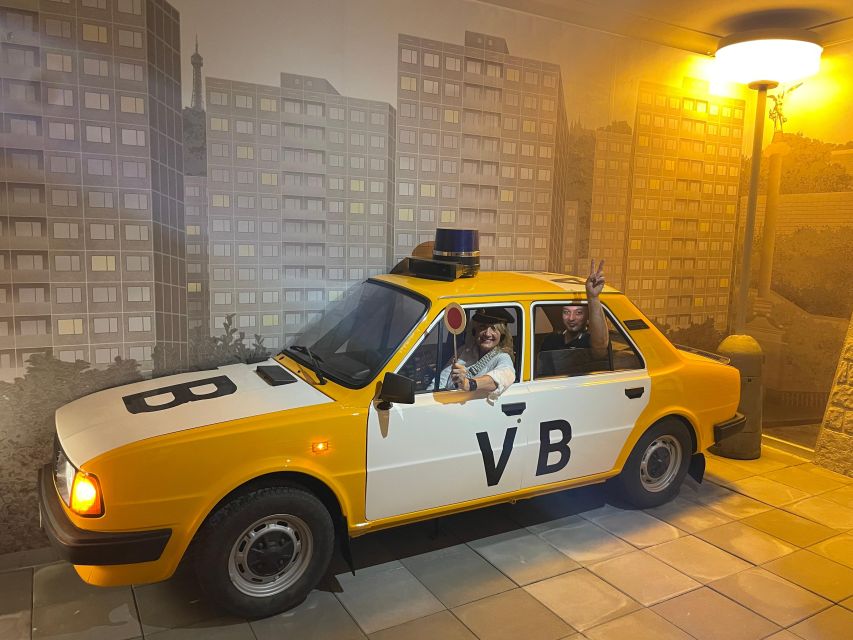
At $18 per person, this is not the cheapest way to get a basic introduction to Prague. You are paying for more than a room of historical objects, though. The price includes entry, the app, the audio guide, and headsets, with interactive film and augmented-reality elements included in the experience.
I think the value is strongest for a first visit. The museum helps you make sense of monuments you will see throughout Prague and gives you ideas for where to go next. Its location also saves time because it sits directly by Charles Bridge.
The value is weaker if you want a quiet, traditional museum with lots of original objects and detailed written scholarship. The presentation is fast-moving and theatrical. It gives you the broad shape of Prague’s story, not an exhaustive study of each period.
For families, the price may be easier to justify because the interactive displays give children and teenagers a clear role. For adults who already know Czech history well, the main benefit may be the presentation and the city views rather than new historical detail.
Who will enjoy Story of Prague most?
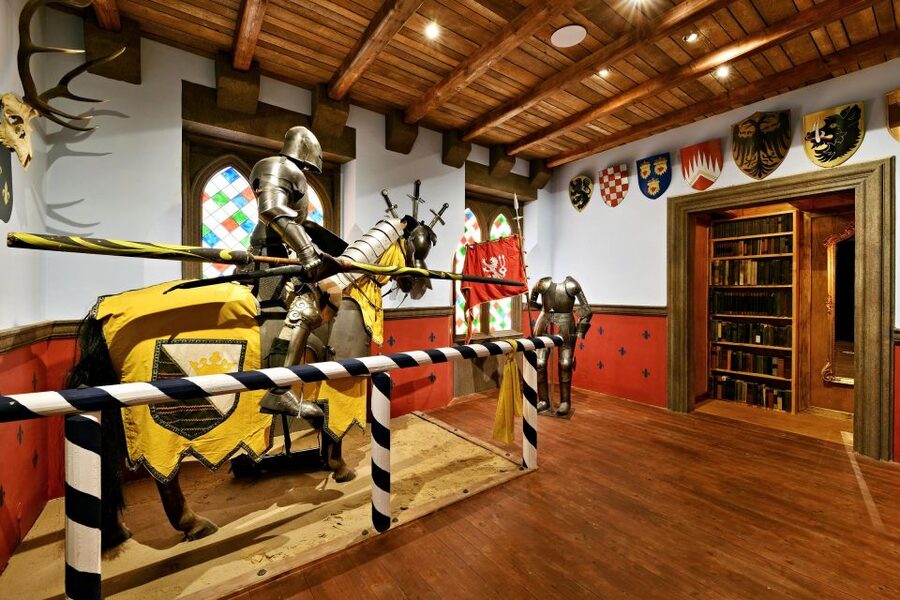
I would recommend this to first-time visitors who want to get their bearings quickly. It is also a good fit if you learn better through sound, film, and visual effects than through long written descriptions.
Families with teenagers should give it serious thought. The photo points, moving installations, and phone-based activities offer more variety than a conventional museum. You can still learn about Prague without asking younger members of your group to stand quietly beside labels for an hour.
It also suits anyone who wants a compact history lesson before exploring the city. The audio includes stories and legends connected with visible monuments, so you can take those ideas with you as you walk.
I would be more cautious if you dislike using your phone while sightseeing. The app is central to the visit, and the camera and scanning functions can be a nuisance. I would also think twice if you need step-free access or have mobility impairments, since the activity is not listed as suitable for people with mobility impairments.
Practical details before you go
The meeting point is the Story of Prague museum at the entrance to Charles Bridge. Enter from inside the house passage rather than looking for a separate street-level entrance.
The host or greeter languages are Czech, English, Spanish, German, and French. The audio guide is offered in the same five languages.
You can cancel up to 24 hours ahead for a full refund, and the reserve-now, pay-later option lets you hold a place without paying immediately. Availability and starting times should be checked for your chosen date.
A few simple preparations will make the visit easier:
- Bring headphones if you prefer your own, or borrow the included headset at reception.
- Charge your phone before arriving.
- Pack a portable charger for the app and camera functions.
- Allow extra time if you want to hear the full audio rather than skim the labels.
- Look for the intended route so you do not accidentally read the rooms out of order.
Should you book Story of Prague?
Book it if you want a lively introduction to Prague, especially near the start of your visit. The location beside Charles Bridge is excellent, the three-floor route covers the city’s major historical chapters, and the audio, film, and photo features make the material easier to engage with.
Skip it if you prefer a quiet museum, dislike app-based activities, or want detailed object-by-object historical study. The narration may feel slow, the route can be unclear, and busy periods may make the interactive displays harder to use.
For most first-time visitors, I would place this early in the Prague schedule. It gives you useful context before you walk past the monuments, and at $18, the combination of location, audio, views, and interactive displays offers fair value when those features match your interests.
FAQ
Where is the Story of Prague museum?
It is located right at the entrance to Charles Bridge in central Prague. Enter from inside the house passage.
How much does the experience cost?
The listed price is $18 per person.
What languages are available?
The host or greeter languages are Czech, English, Spanish, German, and French. The audio guide is available in Czech, English, Spanish, German, and French.
Is an audio guide included?
Yes. Entry, the app, and headsets are included. You can connect your own headphones or borrow headsets at reception.
How does the interactive museum work?
You download the app, connect headphones, scan the first tag, and follow the displays. The experience uses audio, film installations, augmented reality, physical objects, and interactive photo points.
Is the museum suitable for people with mobility impairments?
No. The activity is listed as not suitable for people with mobility impairments.
Just added around Prague
- Prague: Steel Art Museum Entry Ticket★ 4.8 · 572 reviews
- Prague: Signal Space Digital Art Gallery Entry Ticket★ 4.6 · 38 reviews
- Prague: Tickets for the Franz Kafka Museum★ 4.2 · 188 reviews
- Prague: River Cruise, Charles Bridge Museum, & Walking Tour★ 4.7 · 62 reviews
- Prague: National Museum Ticket & Online Audioguide City Tour★ 4.3 · 325 reviews
- Choco Art Museum in Prague Entry Ticket★ 3.6 · 29 reviews
- Prague: Museum of Torture Entry Ticket★ 3.6 · 317 reviews
- Prague: Mozart Interactive Museum Entry Ticket★ 4.7 · 16 reviews
Museum Tours in Prague, compared.


IAM Illusion Art Museum Prague Fast Pass Ticket
Read our review →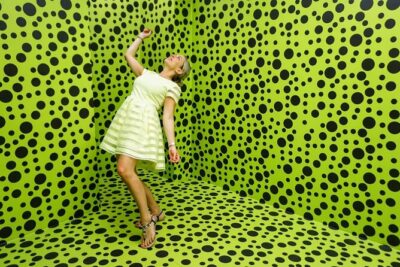
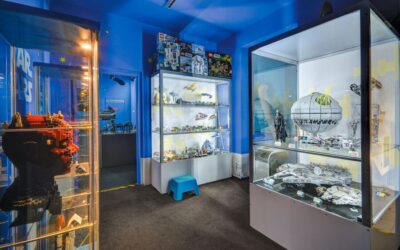
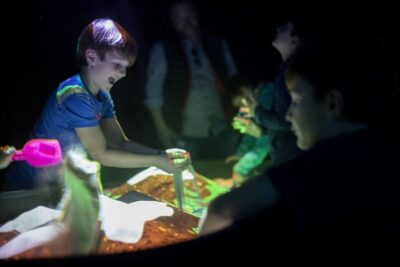
Ticket to Audiovisual Light Art at Lumia Gallery
Read our review →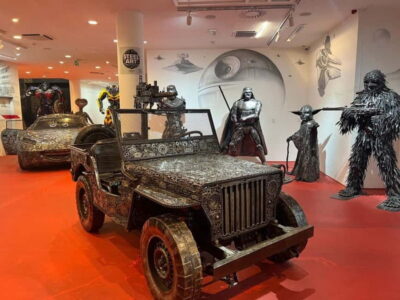
Browse the lists this tour appears in