
Review · POLAND
Archaeological Museum of Krakow Entrance Ticket
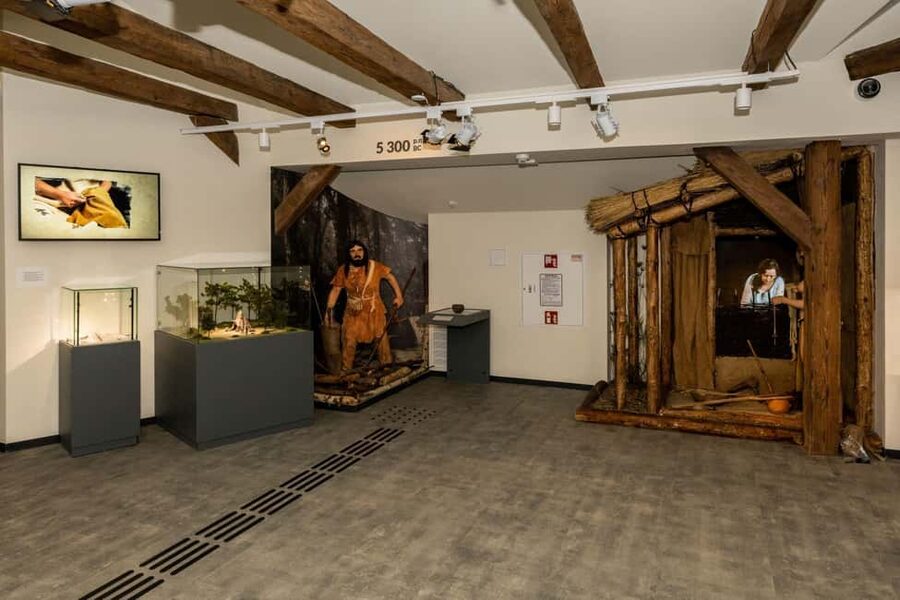
The museum’s most memorable object is Światowid, a ninth to tenth-century pagan statue with four faces, found in 1848 near Zbrucz. It gives the visit a clear focus, but the museum also opens a window onto much older life in Lesser Poland, long before Krakow became a royal city.
I like the low price, about $2.13 per person, and the chance to visit three connected sites: the main museum, the underground exhibition beneath St. Wojciech’s Church, and the Nowa Huta-Branice branch. I also like that you can take your time instead of being tied to a guide or fixed group.
The main caution is ticket access. One poor experience involved a visitor not receiving a ticket or QR code and being refused at the ticket desk. Save your confirmation carefully, check the exact entry instructions, and remember that a Krakow City Card includes free admission.
Key points to know before you go
- Światowid is the star object: See the unusual four-faced pagan figure from the ninth or tenth century, found in 1848 near Zbrucz.
- Three locations are included in the museum network: The main building, the underground exhibition beneath St. Wojciech’s Church, and Nowa Huta-Branice.
- The main building has a surprising past: It began as a Barefoot Carmelite monastery, later became St. Michael’s Prison, and now houses archaeological collections.
- The ticket is self-guided: No guide is included, so you set your own pace and should allow time to read the displays.
- The low price is a strong value: At roughly $2.13, the ticket costs little compared with many Krakow museums.
- Check the fine print before arriving: Validity can be one or two days depending on the option, and final admission is 90 minutes before closing.
From Carmelite monastery to St. Michael’s Prison
The main Archaeological Museum occupies a building with a history of its own. For decades, the site belonged to the Barefoot Carmelites and functioned as the Monastery of St. Michael. In the nineteenth century, the Austrians stationed in Krakow converted it into a prison.
That change was dramatic. A religious house became a place of confinement, yet it kept the monastery’s name and became known as St. Michael’s Prison. After the Second World War, the prison closed and the Archaeological Museum was established here.
I like this setting because it gives your museum visit an extra layer before you even reach the displays. You are not entering a purpose-built modern gallery. The building itself connects religious Krakow, imperial rule, wartime change, and the city’s modern cultural life.
The available information does not specify a room-by-room route through the main building, so you should expect a museum visit rather than a guided tour with a fixed sequence. Without a guide, you will need to follow the signs and display information yourself. That suits independent visitors who enjoy pausing at objects that catch their eye, but it may feel less helpful if you prefer a detailed explanation of every collection.
More archaeological museums in Poland:
- Athens: National Archaeological Museum Ticket & Audio Guide
★ 4.3 · 1,330 reviews - Milan: Cathedral, Archeological Area and Museum Ticket
★ 4.5 · 1,093 reviews - Delphi: Archaeological Site & Museum Ticket with Audio Tours
★ 4.3 · 721 reviews
Meeting Światowid, the four-faced pagan figure
The museum’s headline object is the statue of Światowid, often described as a pagan god with four faces. It dates from the ninth or tenth century and was found in 1848 in Zbrucz.
The statue matters because it offers a rare, tangible link to pre-Christian religious beliefs in the region. Much of Krakow’s familiar identity is tied to churches, royal ceremonies, and Christian art. Światowid points to an earlier world, when sacred ideas and images took very different forms.
The four faces are the detail you will notice first. They give the figure an unusual presence and make it easy to remember, even if you are not an archaeology specialist. I would make this your first target in the main building, then use the rest of the collection to place it in a wider setting.
Keep your expectations sensible. This is not advertised as a performance, a reenactment, or a guided pagan ritual experience. You will see the object and other archaeological material in a museum setting. Its value comes from the age of the statue, its unusual design, and the questions it raises about belief in Lesser Poland before Christianity.
What else to look for in the main museum
The main museum presents archaeological treasures found in the Lesser Poland region. The supplied details do not name every gallery or object, so I would not arrive expecting a precise list of guaranteed pieces beyond Światowid.
Instead, plan to spend time with the collection as a record of people who lived in the region across different periods. Archaeology turns ordinary remains into clues: objects can show how communities worked, worshipped, made things, and adapted to change. Even a small artifact can help you think beyond Krakow’s famous medieval center.
This is a good stop for you if you enjoy evidence rather than spectacle. The museum asks you to look closely and make connections. It is less suited to a quick photo stop, especially if you want to understand more than the famous statue.
Since no guide is included, a little preparation can improve the visit. Read the basic background about Światowid before you go, note the three museum locations, and allow enough time for captions. You can move quickly through less familiar material, then slow down where the objects interest you most.
Beneath St. Wojciech’s Church on Main Square
The museum also operates an underground exhibition beneath St. Wojciech’s Church on Krakow’s Main Square. This branch focuses on the history of the square, the church, and its patron, Saint Wojciech.
The setting is the main attraction here. Beneath one of Krakow’s best-known public spaces, you can see remnants of wooden and stone floors, along with Romanesque walls. These remains help you picture earlier stages of the square and church, before the familiar surface of today’s Main Square took shape.
I like this branch because it connects archaeology to a place you are already likely to visit. Rather than looking at objects in isolation, you can relate the underground remains to the church above and the city square around it.
The branch is compact in concept, but that does not make it disposable. It gives you a physical sense of how Krakow changed over time. If you are already near the Main Square, it can be a convenient addition to the main museum visit.
The available information does not state how long you need at the church exhibition, so use your interest as a guide. Visitors who enjoy old masonry, building layers, and urban archaeology may want to read everything. If your main goal is Światowid, you can treat this as a shorter historical stop.
A few more museum visits around Poland worth comparing
- Schindler’s Factory in Krakow: Guided Tour & Skip the Line Ticket
★ 4.5 · 1,714 reviews - Warsaw: POLIN Museum of the History of Polish Jews Ticket
★ 4.7 · 1,142 reviews - Warsaw: Museum World of Illusion Entry Ticket
★ 3.9 · 666 reviews - Krakow: Kościuszko Mound Entry Ticket with Exhibitions
★ 4.4 · 399 reviews
Following archaeology to Nowa Huta-Branice
The third branch, Nowa Huta-Branice, is linked to the Nowa Huta district and its metallurgical plant. Archaeological discoveries there began in 1949 during the first construction works.
This branch gives the museum a different angle. The story is not only about Krakow’s old center and medieval religious buildings. It also shows how archaeology emerged during the construction of a major industrial district after the war.
That connection makes Nowa Huta-Branice useful for visitors interested in the relationship between modern development and the much older remains beneath it. Construction can destroy archaeological evidence, but it can also reveal it. The discoveries made during early works in 1949 opened a new chapter for research in the area.
There is no transport information included with this ticket, and no guide or transfer is provided. You should therefore check the location and plan your own route before treating the three branches as one continuous visit. The main museum and St. Wojciech’s Church are useful additions to a central Krakow day, while Nowa Huta-Branice requires more deliberate planning.
Do not assume that the branches are all next door to one another. The ticket covers the museum network, but you remain responsible for getting between sites and checking each location’s opening hours.
How the ticket works and what the price means
At about $2.13 per person, this is an inexpensive museum ticket. At that price, I see it as an easy addition to a Krakow sightseeing day, especially if you already plan to visit the Main Square.
The value is strongest if you use more than one branch. The main building gives you Światowid and regional archaeology. St. Wojciech’s Church adds underground remains in a central location. Nowa Huta-Branice adds a separate story tied to postwar construction and archaeological work.
The ticket is valid for one or two days, depending on the option you book. That flexibility can help if you do not want to rush through all three locations. Check the exact validity period before paying, since the available option affects how much time you have.
A Krakow City Card includes free entrance. If you already hold the card, buying this separate ticket would not make sense. Compare the cost of the card with your wider plans, though the museum alone is inexpensive enough that the standalone ticket is straightforward for most people without a city card.
Opening hours can change from the times shown when you book. Check the local operator’s official website for the current schedule, and remember that the last admission is 90 minutes before closing. That final-entry rule matters if you are trying to fit the museum into a crowded afternoon.
A self-guided visit requires a little planning
This is an entrance ticket, not a guided tour. A guide is not included, and no guide name is provided. You will explore independently, which gives you freedom but also means there is no expert on hand to explain the pagan symbolism, the monastery’s transformation, or the archaeology beneath the church.
I prefer this format when I want to control my pace. You can spend extra time with Światowid, move quickly through displays that interest you less, and decide how much energy to give each branch.
If you want a fuller explanation, bring your own background notes or use the museum’s display text. Do not expect a scheduled talk or a tour leader to connect the sites for you. The experience works best when you accept it as an independent museum visit.
Ticket delivery deserves special attention. One recorded problem involved a missing ticket and a ticket office that would not admit the person without a QR code. That does not establish that every booking has a problem, but it is enough reason to check your email, app, voucher, and QR code before leaving your accommodation.
If the booking instructions say that the meeting point varies by option, read your specific confirmation carefully. The activity ends back at the meeting point, but the supplied details do not identify one universal meeting place for every option.
Who will get the most from this museum
I would recommend this experience to you if you like archaeology, early religious beliefs, old buildings, and the less familiar parts of Krakow’s past. The four-faced Światowid figure gives the visit a strong centerpiece, while the branch locations add variety.
It also suits independent museum visitors. You can create a short visit around the main building, add St. Wojciech’s Church while sightseeing on the Main Square, or use the one or two-day validity to spread the branches out.
Families with older children may find the pagan statue and underground remains easy starting points for questions. Younger children may need help staying interested because this is a self-guided museum visit, not an activity built around demonstrations or entertainment.
I would be more cautious if your Krakow schedule is already packed with major museums and churches. The museum is inexpensive, but Nowa Huta-Branice takes planning, and the main collection may not suit you if you want only famous paintings or grand interiors.
Smoking, alcohol, and drugs are not allowed. Those rules are simple, but keep them in mind when planning a long day across several Krakow attractions.
Should you book the Archaeological Museum ticket?
Book it if you want an affordable, independent look at Krakow before the familiar Christian and royal story took center stage. Światowid alone gives the visit a memorable focus, while the former monastery and prison add unusual context to the main building.
I would book the ticket for roughly $2.13 if you are interested in archaeology or already plan to be near the Main Square. Add the St. Wojciech’s Church exhibition, and consider Nowa Huta-Branice only after checking its location and hours.
Skip the separate ticket if you have a Krakow City Card, since admission is free with that card. Also pause before booking if you need a guide, because none is included. Finally, verify that your QR code or entry voucher has arrived. With that small bit of preparation, this is a low-cost way to see a quieter, older side of Krakow.
FAQ
Where is the Archaeological Museum located?
The main museum is in the former Monastery of St. Michael, a building that later became St. Michael’s Prison. The museum also has branches beneath St. Wojciech’s Church on Krakow’s Main Square and at Nowa Huta-Branice.
What is the most famous object in the museum?
The best-known object is the Światowid statue, a ninth to tenth-century pagan figure with four faces. It was found in 1848 near Zbrucz.
Is a guide included with the ticket?
No. The ticket includes museum entrance only. You visit the exhibitions independently without a guide.
How long is the ticket valid?
The ticket is valid for one or two days, depending on the option booked. Check the selected option for the exact validity period.
Is admission free with a Krakow City Card?
Yes. Holders of a Krakow City Card receive free admission.
What are the museum’s branches?
The branches are the main Archaeological Museum building, the underground exhibition beneath St. Wojciech’s Church, and the Nowa Huta-Branice location.
What can I see beneath St. Wojciech’s Church?
The underground exhibition presents the history of the Main Square, the church, and Saint Wojciech. You can see remnants of wooden and stone floors and Romanesque walls.
Why is Nowa Huta-Branice important?
The branch is linked to the Nowa Huta district and its metallurgical plant. Archaeological discoveries there began in 1949 during early construction works.
When is the last entrance?
Last admission is 90 minutes before closing. Opening hours can change, so check the local operator’s official website for current times.
Can I cancel the ticket?
You can cancel up to 24 hours in advance for a full refund.
Just added around Poland
- Schindler’s Factory Skip-the-line Museum Ticket★ 4.9 · 15 reviews
- Schindler’s Factory Museum Guided Tour – Krakow★ 4.5 · 15 reviews
- Krakow: Schindler’s Factory Museum Guided Tour★ 4.1 · 86 reviews
- Schindler’s Factory Museum in Krakow – Guided Tour★ 4.3 · 33 reviews
- Krakow: Rynek Underground Museum Skip-the-line Guided Tour★ 4.7 · 138 reviews
- Krakow: Vodka Factory Museum Entry Ticket and Tasting★ 4.3 · 75 reviews
- Krakow: Rynek Underground Museum Guided Tour & Stories★ 4.8 · 26 reviews
- Krakow: Skip-the-Line Rynek Underground Museum Guided Tour★ 4.7 · 26 reviews
Museum Tours in Poland, compared.

Schindler’s Factory in Krakow: Guided Tour & Skip the Line Ticket
Read our review →
Auschwitz-Birkenau Museum and Memorial Guided Tour from Krakow
Read our review →
POLIN Museum of the History of Polish Jews Ticket
Read our review →


Krakow Schindler’s Factory Museum Guided Tour in English
Read our review →Browse the lists this tour appears in